
Commercial Air in Sherman Oaks: What Your HVAC System Says About Your Business
In Sherman Oaks, a lot of business happens indoors. Offices along Ventura, studios and production spaces, medical and wellness suites, boutiques, and restaurants all rely on HVAC systems to keep customers comfortable and staff productive. When the air feels stale or dusty, it’s not just a comfort issue; it becomes part of the experience people associate with your brand. Commercial air duct cleaning is one of those behind-the-scenes services that rarely gets attention until it’s overdue, but when it’s handled well, you can feel the difference in the way the space breathes. If you’re exploring options, a good place to begin is understanding what full-scope air duct cleaning looks like when it’s done as a complete system service rather than a quick pass over visible grilles.
Commercial spaces in Sherman Oaks often have higher foot traffic, more frequent door openings, and more particles introduced from outside. Add in copier rooms, break areas, packaging materials, textiles, and the simple reality of people moving all day, and your HVAC system becomes the central pathway that redistributes whatever the building collects. Over time, dust and debris settle inside supply runs, returns, and mechanical components, and that accumulation can affect air movement and the overall feel of the environment.
Why Commercial Duct Cleaning Is Different from Residential Work
Commercial HVAC systems are designed for larger volumes of air and longer operating hours. Many businesses run climate control from early morning into the evening, and some operate nearly nonstop. More runtime means more air cycles, and more cycles mean more opportunity for particles to settle in the system. Commercial ductwork may include larger trunk lines, multiple zones, rooftop units, or split systems feeding different suites. Access points can be more complex, and the cleaning plan must account for business operations, noise considerations, and the need to keep customer-facing areas clean and presentable.
Another important difference is that commercial properties often have stricter expectations for documentation, scheduling, and risk management. A professional commercial duct cleaning team should be able to coordinate with facility managers, work after hours if needed, and keep disruptions minimal. In Sherman Oaks, where many businesses share walls or occupy multi-tenant buildings, that coordination matters. A well-run service feels organized, contained, and respectful of the day-to-day rhythm of the building.
Signs a Commercial Space May Need Duct Attention
Businesses don’t always notice duct issues right away because staff acclimates to the environment. But certain signs stand out. If dust seems to settle quickly on counters, displays, or reception surfaces even with regular cleaning, the HVAC pathway may be contributing. If certain zones feel consistently stuffy or warm compared with others, you may be dealing with airflow restriction, dirty return pathways, or imbalance that becomes worse as debris accumulates. Odors that appear when the system starts up after being off can also be a clue, especially in spaces that sit closed overnight.
In businesses with specialized activities, the need can be even more obvious. Salons and studios may have product aerosols or fine particles that travel. Fitness spaces may deal with higher humidity and frequent air cycling. Medical and wellness suites often aim for a crisp, clean feel that can be undermined by stale circulation. In each case, duct cleaning isn’t a cosmetic add-on; it’s part of maintaining a consistent indoor environment that supports the work you do.
How Professionals Clean Commercial Duct Systems Without Creating a Mess
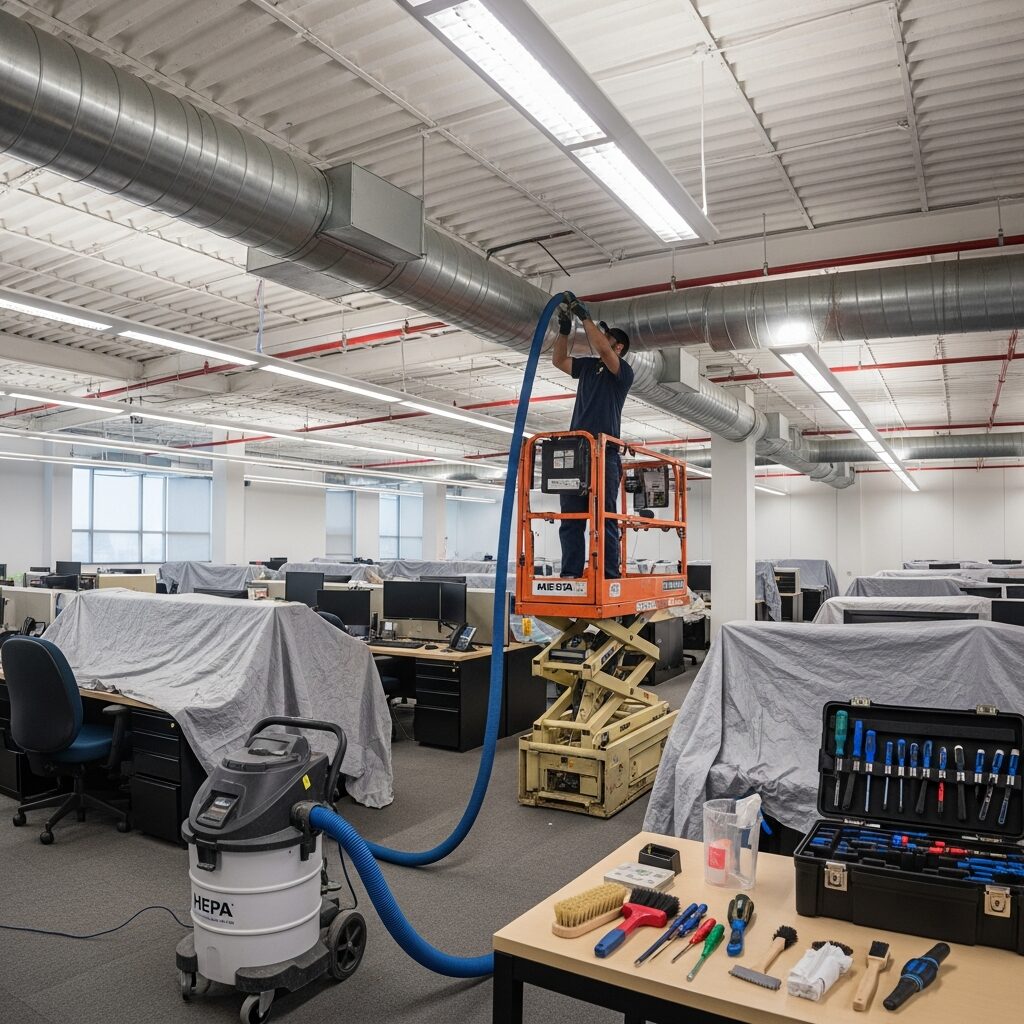
The key to commercial duct cleaning is control. A proper service uses equipment that creates negative pressure so debris is pulled toward containment rather than drifting into occupied areas. Technicians use agitation tools sized for commercial ducts to dislodge buildup from interior surfaces, focusing on main trunks, branch runs, and return pathways. Work areas should be protected, and cleaning steps should be sequenced so that customer-facing spaces are kept tidy throughout the process.
In Sherman Oaks, it’s common for businesses to occupy spaces with finished ceilings, decorative elements, and sensitive equipment. That means the cleaning crew has to be thoughtful about where and how they access duct lines. When additional access points are needed, the plan should be explained clearly ahead of time. A professional team will also account for the reality of occupied buildings, scheduling noisier phases around meetings, classes, or client sessions.
Mid-Service Considerations: What Facility Managers Should Ask About
Halfway through a commercial duct cleaning, the most valuable information is often what the team discovers about your system’s condition. Are returns heavily loaded? Are there sections where debris collects repeatedly? Are there signs of duct leakage that could be pulling in dust from ceiling voids or service corridors? A strong provider will communicate those findings in a practical way, so you can decide what to address next.
This is also the right time to confirm that the scope includes the full airflow loop, not just the supply side. A business might have clean supply registers but a return plenum that’s loaded with dust because it’s constantly pulling air from busy areas. When you review what comprehensive air duct cleaning entails, you’ll see why return pathways and mechanical components are so often emphasized: that’s where a lot of the “hidden” debris lives.
Benefits Businesses Often Notice After a Thorough Cleaning
The most immediate change many businesses report is that the air feels “lighter” or less stale, especially when the system starts up in the morning. Staff may notice fewer dusty surfaces near vents, and some spaces experience more consistent comfort across zones. While duct cleaning doesn’t replace mechanical maintenance, it can complement it by removing buildup that affects how air moves and how cleanly it circulates.
There’s also the customer perception angle. In service-based businesses, people tend to remember how a place feels. A clean, fresh indoor environment supports a sense of professionalism. That matters in clinics, spas, studios, and offices where clients are seated for long periods. In retail environments, it can help preserve the look of merchandise and reduce the dull film that dust can create over time.
Planning Commercial Duct Cleaning Around Business Hours
One of the reasons businesses delay duct cleaning is concern about downtime. The right team will help you plan a schedule that minimizes disruption. For some locations, after-hours service makes the most sense. For others, a phased approach can work, cleaning one zone at a time so parts of the business remain fully operational. Sherman Oaks has a mix of small owner-operated shops and larger professional offices, and the best providers adapt to both without compromising quality.
If your business is in a multi-tenant building, it’s also smart to coordinate with property management early. Access to mechanical rooms, rooftop units, and service corridors may require advance notice. A team familiar with local commercial properties will anticipate these logistics so the day of service runs smoothly.
FAQ
Q: Will duct cleaning disrupt customers or staff?
A: It can be scheduled to reduce impact, and professional containment keeps dust from spreading. Noise levels vary by equipment and building layout, so planning around peak business hours is often helpful.
Q: Is commercial duct cleaning only for large buildings?
A: No. Small offices, studios, and retail suites can benefit, especially if the HVAC runs frequently and the space has steady foot traffic.
Q: Can duct cleaning help with uneven temperatures across zones?
A: It may help if buildup is contributing to restriction, particularly in returns or main trunks. If uneven temperatures persist, it can point to balancing issues, duct leakage, or equipment concerns that should be evaluated.
Q: How do we confirm the cleaning was thorough?
A: Many providers use visual verification, photos, and clear explanations of what areas were accessed and cleaned. A transparent scope and before-and-after documentation are strong indicators of quality.
Q: Should we change filters after service?
A: Yes in most cases. Starting with clean filters supports the benefits of the service and helps capture any remaining loosened particles.
Keep Your Sherman Oaks Business Feeling Fresh and Professional
Your HVAC system is one of the most influential pieces of infrastructure in your business, even if it’s mostly out of sight. When ducts are kept clean and airflow pathways are maintained, the entire space tends to feel more comfortable, more consistent, and more welcoming to clients and staff. If you’re ready to schedule a commercial service that respects your operations and targets the full system, begin with air duct cleaning and plan a visit that fits your building, your hours, and the standards you want your customers to experience.