
What to Expect When You Start Looking Into Air Duct Cleaning in Sherman Oaks
If you live in Sherman Oaks long enough, you start to notice how quickly dust seems to return. It settles on shelves even after a careful wipe-down, it shows up around supply vents, and it can make a home feel a little less fresh than it should. That’s often the moment homeowners begin searching for air duct cleaning and trying to understand what the process is really like. Even though this article’s title mentions “cost,” what most people truly want is clarity: what’s included, how the work is performed, what affects the scope of the job, and how to recognize a service that’s thorough rather than rushed.
Sherman Oaks is a mix of classic Valley homes, newer remodels, condos, and small apartment buildings. That variety matters because duct systems aren’t one-size-fits-all. Some homes have long trunk lines with multiple branches, some have tight attic runs, and others rely on older sheet-metal ducts that have seen decades of use. Understanding what to expect begins with understanding your own home’s HVAC layout and the everyday conditions that influence what collects inside the system.
In my experience around the neighborhood, the most common triggers for scheduling duct cleaning are renovations, a musty smell when the AC kicks on, a move-in situation where you want a fresh baseline, or persistent dust despite good housekeeping. Allergy flare-ups can also be a motivator, especially during the months when you’re running air conditioning more often. The good news is that a professional cleaning, done properly, can reset the system and make it easier to maintain cleaner indoor air over time.
Why Sherman Oaks Homes Build Up Dust and Debris in the Ductwork
Even with decent filtration, ducts can become a collection point for fine particles. We live in a region where outdoor dust, pollen, and traffic-related particles can easily enter the home through open doors, windows, and everyday foot traffic. Add pets, fabric fibers, and the normal shedding of household materials, and you have a consistent stream of airborne particles heading toward the return vents.
Sherman Oaks can also be windy at times, and the Valley heat encourages long AC cycles. Longer run times mean more air movement through the ducts, which can gradually accumulate buildup at turns, seams, and near the blower compartment. If the filter isn’t the right size, isn’t seated properly, or is replaced inconsistently, more particulate matter can bypass filtration and settle in the system.
Older homes sometimes have ductwork that was never thoroughly cleaned after construction or remodel work. Drywall dust is notorious for lingering. Even if you don’t see it, fine construction particles can cling inside the ducts and become airborne again when the system starts up. That’s why many local homeowners decide to schedule a cleaning after major interior work, even if they’ve already done a deep clean of the living areas.
What “Professional Air Duct Cleaning” Should Actually Include
A real duct cleaning is not a quick vacuum at the vent covers. A thorough service addresses the supply runs, return runs, and the central components that move air. The goal is to remove accumulated dust and debris rather than just stir it up or relocate it. When the work is done correctly, you should see a clear before-and-after difference around registers, and the system should operate without releasing puffs of dust.
Expect technicians to start with an evaluation. They may ask about hot or cold spots, odors, recent construction, pets, smoking, or humidity issues. They’ll also look at the number of registers, the placement of returns, and whether access points exist for agitation tools and vacuum hoses. A careful inspection helps determine how to approach the job without damaging ducts, especially flexible ducting that can be more delicate than metal.
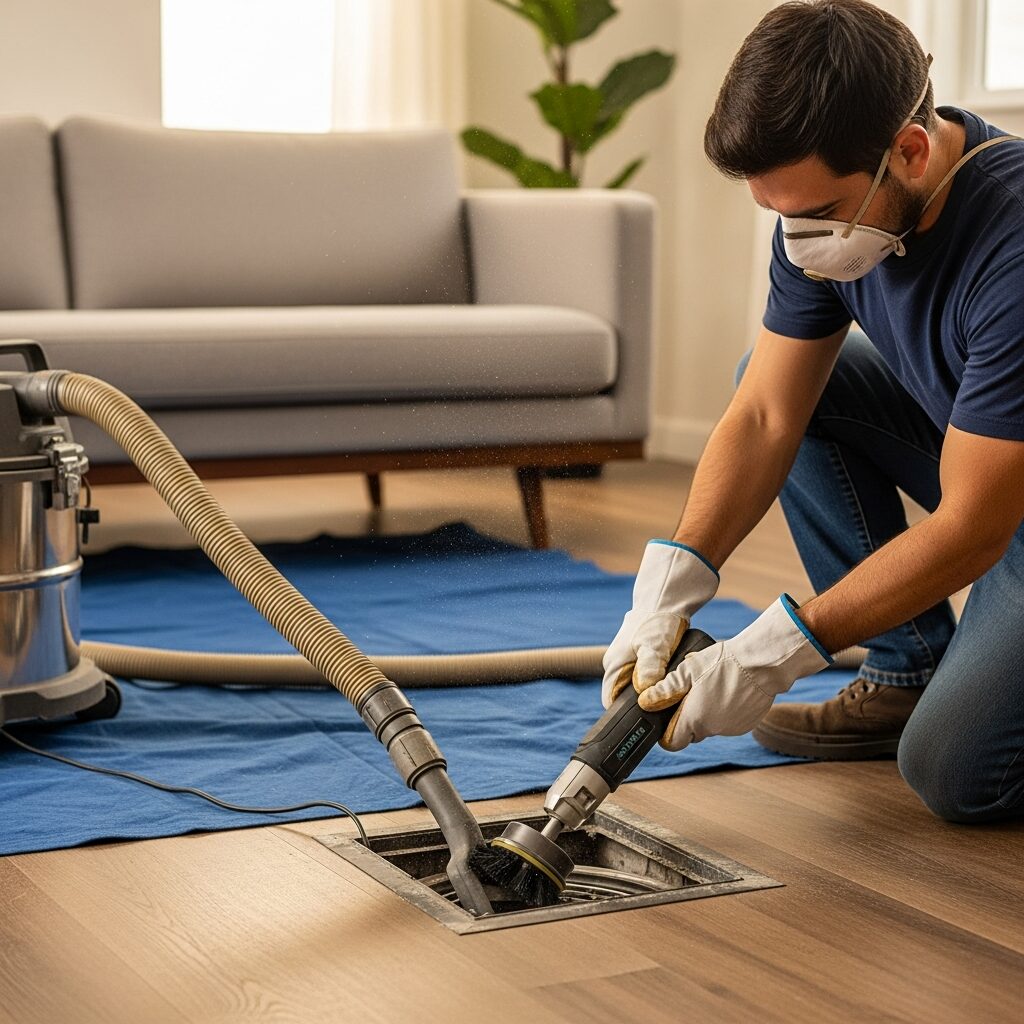
Most professional approaches rely on source removal: creating negative pressure with a powerful vacuum collection unit while simultaneously dislodging debris with agitation tools. When done in a controlled way, loosened dust is pulled toward the vacuum rather than drifting into your rooms. You may also see attention to the blower compartment area, because that’s where airflow is concentrated and where buildup can affect performance.
How the Process Typically Works From Start to Finish
On the day of service, you can expect a setup that protects your home. Technicians often place covers or use drop cloths near work areas, especially where hoses come in through a door or where they will access attic entries. Register covers may be removed for cleaning or sealed temporarily to control airflow during negative pressure.
After establishing suction, the technician will work through the system section by section. Agitation tools can range from soft-bristle rotary devices to air whips, depending on duct type and condition. The goal is to gently but effectively dislodge what’s adhered to surfaces. In Sherman Oaks homes with older or fragile ducting, the right tool choice matters. Too aggressive a method can tear flex duct or loosen connections, which is why experience and restraint are as important as equipment.
When the ducts are cleaned, the technician will typically clean the register covers, and sometimes the return grille and accessible areas near the air handler. If your home has multiple returns, each return pathway should be addressed rather than only the most visible one. A quality crew will also check that everything is reattached, sealed appropriately, and left as tidy as they found it.
What Influences the Scope of a Duct Cleaning Job (Without Talking About Prices)
Homeowners often ask why one duct cleaning takes much longer than another. The time and complexity are tied to several practical factors. The number of supply vents and returns is a major one, but layout matters as much as quantity. A smaller home with a complicated attic run can take more time than a larger home with a straightforward trunk-and-branch design.
Accessibility is another key factor in Sherman Oaks, especially for homes with low attic clearance or tight mechanical closets. If the air handler is in a cramped space, careful disassembly and reassembly take longer, and technicians may need to create safe access to do the job properly. Similarly, multi-level homes or condo systems with shared chases can require a different approach than a single-story ranch layout.
System condition also matters. A well-maintained system with regular filter changes typically has lighter, powdery dust. Systems that have gone years without attention can have thicker mats of debris, especially at turns, near the blower, and at return entries. If there is evidence of moisture, that’s another layer of complexity because dust behaves differently in humid conditions and can adhere more stubbornly to surfaces.
Finally, the history of the home counts. Renovations, roof work, flooring replacement, and drywall repairs can all contribute fine particulate matter that ends up in the duct system. If you’ve recently remodeled in Sherman Oaks, it’s common for homeowners to want a reset so they’re not recirculating construction dust every time the AC runs.
Signs Your Ducts May Need Attention
Some signs are obvious, like visible dust lines around vent covers or little bursts of dust when the system starts. Other signs are subtler. If your home smells stale when the air turns on, that can be a sign that dust and debris inside the ducts are holding onto odors. If certain rooms always feel stuffy compared to others, it might be airflow-related, and while duct cleaning isn’t a cure-all for balancing issues, it can reveal blockages or heavy buildup near registers.
Allergy symptoms that seem to worsen indoors can be another clue, especially if you’ve already addressed common sources like carpeting, bedding, and indoor humidity. Duct cleaning won’t eliminate pollen from the world outside, but it can reduce the reservoir of settled dust that gets stirred up with airflow.
Move-in situations are also popular times to schedule a cleaning. Even a very tidy previous owner can leave behind years of microscopic buildup. Starting fresh can be part of making the home feel like yours, particularly if you’re sensitive to odors or you have young kids who spend more time close to the floor where dust resettles.
Midway Check-In: Choosing a Service That’s Thorough
Halfway through your research, it helps to know what questions to ask. A solid provider will be comfortable explaining the equipment they use, how they protect your home, and which parts of the HVAC system they plan to address. They should be transparent about what they will and won’t do, and they should avoid making sweeping promises that duct cleaning alone will solve every indoor air concern.
If you’re comparing options in Sherman Oaks, it’s reasonable to ask how they handle different duct materials and what steps they take to ensure debris is captured rather than redistributed. A professional should also be prepared to point out if they see disconnected ducts, crushed flex runs, or heavy buildup in the blower area, since those issues can affect air quality and comfort. In many cases, people looking for air duct cleaning are really seeking reassurance that the work will be careful, complete, and respectful of their home.
It’s also worth recognizing that duct cleaning is part of a bigger maintenance picture. A clean system works best with proper filtration, sealed ducts, and a well-maintained air handler. The most satisfying results often come when homeowners pair duct cleaning with improved filter habits and attention to return air pathways, so the system stays cleaner longer.
What You Can Do Before and After the Cleaning for Better Results
Before the appointment, a little preparation helps the crew do their job efficiently. Clearing space around the main return, the thermostat area, and the air handler (often in a closet or attic access point) makes setup smoother. If you have fragile items near registers or on shelves below vents, moving them reduces the chance of dust settling on them during the work.
After cleaning, the biggest impact usually comes from consistent filtration. Use the correct filter size, make sure it seats snugly, and replace it on a schedule that matches your home’s conditions. Homes with pets or heavy AC use often need more frequent filter changes. Also pay attention to doors and windows during peak dust or pollen days; keeping the home sealed during windy periods can reduce what the system has to handle.
Another practical step is to keep return vents unobstructed. In some homes, furniture placement gradually blocks returns, which forces the system to pull air from gaps and corners where dust tends to collect. Better airflow can mean less debris settling in the ducts over time.
Common Misconceptions About Duct Cleaning
One misconception is that ducts should look spotless like a kitchen countertop. In reality, some light staining or residual dust in hard-to-reach seams can be normal, especially in older metal ducts. The goal is to remove the loose, accumulated debris that can recirculate, not to turn the inside of the duct into a showpiece.
Another misconception is that duct cleaning automatically fixes airflow problems. If you have undersized ducts, closed dampers, crushed flex runs, or a blower issue, cleaning alone won’t fully resolve comfort problems. However, the inspection and access required for cleaning often brings these issues to light, which can be valuable information for improving system performance.
Finally, some people worry that duct cleaning will make a mess. With proper negative pressure and careful sealing, the process should be controlled. You might notice a slight “freshly disturbed” smell for a short time, but you shouldn’t see clouds of dust drifting through the rooms. If a crew is not taking steps to contain debris, that’s a sign they are not using best practices.
FAQ
Q: How often should a Sherman Oaks homeowner consider duct cleaning?
A: Frequency depends on your home’s conditions. Many homeowners consider it after renovations, when moving in, or when there are clear signs like persistent dust release or odors when the system runs. Homes with pets, heavy AC usage, or allergy concerns may revisit it more often than homes with minimal indoor activity and strong filtration habits.
Q: Will duct cleaning help with allergies?
A: It can help reduce the amount of settled dust and debris that gets recirculated, which may lessen irritation for some people. It’s most effective when combined with consistent filter changes and good housekeeping, because allergens also come from fabrics, outdoor air, and daily life.
Q: Is duct cleaning safe for older ductwork?
A: Yes, when performed by an experienced team that selects tools based on duct material and condition. Older systems may require gentler agitation and careful handling of connections to avoid loosening joints or damaging flexible runs.
Q: Do I need to leave the house during the service?
A: Most homeowners stay home. The technicians may need access to multiple rooms and may create noise with vacuums and agitation tools. If you have pets that are sensitive to sound or strangers, arranging a quiet space for them can make the day easier.
Q: Can duct cleaning remove odors from the HVAC system?
A: It can reduce dust-related odors and remove debris that holds onto smells. If odors are caused by moisture problems, a dirty evaporator coil, or other sources, additional HVAC maintenance may be needed to fully resolve the issue.
Ready to Refresh Your Home’s Air in Sherman Oaks?
If you’ve been noticing stubborn dust, a less-than-fresh smell when the AC starts, or you simply want a clean baseline after a remodel or move-in, a professional duct cleaning can be a practical next step. The most important thing is choosing a team that explains the process clearly, uses source-removal methods, and treats your home with care from start to finish.
When you’re ready to schedule or you want to learn more about what a thorough service looks like, explore air duct cleaning options and take the first step toward a cleaner, more comfortable indoor environment.