
How to Estimate the Expense: Grout Cleaning Service Cost Factors Explored
Ignoring the slow buildup of grime on your tile floors does more than just dull their appearance. Over time, embedded grit acts like sandpaper against the edges of your tiles, while moisture trapped in unsealed, porous grout lines becomes a breeding ground for deep-seated discoloration and structural degradation. For homeowners in Sherman Oaks, delaying this maintenance can turn a straightforward restoration into a complex, labor-intensive resurfacing project. When you begin researching how to bring your floors back to life, understanding the variables that professionals use to build an estimate is the best way to plan your budget without any surprises.
While many search for flat rates, the reality is that reputable surface restoration is never one-size-fits-all. Every home has different layouts, tile materials, and levels of wear. By understanding the core variables of a professional quote, you can make informed decisions, avoid common pitfalls, and prepare your home to ensure the process runs as efficiently as possible.
Before You Start: What to Gather for an Accurate Estimate
To get the most precise assessment from a local technician, it helps to document a few details about your tiled areas. Having this information ready prevents misunderstandings and helps service providers understand the scope of your project immediately.
- Rough Square Footage: Measure the length and width of the tiled rooms to calculate the total area.
- Tile Type: Note whether your floors are ceramic, porcelain, travertine, marble, or slate.
- Grout Joint Width: Measure the width of the spaces between tiles, as wider lines require more cleaning agents and sealant.
- Current Sealer Status: Determine if your grout was sealed in the past, or if water currently absorbs straight into the joint, darkening it instantly.
- Access and Layout: Identify if the area is a wide-open living room or a tight bathroom with hard-to-reach corners.
Step 1: Measure and Calculate Your Total Square Footage
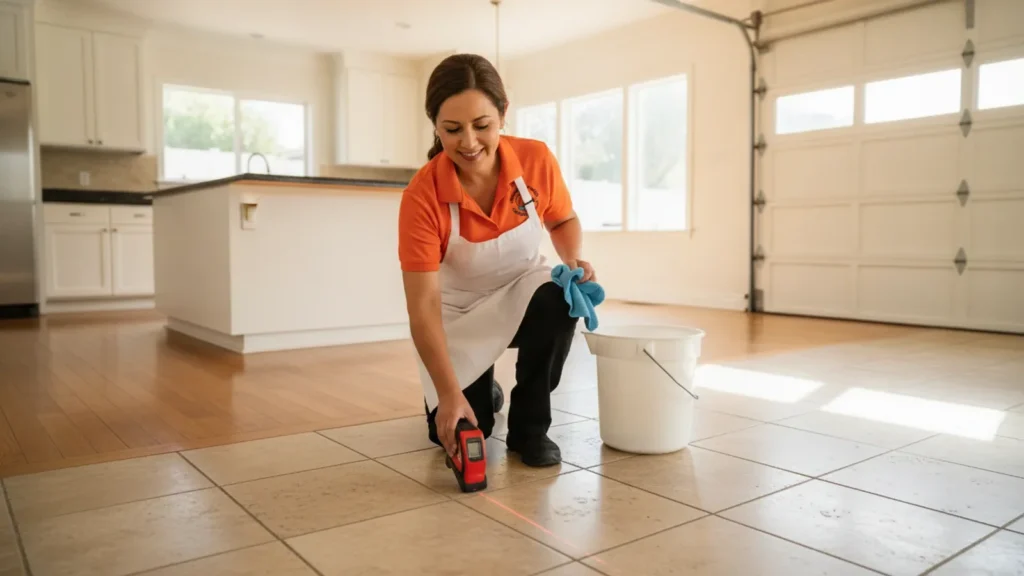
The foundation of almost any floor care quote is the overall size of the space. Technicians use square footage as a baseline because it dictates the volume of cleaning solutions, the wear on equipment, and the baseline time required on-site. To calculate this yourself, clear the floor of basic obstacles and use a tape measure to find the dimensions of each room. Multiply the length by the width for rectangular spaces. For irregular layouts, break the room down into smaller imaginary rectangles, calculate each, and add them together. Keep in mind that smaller, highly compartmentalized spaces like hallways or laundry closets may be priced differently than a single large, open-concept living area due to the additional setup and maneuvering required.
Step 2: Identify Your Tile and Grout Material Characteristics
Not all tiles can be treated with the same cleaning agents or pressure settings. Ceramic and porcelain are highly durable, non-porous materials that can safely withstand aggressive pressure and specialized alkaline cleaners. Natural stones, such as travertine, marble, slate, or limestone, are highly sensitive to acids and high-heat pressure systems, requiring specialized, neutral pH cleaning agents and delicate handling to prevent etching or scratching. Because natural stone requires distinct techniques and products, the material of your tile directly influences the complexity of the service. Identifying your material early ensures the technician brings the correct agents to preserve the integrity of your stone.
If you want it handled correctly the first time, consider professional tile cleaning in Sherman Oaks.
Step 3: Evaluate the Width and Condition of the Grout Lines
Grout is incredibly porous, acting like a hard sponge that absorbs dirty mop water, cooking oils, and spills. The wider the grout joints, the more surface area there is to collect dirt and the more material is needed for restoration. Additionally, the physical condition of the grout is critical. If the grout is stable and fully intact, standard deep-cleaning extraction methods are highly effective. However, if the grout is crumbling, cracked, or missing in sections, standard high-pressure extraction could wash away the damaged material entirely. Assessing these joint conditions beforehand determines whether you need a straightforward deep clean or delicate manual treatment and patching.
Step 4: Assess the Severity of Soil, Grease, and Previous Coatings
The type of buildup on your floors determines the level of labor required. A bathroom floor dealing with light mineral deposits and soap scum requires a different approach than a kitchen floor thick with traffic-ground grease and cooking oils. Furthermore, home floors that have been treated with heavy, wax-based retail floor polishes or topical DIY sealers require a stripping process before any deep cleaning can begin. Removing these layers of sticky, yellowed buildup adds a significant labor step, as the old coatings must be chemically dissolved and extracted before the actual grout lines can be reached and cleaned.
Step 5: Factor in Room Layout, Obstacles, and Accessibility
The physical environment where the work takes place heavily influences labor time. Large, rectangular living areas with minimal transitions allow technicians to move quickly and efficiently with rotary floor tools. Conversely, small bathrooms, tight laundry rooms, stairs, and spaces with built-in cabinetry require detail-oriented hand-tool work. If the home has multiple stories, technicians must run long vacuum and pressure hoses up stairwells, which adds setup and breakdown time. Clearing small furniture, plants, and floor mats before the crew arrives helps optimize this step and keeps the focus entirely on the restoration work.
Step 6: Determine Your Sealing and Protection Needs
Many Sherman Oaks homeowners rely on expert tile cleaning in Sherman Oaks for exactly this.
Cleaning your grout is only half the battle; keeping it clean requires professional sealing. Grout lines are naturally porous and will begin absorbing dirt and liquids immediately after cleaning if left unprotected. Homeowners typically choose between a standard clear penetrating sealer, which sinks into the grout to repel liquids, or a color seal. Color sealing is a specialized service where a highly durable, pigmented barrier is applied over the grout lines. This not only provides maximum stain protection but also restores a uniform color across the entire floor, masking permanent stains. Deciding on your level of protection is a major element in the final scope of work. To understand why this protection is so vital, you can read our guide on how to protect grout after cleaning.
Step 7: Request a Detailed, Itemized On-Site Inspection
The final step in understanding the cost factors of your project is to schedule an in-person evaluation. While over-the-phone estimates can provide a very general baseline, they cannot account for the actual condition of your grout or the specific type of stone or tile in your home. A professional on-site inspection allows a technician to perform a physical scratch or drop test to confirm the tile material, check for loose grout, and identify stubborn stains that may require specialized spot-treatment. An itemized written estimate ensures that you know exactly what is included, from the pre-vacuuming and soil suspension to the final extraction and sealing steps.
Unique Tile Challenges in the Sherman Oaks Housing Market
Sherman Oaks features a diverse range of homes, from mid-century ranch houses to modern custom builds and multi-family complexes. This architectural diversity brings specific flooring challenges that directly impact tile and grout restoration work.
Many of the established mid-century homes in the neighborhood feature original saltillo, terrazzo, or delicate ceramic tile. These vintage installations often have decades of wax buildup, yellowed topical sealers, and deeply embedded soil within wide, hand-poured grout joints. Restoring these surfaces requires a careful hand, lower pressure settings, and extensive stripping phases to avoid damaging fragile, aged tiles. On the other hand, newer construction in the hillsides of Sherman Oaks frequently utilizes expansive natural stone floors, such as large-format travertine or marble. These premium stone surfaces are highly sensitive to acidic cleaning products and require meticulous, pH-neutral solutions and expert sealing to protect the stone from the local hard water common across the San Fernando Valley. Our regional climate, marked by hot, dry summers and dusty canyon winds, also means fine particulate dust easily makes its way indoors, settling into unsealed grout lines and acting as an abrasive underfoot if not professionally extracted.
When to Call a Professional in Sherman Oaks
While light mopping and basic scrubbing are great for weekly maintenance, some situations require industrial equipment and professional expertise. If you have tried scrubbing your floors with retail products only to find the grout remains dark and blotchy, the dirt has penetrated too deep for household brushes to reach. Attempting to use harsh chemicals or excessive pressure can permanently etch natural stone or wash away weakened grout.
Ready for the next step? Learn how tile cleaning services in Sherman Oaks can help and reach out to the team.
Calling in a specialized technician is highly recommended if you are dealing with large areas of natural stone, heavily soiled kitchen grease, yellowed wax coatings, or if you want to apply a color seal to completely renew the look of your home. If you want to dive deeper into selecting the right methods for your home, check out our guide on how to choose grout cleaner. When you are ready to completely revitalize your home’s tiled surfaces, you can easily schedule a deep professional tile cleaning to bring back their original beauty.
Frequently Asked Questions
Why is professional tile cleaning more effective than DIY scrubbing?
Household cleaning tools lack the extraction power to pull dirty water out of porous grout, often just spreading dirt around and leaving a film behind. Professionals use specialized truck-mounted extraction systems that combine pressurized hot water with high-vacuum suction, drawing the embedded soil completely out of the floor.
Is grout sealing always necessary after a professional clean?
Yes, sealing is highly recommended because the deep cleaning process strips away old, degraded sealers along with the dirt. Leaving grout unsealed leaves its pores completely open to absorbing liquid spills, dirt, and oils, which can lead to rapid re-soiling and permanent staining.
How long does the tile and grout restoration process take?
While the exact time depends on the size of the area and the level of soil, most residential projects are completed within a few hours to a single day. The technician can provide a precise timeline during the initial on-site inspection based on your specific layout.
Achieve Beautiful, Long-Lasting Floors Today
Understanding the grout cleaning service cost factors allows you to make smart, informed decisions for your home’s upkeep. Rather than letting dirt and grit degrade your surfaces, investing in timely maintenance preserves your flooring and keeps your home looking its best. If you are ready to completely restore tile flooring in your living space, reach out to California first carpet cleaning in Sherman Oaks, CA. Our experienced team uses advanced techniques to lift stubborn grime safely, leaving your tile and grout looking refreshed and thoroughly clean. Contact us today to discuss your flooring needs and request an accurate on-site estimate.