
Understanding what people really mean by “cost” in Sherman Oaks
In Sherman Oaks, the question I hear most often isn’t actually about a number. It’s about what a homeowner is getting for their money, what “air duct cleaning” includes, and how to tell whether the work will make a real difference in comfort and indoor air quality. When neighbors ask about “air duct cleaning cost,” they’re usually trying to avoid two problems that pop up around the Valley: bargain offers that don’t clean much of anything, and overly aggressive sales pitches that turn a straightforward job into a confusing upsell. The best way to think about “cost” is to understand the scope of work, the condition of the duct system, and the professionalism of the crew that shows up at your door.
Sherman Oaks homes range from older properties with decades of remodeling layers to newer builds with tighter envelopes and modern HVAC layouts. Those differences matter because ductwork can be tucked into attics, crawlspaces, walls, and soffits, and access affects how thoroughly a team can clean without damaging anything. When you start your search for air duct cleaning, it helps to know what a reputable company is doing behind the scenes and why some jobs take longer and require more care than others.
Another part of the “cost” question is timing. In our warm seasons, HVAC systems can run long hours, and dust and fine debris circulate more often. If you’ve been running the AC hard, have pets, or recently hosted a renovation project, your ducts can collect a surprising amount of particulate. That doesn’t mean every home needs frequent cleaning, but it does mean the condition of your system can change over time, especially in neighborhoods where traffic and outdoor dust are part of everyday life.
What a thorough duct cleaning should include
A meaningful cleaning is not just vacuuming a vent cover and calling it done. A proper job addresses the supply runs, the return pathways, and the components that actually move and filter the air. In a typical Sherman Oaks setup, that means cleaning debris from the trunk lines, branch lines, and registers, and paying special attention to return ducts because that’s where the system pulls in the most household dust. If you’ve ever removed a return grille and seen a gray “felt” layer along the edges, you’ve seen how quickly returns can load up.
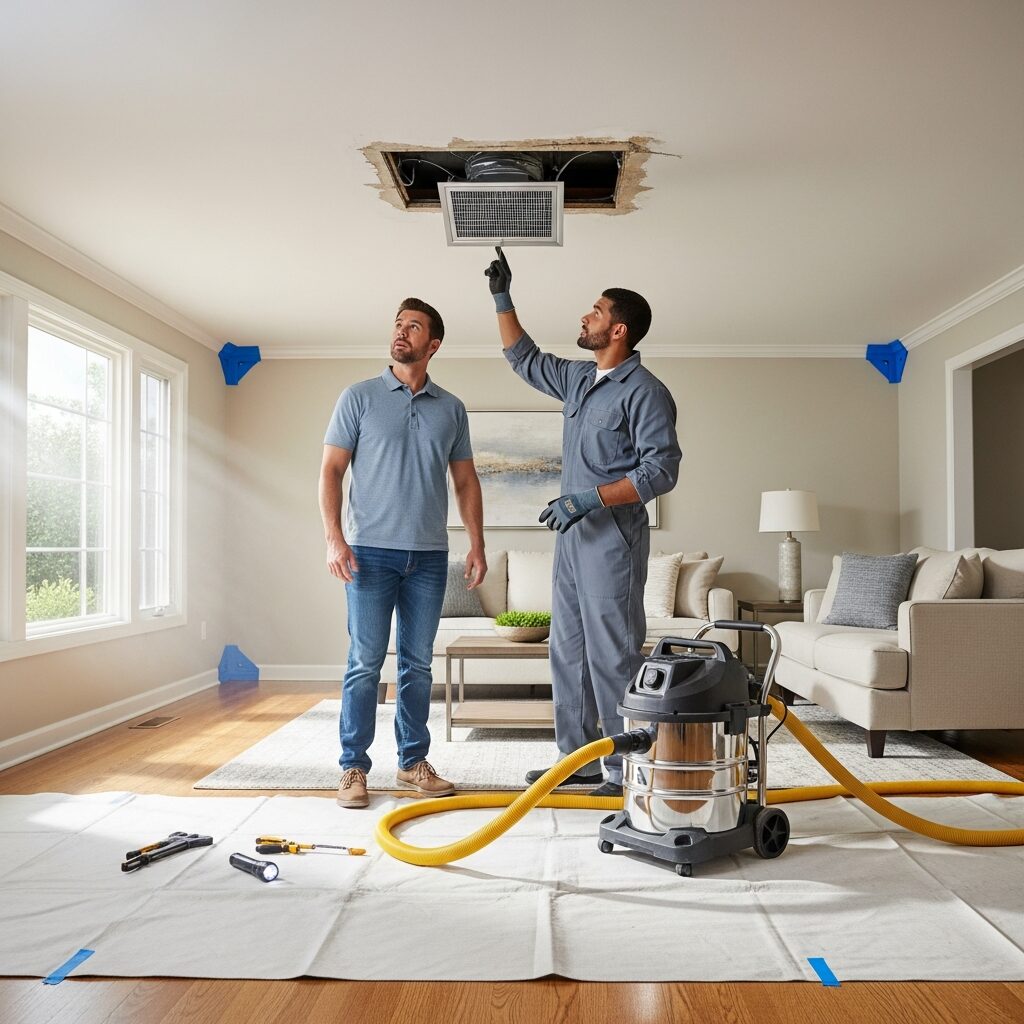
Homeowners also benefit when the technicians take time to protect the house. In real life, that looks like corner guards, drop cloths, careful handling of vent covers, and a methodical approach that avoids blasting dust into rooms. The whole point is to remove contaminants, not redistribute them. A reputable crew uses containment and negative pressure so loosened debris is captured and removed rather than floating into your living space.
Some Sherman Oaks homes have ducts that have been patched repeatedly over the years. You may have older metal ducts with joints that need sealing, flexible duct runs that can be delicate, or fiberglass-lined sections that require a gentler approach. The best providers will explain what type of ducting you have and how it changes their cleaning method. That explanation is part of what you’re paying for: a plan that matches your home rather than a one-size-fits-all routine.
Why homes in Sherman Oaks can have unique duct challenges
The Valley has its own personality, and your ductwork feels it. Warm weather encourages long cooling cycles. Outdoor particulates, especially during dry months, can make their way indoors through doors, windows, and small gaps. If your home sits near a busy corridor, you may notice quicker dust buildup on surfaces. That same dust can settle inside duct runs over time, particularly if filters are not changed regularly or if return leaks pull air from attics and wall cavities.
Another common local factor is remodeling. Sherman Oaks has plenty of older homes that get updated room by room. Even a careful renovation produces fine dust, and if the HVAC system runs during construction, that dust can enter returns and settle in ducts. Sometimes it’s obvious because you’ll see drywall powder around vents; other times it’s subtle, showing up as a musty odor when the system kicks on or as an increase in allergy irritation.
Seasonal shifts matter too. When the heat kicks on after months of mild weather, a little “first-run” smell can be normal. But persistent odors, visible debris, or uneven airflow are signs that it’s worth a closer look. The point isn’t to create worry; it’s to understand how your environment and your home’s history can shape what’s happening inside the hidden parts of the HVAC system.
What drives the scope of work (without focusing on numbers)
When people ask about “cost,” they are really asking how much work their home requires. Several practical variables affect that scope. First is the size and layout of the home. More rooms often means more registers and longer duct runs. Second is accessibility. A single-story home with a roomy attic can be easier to service than a property where ducts weave through tight soffits or where the air handler is located in a cramped closet.
Third is the level of buildup. A home with consistent filter changes, sealed returns, and no recent construction tends to have lighter accumulation. A home with pets, heavy foot traffic, or older filters may have more lint and dander in the returns. Fourth is the system design. Some homes have multiple HVAC zones or more than one air handler, which adds complexity because each system must be addressed separately for a consistent result.
Finally, there is the condition of the ductwork itself. If ducts are fragile, torn, or poorly connected, a trustworthy company will slow down and adapt. That careful approach can take more time, but it’s the difference between a clean system and a damaged one. If a provider promises a lightning-fast “whole house” job without asking questions about your layout, it’s a sign they may not be planning for the realities of your home.
How to tell whether a company’s offer is meaningful
In the Sherman Oaks area, advertisements can be all over the map. One of the simplest ways to evaluate an offer is to listen for the language of process. A solid company explains how they create negative pressure, how they agitate debris from branch lines, and how they prevent mess. They talk about inspecting registers and returns, not just “vacuuming vents.” They ask about your concerns—odors, allergy symptoms, visible dust, uneven airflow—and they tell you what duct cleaning can and cannot fix.
A meaningful offer also includes communication. You should know how long the job is expected to take, what rooms will be accessed, and what preparation is helpful. You should also feel comfortable asking whether they will show you what they find, such as photographs of inside the ducts or the collection they remove. Transparency matters because ductwork is hidden, and homeowners deserve some proof that real cleaning occurred.
When you’re comparing providers, it’s reasonable to ask whether they clean the main trunk line and the return side, whether they address the blower compartment if appropriate, and how they protect the home while moving equipment in and out. These questions don’t require you to be an HVAC expert; they simply help you distinguish between surface-level service and full-system attention.
The middle-of-the-road reality: what most homeowners experience
Most Sherman Oaks homeowners who schedule a reputable duct cleaning do so for practical reasons. They’ve noticed stubborn dust that returns quickly after cleaning. They’ve had a remodeling project. They’ve moved into a home and want a fresh baseline. Or they’re dealing with seasonal allergies and want to reduce indoor irritants. In many cases, people don’t expect a dramatic transformation, but they do notice that the home feels fresher, that odors are reduced, and that surfaces stay cleaner a bit longer.
The other common result is peace of mind. Ductwork is like the plumbing of your air. You don’t look at it every day, so it’s easy to ignore until a problem shows up. Having it professionally cleaned and inspected gives you a clearer sense of the system’s condition. That’s especially helpful if your HVAC has been struggling, or if you’re trying to troubleshoot a persistent dusty smell when the fan runs.
If you’re in the stage of planning, this is also where researching a reputable provider becomes valuable. A focused resource about air duct cleaning can help you understand what a complete service looks like and what questions to ask before anyone steps into your home.
When duct cleaning is especially worth considering
Duct cleaning is not a magic fix for every indoor comfort issue, and a good local pro will tell you that. Still, there are certain situations where it tends to be more beneficial. If you’ve had water intrusion near vents or an HVAC closet, you want to ensure there isn’t moisture-related contamination in hidden areas. If you’ve had rodents or insects in attic spaces, you want to confirm they haven’t affected duct runs or insulation near returns.
Another strong reason is after construction or major dust events. Even when contractors tape off vents, dust finds a way. If the HVAC system was running during sanding, cutting, or drywall work, fine particulate can travel quickly. Cleaning can remove that residual debris rather than letting it circulate for months.
Also consider it if you’re experiencing airflow issues that aren’t explained by closed dampers or dirty filters. While duct cleaning won’t fix a design problem, it can remove obstructions and help a technician spot disconnected runs, crushed flex duct, or heavy buildup at turns and transitions.
How to prepare your home for a smooth appointment
Preparation doesn’t have to be complicated, but it helps the crew do careful work efficiently. Clearing space around registers and returns is a big one; moving a chair or rug can save time and reduce the risk of scuffs. If you have an attic access point, make sure it’s reachable. If the air handler is in a closet, removing stored items can help technicians work safely and keep your belongings clean.
If you have pets, planning a comfortable area for them during the service can reduce stress. The equipment can be loud, and doors may open frequently as hoses and tools are brought in and out. A little planning keeps the experience calm for everyone.
It’s also helpful to write down what you’ve noticed: specific rooms that feel dusty, vents that smell musty, or times when symptoms flare. That information helps the technicians focus their inspection and confirm whether the duct system is likely contributing to the issue.
What to expect after the cleaning
After a thorough cleaning, many homeowners notice the home feels less stale when the system runs. You may also find that the fine dust on furniture is slower to reappear, especially if you pair cleaning with consistent filter changes. Keep expectations realistic: dust comes from many sources, including outdoor air, fabrics, and everyday life. The goal is to reduce avoidable buildup inside the HVAC pathway.
If a company identifies gaps, loose connections, or return leaks, you may choose to address them to keep the ducts cleaner longer. Sealing the return side can be particularly impactful because it prevents the system from pulling dusty air from attics or wall cavities. Again, a trustworthy provider explains what they see and why it matters, without pushing unnecessary add-ons.
One more note: if you change filters right after the cleaning and then again sooner than usual, you may catch residual loosened particles. That can be normal, especially if the system had heavy accumulation. After that short settling period, you can return to a regular filter schedule that matches your household and HVAC usage.
FAQ
Q: How do I know if my Sherman Oaks home actually needs duct cleaning?
A: The clearest signs are visible dust or debris blowing from registers, persistent odors when the HVAC runs, or a history of construction dust, pests, or moisture issues. If you’re unsure, ask for an inspection-focused visit where the company explains what they see and what a cleaning would address.
Q: Will duct cleaning help with allergies?
A: It can help reduce one source of airborne irritants, especially if your ducts and returns have significant dust and dander buildup. Many allergy triggers also come from bedding, carpets, and outdoor air, so duct cleaning is best viewed as one helpful step in a broader indoor air quality plan.
Q: Is it normal for returns to look dirtier than supply vents?
A: Yes. Returns pull air from rooms back into the system, so they often collect more dust. A thorough service should pay careful attention to return pathways and the areas behind return grilles.
Q: Can duct cleaning fix weak airflow in one room?
A: Sometimes it helps if debris or heavy buildup is restricting a run, but weak airflow can also be caused by duct design, disconnected ducts, closed dampers, or an HVAC balancing issue. A good technician will explain what’s likely in your case.
Q: How can I keep my ducts cleaner after service?
A: Use the right filter for your system, change it consistently, keep return grilles unobstructed, and address leaks on the return side if they exist. Reducing indoor dust sources and running kitchen and bath fans can also help.
Ready for a cleaner, fresher HVAC system in Sherman Oaks?
If you want clarity about what a thorough duct cleaning involves and you’d like to schedule service with a team that respects your home and explains the process, start with a trusted local resource for air duct cleaning. You’ll get a better sense of what’s included, what to expect on appointment day, and how to maintain results so your indoor air feels cleaner season after season.