
Breathing Easier in Sherman Oaks Starts Inside Your Ducts
Living in Sherman Oaks means enjoying that familiar Valley rhythm: warm afternoons, cool evenings when the marine layer drifts over the Sepulveda Pass, and that steady hum of HVAC systems working hard to keep homes comfortable. What many neighbors don’t realize is that a big part of indoor comfort isn’t only about thermostat settings or new filters. It’s about what’s happening in the hidden pathways behind your walls and ceilings. When you’re looking for air duct cleaning near you in Sherman Oaks, you’re usually responding to a feeling you can’t quite ignore anymore—musty air, dust that seems to reappear right after you wipe it down, or allergies that flare up when the AC kicks on.
Over the years, I’ve talked with homeowners near Ventura Boulevard, condo residents closer to the Galleria area, and families tucked into the hills who all share the same surprise: the duct system is like a quiet storage space for whatever makes its way inside the home. Dust, lint, pet dander, bits of insulation, pollen from those breezy Santa Ana days—over time, it can accumulate and then get redistributed through your living spaces whenever the system runs. The goal isn’t to chase perfection; it’s to restore a cleaner baseline so your HVAC can circulate air without dragging yesterday’s debris into today’s fresh start.
What makes duct care especially relevant in Sherman Oaks is how much we rely on heating and cooling across the year. Even when it’s not peak summer, many homes run the system regularly for comfort, filtration, and airflow. That consistent operation is a good thing—when the system is clean. When it isn’t, the ducts can become a source of irritation that’s hard to pinpoint, because the evidence is often subtle until it’s not.
What “Trusted Near You” Really Means in a Local Context
When people say they want a trusted company nearby, they usually mean more than close proximity. They want a crew that shows up when they say they will, respects the home, and explains what they’re doing without making you feel like you need an engineering degree to follow along. In Sherman Oaks, where homes range from mid-century ranch styles to newer builds and multi-unit properties, a one-size-fits-all approach doesn’t work very well. A trustworthy provider takes a few minutes to understand how your home is laid out, how your HVAC system is configured, and what concerns led you to book the cleaning.
Trust also comes from transparency. A reputable duct cleaning should start with a clear plan: which supply and return runs are being addressed, how the system will be protected from debris drifting into the home during the work, and how they’ll verify that meaningful removal occurred. You should feel comfortable asking what they found and what it implies, especially if the technician points to signs of moisture, excessive lint, or construction debris from an old renovation. The best local pros explain the “why” without turning it into a scare tactic.
And then there’s the simple, practical side of trust: clean drop cloths, careful handling around vents, and attention to details like sealing access points properly. When you live in a community as active as Sherman Oaks—with school drop-offs, tight schedules, and busy households—service should fit into real life, not disrupt it.
How Dust and Debris Build Up in Sherman Oaks Homes
Even in well-kept homes, ducts collect material over time. Every time your system cycles, air moves through returns, passes the filter, and is pushed through supply lines. Filters catch a lot, but they don’t catch everything, and not all systems are equally sealed. Small gaps at duct joints, older vent boots, and attic runs can allow fine dust to settle in places you never see.
Sherman Oaks has a few local factors that can accelerate buildup. We get seasonal winds that push outdoor particulates inside whenever doors and windows open, and we also have a lot of daily traffic near major arteries like the 101 and the 405. That doesn’t mean your home is “dirty,” but it does mean your indoor environment is constantly negotiating with the outdoors. Add pets, kids, frequent laundry, and cooking, and you’ve got plenty of airborne material that can migrate into the duct system.
Another common scenario here is home improvement work. Even small projects—replacing flooring, scraping popcorn ceilings, cutting drywall—create fine dust that travels further than you’d expect. If the HVAC ran during a renovation, those particles may have been pulled into returns and distributed through the system. Later, it can show up as persistent dusting needs or that faint, dry, chalky smell when the air first kicks on.
Signs Your Ducts May Need Attention
Some signs are obvious, like visible dust around registers that returns quickly after cleaning, or a persistent odor that seems tied to HVAC operation. Other signs are more behavioral: a family member notices congestion only at home, or you find yourself changing filters more often because they look loaded unusually fast.
In my experience, the most telling clue is inconsistency in comfort. If certain rooms feel stuffier despite the system running, that can be airflow-related. Duct cleaning isn’t the cure for every airflow issue—sometimes dampers are mis-set or ducts are undersized—but a heavy layer of debris can contribute to restrictions, especially near elbows and branch lines where material tends to settle.
There’s also the seasonal “first run” effect. When you switch from heating to cooling or vice versa, you might notice a dusty smell during the first cycle. A brief smell can be normal, but if it lingers, it’s worth investigating. Ducts, blower compartments, and returns are all part of the same air pathway, and a reputable technician will talk you through what they observe.
What a Professional Cleaning Typically Involves (Without the Mystery)
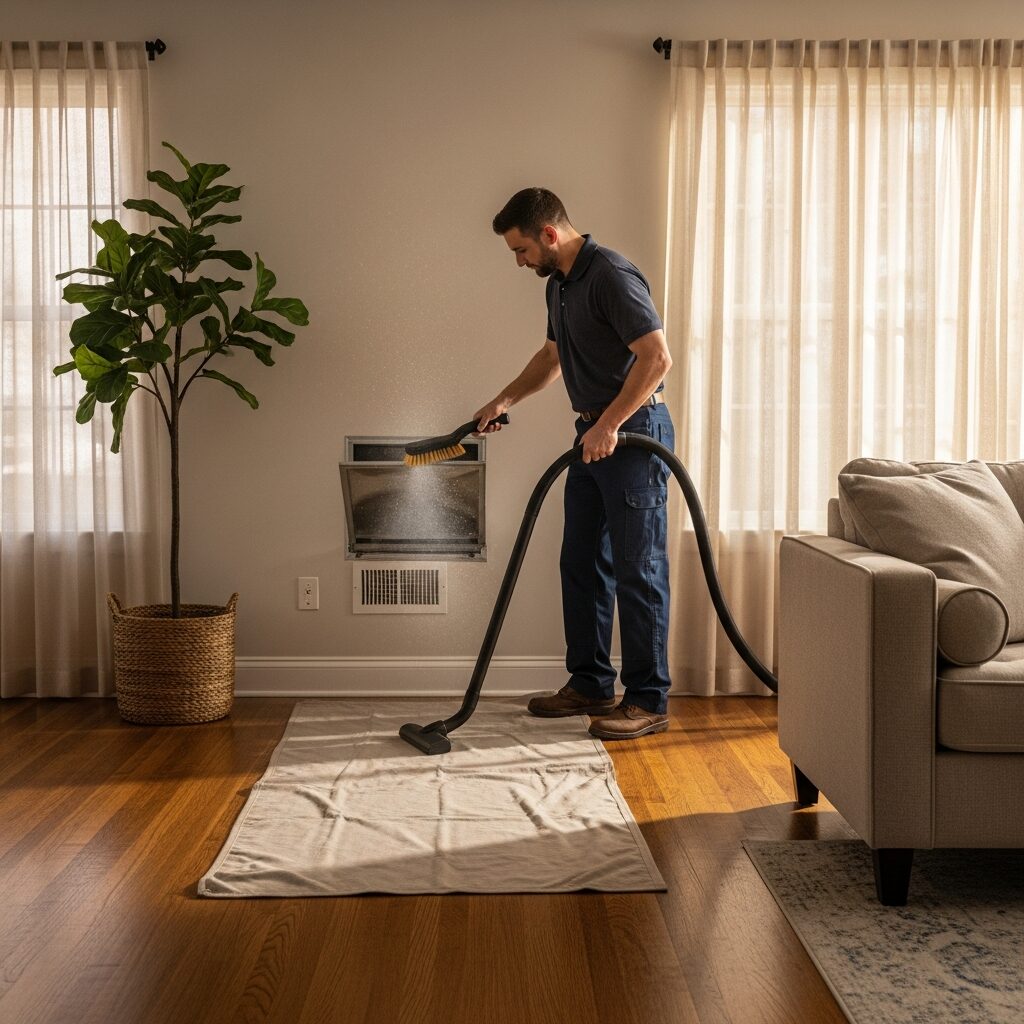
Homeowners often ask what duct cleaning looks like in real terms. The short version is controlled agitation and strong vacuum collection, done in a way that keeps debris moving out of the system rather than into your rooms. A good crew will protect floors and nearby furnishings, and they’ll use equipment designed to capture fine particulate without blowing it around.
In many cases, access points are created or used to reach trunk lines, and individual runs are addressed so debris is loosened and extracted effectively. Registers are typically handled carefully to avoid damaging paint or finishes. If you’ve ever worried that duct cleaning will make a mess, the right provider should ease that concern with proper containment practices and a calm, methodical workflow.
It’s also common for reputable technicians to mention what duct cleaning is not. It’s not a magical reset that guarantees zero dust forever, because dust is part of life. It’s not a substitute for proper filtration or routine HVAC maintenance. Instead, think of it as deep cleaning the pathways that your conditioned air travels through—something that can improve the baseline so regular upkeep works better.
Mid-Home Check-In: Pairing Duct Cleaning With Better Daily Habits
Here’s the part that often gets overlooked: the cleanest ducts in the world won’t stay that way if the home environment keeps feeding them excessive debris. Midway through a typical conversation with a Sherman Oaks homeowner, we end up talking about practical habits that keep indoor air feeling fresher. Simple things like replacing filters on a consistent schedule, keeping return vents unobstructed, and using kitchen and bathroom exhaust fans properly can reduce what ends up circulating through the system.
If you’re scheduling air duct cleaning, it’s also a good time to take a look at the return grille area. Returns act like the vacuum intake for your home’s air. If the space around the return is dusty, that dust is more likely to be pulled in. Keeping that zone clean and avoiding storage piles in front of returns can make a noticeable difference in day-to-day freshness.
And in Sherman Oaks, where many homes have pets that spend time indoors to escape the heat, grooming routines matter. Pet hair and dander don’t just settle on floors; they become airborne when you walk, when the system turns on, and when doors open. A clean duct system plus consistent pet care and vacuuming creates a balanced approach that feels sustainable instead of like a constant battle.
Special Considerations for Condos, Apartments, and Multi-Unit Buildings
Sherman Oaks has a healthy mix of single-family homes and multi-unit properties. If you live in a condo or apartment, the duct situation can vary widely. Some units have individual HVAC systems and duct runs entirely within the unit, while others share certain building pathways. When you’re seeking duct cleaning in this context, it’s important that the provider understands what is and isn’t accessible, and how to work without impacting neighbors.
In multi-unit environments, communication and professionalism are even more critical. Noise levels, work hours, parking limitations, and building policies all matter. A trusted local crew knows how to coordinate with property management and handle the job with minimal disruption. The result should be a cleaner air pathway in your unit, without leaving you to deal with dust fallout or lingering concerns about what was actually done.
How to Tell If a Provider Is Worth Inviting Into Your Home
Trust is partly about how the company presents itself and partly about how they treat your questions. When you call, pay attention to whether they ask about your system, your home type, and your concerns. A real professional wants to understand the situation rather than forcing every home into the same script.
On the day of service, you should expect a brief walk-through or at least a conversation about access points, vents, and any areas you’re particularly concerned about. If you’ve noticed dust patterns, odors, or allergy triggers, mention them. A thoughtful technician will connect your observations with what they’re seeing in the system, and they’ll tell you what’s normal and what’s not.
Finally, a trustworthy team respects your space. That means careful movement around furniture, clean work habits, and a focus on leaving the home as tidy as they found it. The work happens behind the scenes, but the professionalism should be visible.
After the Cleaning: What to Expect in the Days That Follow
Many homeowners notice that the home feels “lighter” afterward—less stale air, fewer odors when the HVAC cycles, and a reduction in that fine dust that seems to settle on surfaces overnight. Results vary depending on how much buildup was present and what other factors are at play, such as filtration quality and how often windows are open.
It’s also normal to become more aware of airflow. Once a system is cleaned, you may notice certain rooms receive air more evenly, or that the system doesn’t need to run as long to maintain comfort. Again, duct cleaning is not a cure-all, but it can remove one major variable that’s been quietly affecting your indoor environment.
To maintain benefits, keep up with filter changes and pay attention to return vents. If your home has had recent construction, consider whether HVAC was running during the dusty phases. A little planning—like covering returns during sanding or cutting—can prevent a lot of cleanup later.
FAQ: Air Duct Cleaning in Sherman Oaks
Q: Will duct cleaning help with allergies in my home?
It can help reduce one source of airborne irritants, especially if dust, pollen, or pet dander has accumulated in the ductwork. Many people notice fewer triggers when the system cycles, but results depend on filtration, housekeeping habits, and other indoor air factors.
Q: Is it normal to see dust around vents?
A small amount can be normal over time, but heavy buildup or dust that returns quickly after cleaning the room can indicate debris in the system, leaks around vent boots, or strong airflow that’s pulling particles from nearby surfaces.
Q: How do I know the cleaning was thorough?
A reputable provider can explain the process, show you what was removed, and discuss what they observed in the main lines and near registers. Clear communication and a consistent method are good indicators of quality.
Q: Should I replace my HVAC filter right after duct cleaning?
Yes, it’s typically a good idea to start fresh with a clean filter afterward, since you want to capture any remaining fine particles and keep the system running cleanly.
Q: Can duct cleaning address odors when the AC turns on?
Sometimes. Odors can come from dust, debris, or microbial growth in areas where moisture has been present. A proper inspection helps identify whether the smell is coming from ducts, the blower compartment, or elsewhere in the system.
Ready to Refresh the Air in Your Sherman Oaks Home?
If you’ve been noticing stubborn dust, lingering odors, or that nagging sense that your indoor air just isn’t as crisp as it should be, it may be time to take a closer look at your duct system. A careful, professional cleaning can restore a cleaner baseline and make your HVAC feel like it’s working with you instead of against you. When you’re ready, explore air duct cleaning and schedule a visit that fits your home, your system, and your Sherman Oaks routine.
کمی