
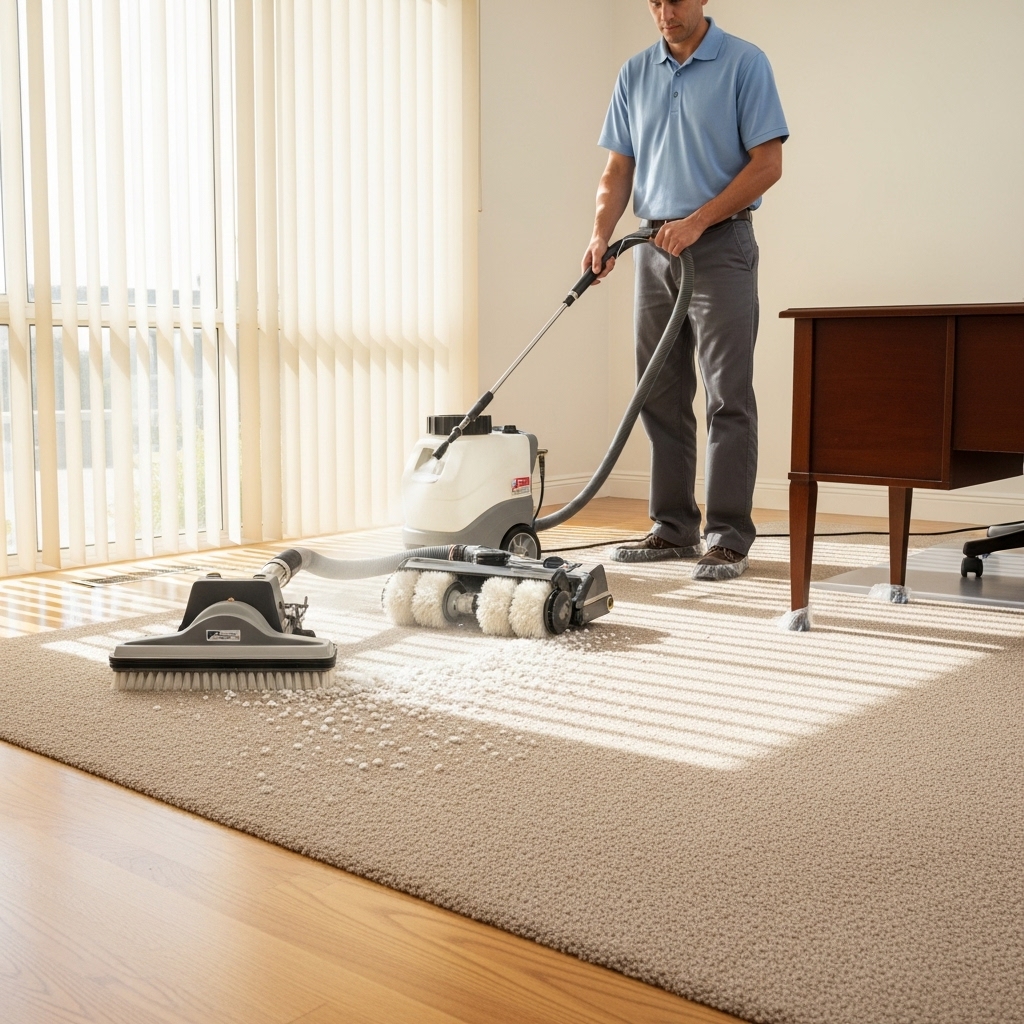
Sherman Oaks moves quickly. Mornings begin with school drop-offs and coffee on Ventura Boulevard, afternoons bring a swirl of errands, and evenings fill with guests or a quiet exhale at home. When you need your carpets refreshed without waiting for long dry times, dry carpet cleaning—more precisely, low-moisture methods that leave fibers nearly dry by the end of the appointment—offers a smart solution. These techniques respect the pace of Valley life and the realities of condos, home offices, and high-traffic living rooms. They are particularly useful for routine maintenance, tight schedules, and situations where downtime simply is not an option. For many homeowners, the path begins with choosing local carpet cleaning services that specialize in fast, effective, low-moisture care tailored to the way we live.
Dry or low-moisture cleaning is not a single method but a family of techniques designed to minimize water use while maximizing soil removal. Two of the most common are encapsulation cleaning and absorbent compound cleaning. Encapsulation uses polymer-based solutions that surround soil particles and keep them from reattaching to fibers; once dry, the polymers are vacuumed away, along with the captured soil. Absorbent compounds, sometimes called sponges, are brushed into the carpet to absorb soils and then extracted by vacuum. Both methods can deliver impressive results with very short downtime, especially for lightly to moderately soiled carpets and maintenance cleans between periodic deep rinses.
Why low-moisture works for busy Sherman Oaks homes
Our neighborhoods feature a mix of single-family homes, apartments, and offices that often need service during the day with immediate return to use. Low-moisture methods shine in these scenarios because rooms can be walked on shortly after completion, and furniture can often be put back right away. For upper-floor condos, the lack of long hose runs and minimal water use reduce disruption in common areas. For home offices, meetings can resume the same afternoon without worrying about damp carpet or extended ventilation.
Speed, however, is only valuable when results are solid. Modern encapsulation chemistry is remarkably effective at breaking the bond between fiber and soil, particularly in traffic lanes where fine dust and oily residues combine. When combined with mechanical agitation—think counter-rotating brushes that lift and separate the pile—encapsulation can revive a carpet’s appearance efficiently. The key is technique: measured application, adequate dwell time, thorough agitation, and complete vacuum recovery once the product dries.
The dry cleaning process in practice
Every good appointment starts with dry soil removal. A strong vacuum with excellent filtration picks up the loose grit that otherwise interferes with cleaning. Next comes targeted spotting for spills and marks that need special attention. Then, the chosen low-moisture method is applied. With encapsulation, a light, even spray is laid down and worked into the fibers; with absorbent compound, the material is distributed and brushed through the pile. After the required dwell and agitation, the carpet is groomed and then vacuumed again once everything has dried. The result is a crisp, even finish with no sticky residue.
Because there is little water involved, the risk of wicking—old spills returning as carpet dries—is reduced. This is particularly helpful in older homes where past cleaning or long-forgotten spills sometimes resurface. It also keeps natural fibers like wool happier, as they prefer controlled moisture and quick return to a dry state. While heavy contamination or deep pet urine issues may call for a separate, more intensive approach, most day-to-day maintenance benefits greatly from low-moisture techniques.
Choosing the right moments for dry methods
Not every situation calls for the same approach. Low-moisture shines in living rooms with steady foot traffic, bedrooms that need quick turnaround, and hallways that must be usable almost immediately. It also suits commercial-style carpet in home offices or studios that have tighter pile and respond well to encapsulation. When carpets are heavily soiled, sticky with kitchen residues, or impacted by significant pet accidents, a careful hot water extraction may be recommended to reset the fibers before returning to a low-moisture maintenance plan. A trusted local provider will help you choose, balancing speed with what your carpet truly needs.
In Sherman Oaks, the climate often cooperates with low-moisture goals. Warm, dry afternoons speed evaporation, and even in cooler months, indoor airflow plus a brief window crack can finish the job quickly. Because products are applied sparingly and designed to dry into a crystal or to separate soils within an absorbent medium, the timeline from start to finish is naturally short.
Careful chemistry and a residue-free finish
One of the strengths of modern low-moisture cleaning is the clean feel it leaves behind. Encapsulation solutions are engineered to release from fibers as they dry, becoming brittle and ready for vacuum removal. That means there is no sticky film to attract new soil. A trained technician measures application rates to match the carpet’s density and the soil load so that there is enough product to work effectively without over-wetting. As always, spotting is done with care so that color and texture are preserved while problem areas are addressed.
After the service, a good grooming pass aligns the fibers. This not only looks sharp but also helps distribute any remaining product evenly for final vacuuming. Homeowners are often surprised at how quickly rooms look guest-ready again, with traffic lanes softened and a gentle lift returned to the pile.
Practical advantages for real-life schedules
For families with packed calendars, the ability to clean in the morning and host in the evening is invaluable. Low-moisture methods make that possible. For real estate showings or open houses, carpets can be freshened hours before potential buyers arrive, avoiding the dampness that might detract from first impressions. For creative professionals working from home, studio spaces can be brightened during a midday break with no downtime. It is an approach that respects your time as much as your floors.
Of course, speed does not mean rushing. Reliable local teams plan the job so that equipment is staged neatly, pathways remain clear, and furniture is handled with care. Communication keeps you in the loop about when areas will be ready and what simple steps—like running the HVAC fan for an hour—can further improve results. Between visits, consistent vacuuming and entry mats maintain the look, and you can schedule periodic deep rinses when appropriate to reset the carpet fully.
Frequently asked questions about dry carpet cleaning
Is dry carpet cleaning really dry?
Low-moisture methods use very little water compared to traditional extraction, so carpets are left nearly dry by the end of the appointment. In most cases, you can walk on them shortly after service. Some products need a short drying window before final vacuuming, but downtime is minimal.
Will low-moisture cleaning remove all stains?
It is excellent for general soiling and many spots, especially in traffic lanes. However, certain stains—like deeply set dyes, heavy grease, or old pet urine—may require targeted treatments or a controlled hot water extraction to fully address. A professional will recommend the right approach for each issue.
Is it safe for wool carpets?
Yes, when performed correctly. Wool prefers minimal moisture and gentle chemistry, both of which align with low-moisture methods. Technicians test in inconspicuous areas and use conservative application to protect color and texture.
How often should I use dry methods?
For busy homes, low-moisture cleaning works well as a quarterly or semiannual maintenance service, with deep rinsing scheduled as needed. The rhythm depends on household traffic, pets, and local dust conditions. A balanced plan keeps carpets looking fresh year-round.
Will there be a chemical smell?
Professional low-moisture products are designed to dry neutral, leaving little to no scent. Any light odor during application dissipates as the carpet dries. The finish should feel clean and residue-free, not perfumed.
When your schedule calls for speed and your standards call for quality, choose a method that honors both. Book fast, effective carpet cleaning that uses low-moisture techniques to restore comfort and appearance without slowing your day.