Living with pets in Sherman Oaks brings out the best parts of Valley life. Morning walks under jacaranda trees, lazy afternoons in sunlit living rooms, and evenings when your dog curls up at your feet while the breeze rolls in from the canyons are part of why we share our homes with animals. But the same joys can leave carpets with persistent odors that seem to linger even after diligent vacuuming and spot cleaning. Pet accidents, dander, and the occasional muddy paw print migrate into the fibers and sometimes into the padding and subfloor. When you need a real solution, specialized pet carpet cleaning designed for odor removal makes all the difference. Early in the process, many homeowners find it reassuring to connect with local experts in carpet cleaning who understand how Valley homes are lived in and how to restore freshness without heavy perfumes.
Odor challenges have layers. On the surface, you may see a faint stain, but the smell tells a deeper story. Pet urine, for instance, crystallizes as it dries. Those crystals become hygroscopic, meaning they attract moisture from the air, which reactivates the odor on warm or humid days. In Sherman Oaks, where afternoons can run warm and dry but evenings cool quickly, that reactivation cycle is common. Ordinary cleaning can briefly reduce the smell, only for it to return with the next shift in weather. The real fix requires reaching below the face fibers and neutralizing the source.
Understanding pet odor at the source
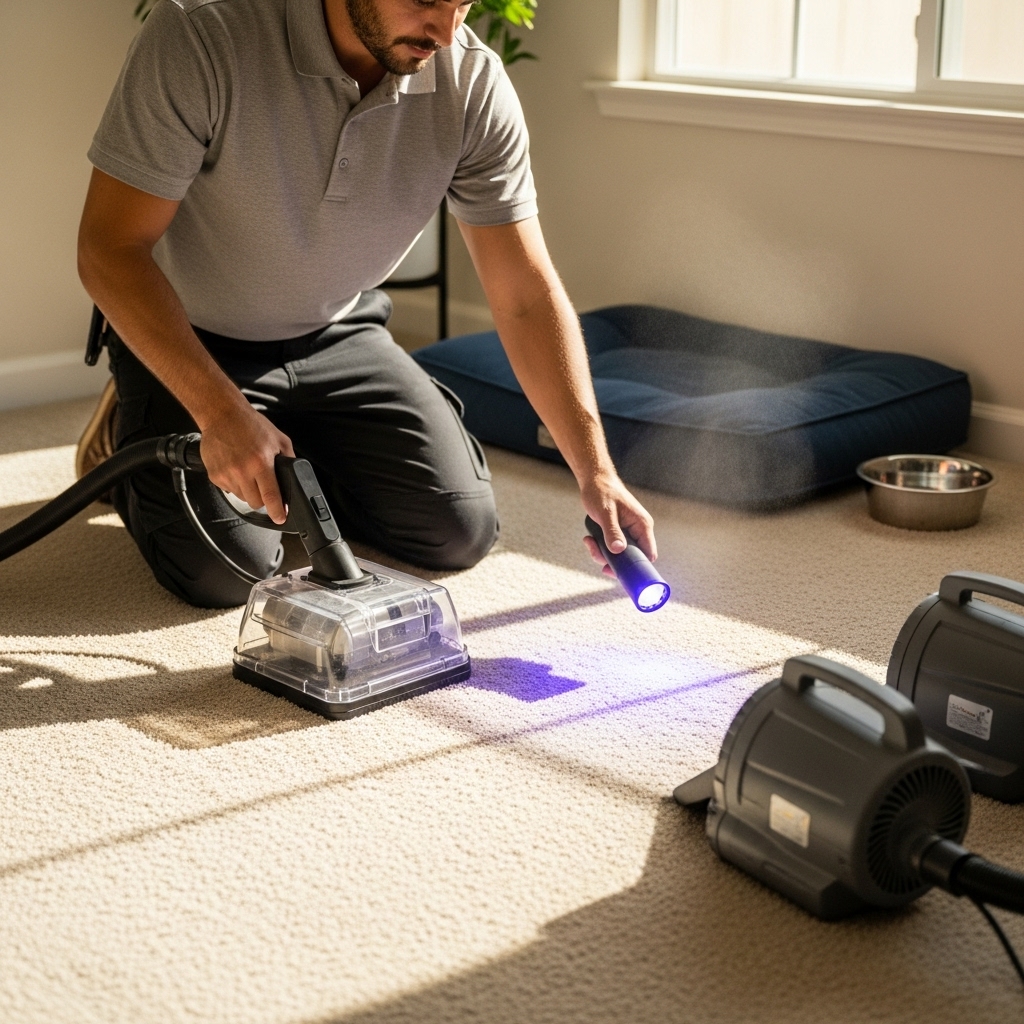
A tailored approach begins with inspection. Good technicians use black light to locate old accidents that have become invisible but still contribute to the problem, and they may use moisture meters or targeted tools to see whether the issue is confined to the carpet or has penetrated the pad. The plan that follows depends on what they find. Light issues may respond to enzyme-based treatments and controlled hot water extraction. Heavier problems, particularly in habitual pet zones, can call for subsurface flushing tools that pull contaminants from the pad without over-wetting the surrounding area.
Chemistry matters. Enzyme and bio-enzymatic treatments work by breaking down the organic molecules in urine and other pet residues. Oxidizers, used judiciously, can help address discoloration and persistent odor components. But effective odor removal is not about masking with fragrance; it is about resolving. A Sherman Oaks specialist knows that a light, neutral finish paired with thorough drying is what gives your home a clean smell that lasts, not a perfumed overlay that fades and leaves the problem behind.
Pet-safe processes and a healthy home
When our pets are part of the family, we care about what goes into our floors. Pet-safe means more than a label; it means process. A reliable provider will pre-vacuum to capture dander and hair that can impede cleaning, apply treatments matched to the specific soil, allow proper dwell time so enzymes can work, and then rinse carefully. Balanced pH and residue-free rinsing ensure that paws and hands alike will not pick up sticky leftovers that attract new soil. Thorough drying with airflow keeps odors from reemerging and prevents wicking, especially important for older spots that have migrated down the backing.
Our Valley climate offers an advantage for drying, but only when managed properly. With windows cracked to promote cross-breeze on a mild day or the HVAC fan moving air when temperatures soar, carpets can dry swiftly. Experienced techs stage air movers to direct flow along the carpet’s surface and into corners. In homes with tight layouts or high humidity, dehumidification can help. The result is a fresh, even dry that gives you your rooms back quickly and safely for your pets.
Common scenarios in Sherman Oaks homes
I often see patterns: a corner near the patio door where a dog waits and sometimes has an accident; a favorite sunny patch where a cat naps and leaves concentrated dander; an area rug atop wood floors that has absorbed a smell that returns after superficial cleaning. Each scenario requires a plan. For the rug on wood, it is important to lift and inspect both surfaces. The rug may need controlled flushing and neutralization while the wood beneath is cleaned and dried to ensure the odor does not migrate back into the rug. For those waiting-by-the-door corners, mapping the full extent of the issue with a black light prevents missing the edges where odor hides.
Stain appearance and odor are related but not identical. A stain can be gone while a smell remains, especially when residues beneath the surface are still present. That is why focusing on the source makes such a difference. When residues are truly removed or neutralized, the odors stop cycling with the weather and you can enjoy those evening breezes without an unwelcome reminder.
The role of professional equipment
Pet odor work benefits from specialized tools. Subsurface extractors, sometimes called “water claws” or flood tools, allow technicians to apply a controlled volume of solution and then draw it, along with dissolved contaminants, straight up from pad and backing layers. Combined with targeted chemistry, this method avoids the trap of flooding a room, which only spreads contamination. On the lighter side, low-moisture encapsulation can be helpful between deeper cleanings to control general soiling and regular pet traffic areas, but it is not a stand-alone solution for true odor removal. The art is in matching the tool to the situation so your carpet is treated thoroughly, not harshly.
For homeowners who worry about color or fiber safety, reputable teams test in inconspicuous areas and keep temperatures and chemistry in the safe range for your specific carpet. Wool responds differently from solution-dyed nylon, and a professional understands those boundaries. Expect protective measures for furniture, careful use of corner guards, and a tidy work area that respects the rhythm of your household.
From problem areas to whole-home freshness
Pet odor rarely stays put. Air currents, HVAC return paths, and the simple movement of people and pets spread molecules throughout a space. A trusted approach balances targeted treatment with whole-room cleaning, and sometimes whole-home service, so that the result is uniform. Once the problem zones are neutralized, a full rinse and extraction brings the rest of the carpet up to the same fresh standard. That continuity is what makes a living room feel brand new when you step back in after the work is done, rather than a patchwork of clean and not-quite-clean spots.
As the process unfolds, communication matters. You should know what is being done, what to expect during drying, and how to keep pets away from treated areas until everything is ready. You should also receive guidance on post-cleaning steps: placing fans, running the system fan, and monitoring stubborn areas that may benefit from a follow-up if the original contamination was severe. Good local teams schedule that check-in and stand by their work so you do not feel left to manage it alone.
Maintenance for pet-friendly homes
After odor removal, keeping that freshness becomes the focus. A vacuum with a strong brushroll or adjustable suction paired with effective filtration captures dander before it settles deeply. Entry mats, especially by patio doors leading to yards, reduce tracked-in soil. For cats, consider placing mats near litter boxes to cut down on granules that migrate into carpet. Blotting accidents immediately, never scrubbing, and using a clean white towel to track progress helps prevent spreading the spot. Beyond these daily habits, scheduling periodic professional carpet cleaning protects your investment and maintains healthy indoor air quality, especially during the high pollen windows our area experiences.
With consistent care, pet-friendly homes can smell as delightful as they look. You do not have to choose between your animals and a fresh interior. The right process replaces that lingering hint of “dog” or “cat” with nothing at all—just a quiet, clean neutrality that lets the character of your space shine through.
What success feels like after odor removal
There is a moment after the final pass and the air movers have done their work when the house simply smells like itself again. It is subtle and deeply satisfying. Fabrics read cleaner, sunlit rooms feel lighter, and walking barefoot becomes a pleasure. Your pets notice, too. They settle back into their routines with no harsh fragrances to bother their sensitive noses. Guests will probably not remark on the cleaning itself—they will just say your home feels welcoming, which is exactly the goal.
Frequently asked questions about pet odor removal
Can you always remove pet urine odor completely?
In most cases, yes. When contamination is limited to the carpet and pad, thorough neutralization and subsurface extraction usually eliminate the odor. If the subfloor or baseboards have absorbed urine, additional steps such as sealing may be needed. A good inspection identifies the scope so the right plan is used.
Is the process safe for my pets and kids?
When performed correctly, yes. Professional solutions are used in controlled amounts, allowed proper dwell time, and then rinsed and extracted. Once dry, the carpet is safe for paws and hands. Avoid letting pets onto treated areas until the job is complete and the fibers are dry.
How long will the cleaning take to dry?
Most areas dry within a few hours with proper airflow. Heavier treatment zones may take a bit longer because more solution is used to flush the pad. Air movers, HVAC fans, and cross-ventilation help speed the process so rooms return to normal the same day.
Will odor come back when it gets hot?
If the source is removed or neutralized, the odor should not return with weather changes. Recurring smells usually mean residues remain beneath the surface. Thorough inspection and subsurface extraction address that, breaking the cycle.
What about stains that changed the carpet color?
Sometimes urine causes dye loss or a chemical reaction that alters color. Cleaning removes the odor and improves appearance, but color loss is permanent. In those cases, options like fiber-specific spot dyeing or a well-placed area rug can help aesthetically after the odor is resolved.
When you are ready to reclaim your home’s natural freshness, partner with a local team that understands pets, fibers, and Valley living. Book focused, effective carpet cleaning that neutralizes odor at the source and lets you enjoy every sunlit corner with confidence.