
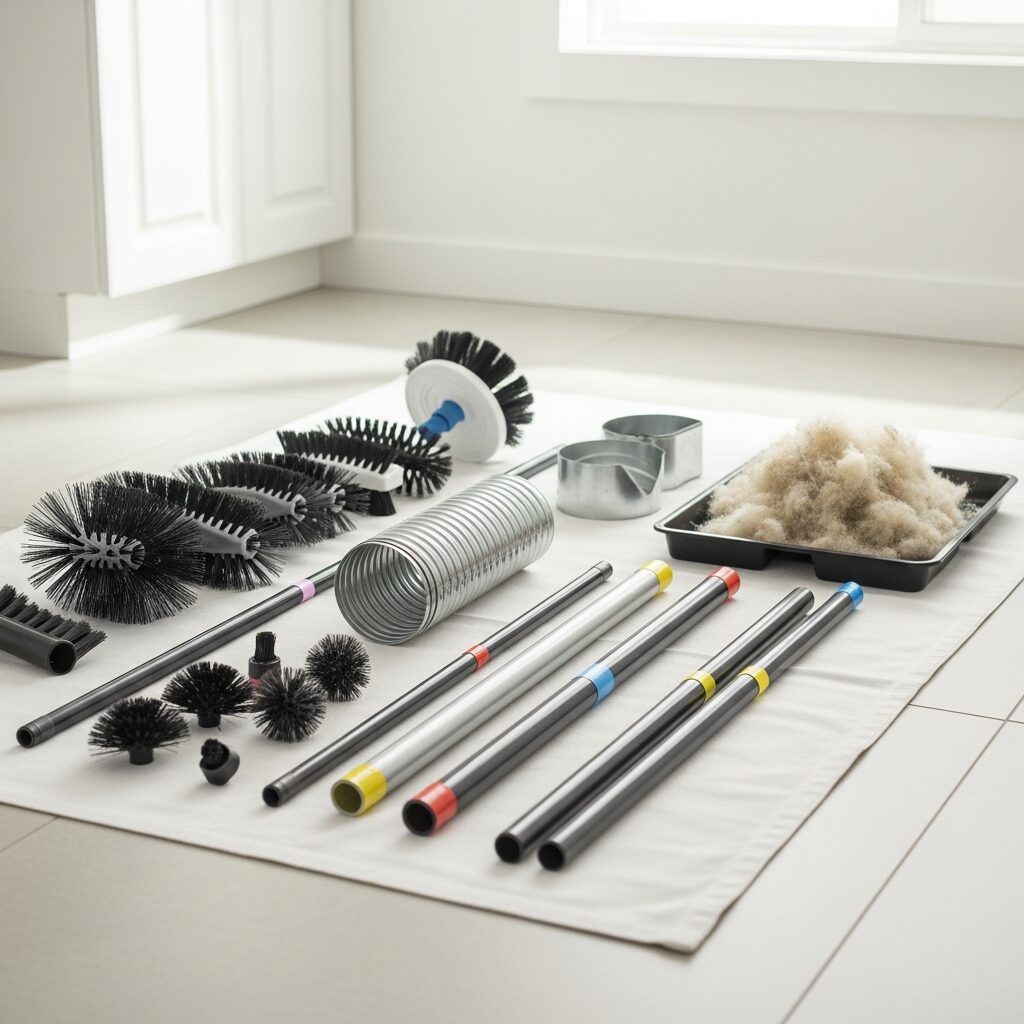
The Local Homeowner’s Guide to Selecting a Dryer Vent Brush
In Sherman Oaks, where homes range from mid-century gems to newly built infill properties, the path your dryer exhaust takes can be short and simple—or long and twisty. If you are considering a brush kit to handle routine maintenance yourself, choosing the right tools makes all the difference. Equally important is understanding the limits of DIY so you do not create a problem inside walls or at a roof cap that is hard to see and harder to fix.
Before you click “buy,” step back and map your vent route. Does your dryer sit against an exterior wall with a straight shot outside, or does it run through an attic with several elbows before reaching a roof cap? The more bends and the longer the run, the more you will need flexibility, length, and control from a brush system. For many Sherman Oaks layouts, it is worth consulting with a local professional who routinely performs dryer vent cleaning and can suggest the best approach—or take on the job when DIY tools will not reach safely.
Brush Materials: Nylon, Poly, and Wire
The bristles matter. Nylon and polypropylene bristles are common and gentle on smooth metal ducts, offering enough stiffness to scour away lint without scratching. Wire brushes can be aggressive and are more likely to snag on protruding fasteners. Because older ducts sometimes have screws poking into the airflow, nylon-bristled heads are typically safer for DIY use.
Brush diameter is important too. A head slightly smaller than the duct’s interior diameter provides firm contact without forcing the brush so hard that it compacts lint at elbows. Too large a head can jam at bends; too small a head may glide past debris without removing much. If you are not certain about your duct size, err on the side of slightly smaller and make multiple passes, checking debris capture frequently.
Rods and Reach: Flexibility vs. Control
Most kits include flexible rods that screw together. Flexibility lets the brush navigate elbows, but too much flex can twist into a knot if over-spun with a drill. Look for rods that balance bend with torsional strength, and check that their connectors are robust. In our hillside neighborhoods where attic runs can be long, you might need more rod sections than a basic kit offers. Always assemble rods carefully and test the connection tightness before advancing into the duct.
Control is more important than speed. Hand-turning may be slow but can provide better feedback, especially when you are learning your vent’s personality. If you use a drill, keep the speed low and avoid reversing direction abruptly, which can unscrew rod joints. Marking the rods with tape at intervals helps you gauge how far you have advanced and reduces the chance you will push into a tight elbow without realizing it.
Access Points: Inside, Outside, or Both
In Sherman Oaks flats with wall hoods, many homeowners can clean from the exterior inward, then from the laundry side outward, meeting in the middle. This two-way approach helps dislodge stubborn lint at elbows and avoids compacting debris toward a termination screen. For roof terminations common in hillside properties, exterior access is trickier. Working from the roof demands proper safety gear and steady footing, which is why many residents prefer a professional for those homes.
Whichever direction you choose, plan for debris capture. A shop vacuum with a HEPA filter near the interior connection helps contain lint, and a drop cloth protects floors and cabinetry. Outdoors, clear space under the hood or cap to catch debris that exits during brushing.
Common DIY Pitfalls and How to Avoid Them
The most frequent DIY issue we see in Sherman Oaks is a rod or brush head stranded inside the duct. This happens when connectors loosen, when a drill is set too fast, or when a brush is forced into a tight elbow. To avoid it, hand-feed rods, keep torque modest, and never power through resistance you do not understand. If something snags, withdraw slowly and reassess your brush size and the likely bend ahead.
Another pitfall is inadvertently compacting lint at the termination. If your wall hood has a screen or your roof cap’s damper is sticky, pushing lint outward can create a dense plug. That is why cleaning from both ends is helpful, and why inspecting and freeing the damper or removing screens before brushing is wise. Screens inside dryer vent terminations are generally discouraged because they trap lint; a proper damper with pest protection is the better solution.
Know When to Call a Pro
There is no shame in recognizing the limits of DIY, especially in homes with long attic runs, steep roofs, or complicated bends. Pros carry a range of brush heads, air whips, cameras, and containment tools that remove more debris while keeping your home clean. They also spot issues like unsafe transition hoses, crushed connectors, or improvised duct sections that should be upgraded. For many Sherman Oaks households, a partnership approach works best—light homeowner maintenance supplemented by periodic professional dryer vent cleaning for the heavy lifting.
Professionals also verify results with airflow readings and, when needed, a visual check inside the duct. That proof offers peace of mind and helps you calibrate how often your specific layout needs attention, which can vary widely from one home to the next in our neighborhood.
Transition Hoses and Behind-the-Dryer Details
Even the best brushing can be undercut by a poor connection behind the dryer. Thin, flexible hoses crush easily when you slide the appliance back, strangling airflow. A rigid or semi-rigid metal transition, properly sized and secured, preserves the pathway you just cleared. Check that the dryer’s outlet and the wall or floor connection align well enough to avoid a sharp bend. If space is tight, an offset connector can help maintain a gentle curve.
While you are back there, confirm that the power cord, gas line (if applicable), and water hoses for a stacked washer-dryer are secure and routed safely. Protecting these utilities prevents accidental damage while moving the unit for cleaning.
Exterior Terminations: Wall Hoods and Roof Caps
At the exit, a clean, free-swinging damper is your best friend. On wall hoods, the flap should open fully when the dryer runs and sit flush when it is off. On roof caps, the internal damper should move freely without sticking. Pest guards should prevent intrusion without creating a lint trap. If a guard or screen impedes airflow, replace it with one designed specifically for dryer vents.
In windy periods common to Sherman Oaks, dust can gather around terminations and bind with lint at the first elbow inside the home. A quick seasonal check outside—without climbing onto unsafe surfaces—can prevent surprises when you start a big laundry day.
FAQ: Choosing and Using a Dryer Vent Brush
Q: What brush size should I buy?
A: Pick a head slightly smaller than your duct’s interior diameter. It will provide good contact without jamming at bends.
Q: Can I use a drill with the brush kit?
A: Yes, but use low speed and steady control. Avoid rapid reversing, which can loosen rod joints and strand the brush inside the duct.
Q: How do I prevent making a mess indoors?
A: Place a HEPA-filtered vacuum near the interior connection and use drop cloths. Work in stages and check debris capture as you go.
Q: What if my vent terminates on the roof?
A: Consider hiring a professional. Roof work requires safety gear and experience, and many roof caps hide stubborn obstructions.
Q: Do I need to replace my transition hose?
A: If it is thin, flexible, or crushed, upgrade to a rigid or semi-rigid metal connector sized to your space. It preserves airflow and reduces risk.
Ready for Confidence in Your Cleaning
If you want expert guidance, or if your home’s layout calls for more than a DIY kit can handle, reach out to local specialists who focus on dryer vent cleaning. With the right plan, you will protect your home, your dryer, and your peace of mind—without unwanted surprises.