
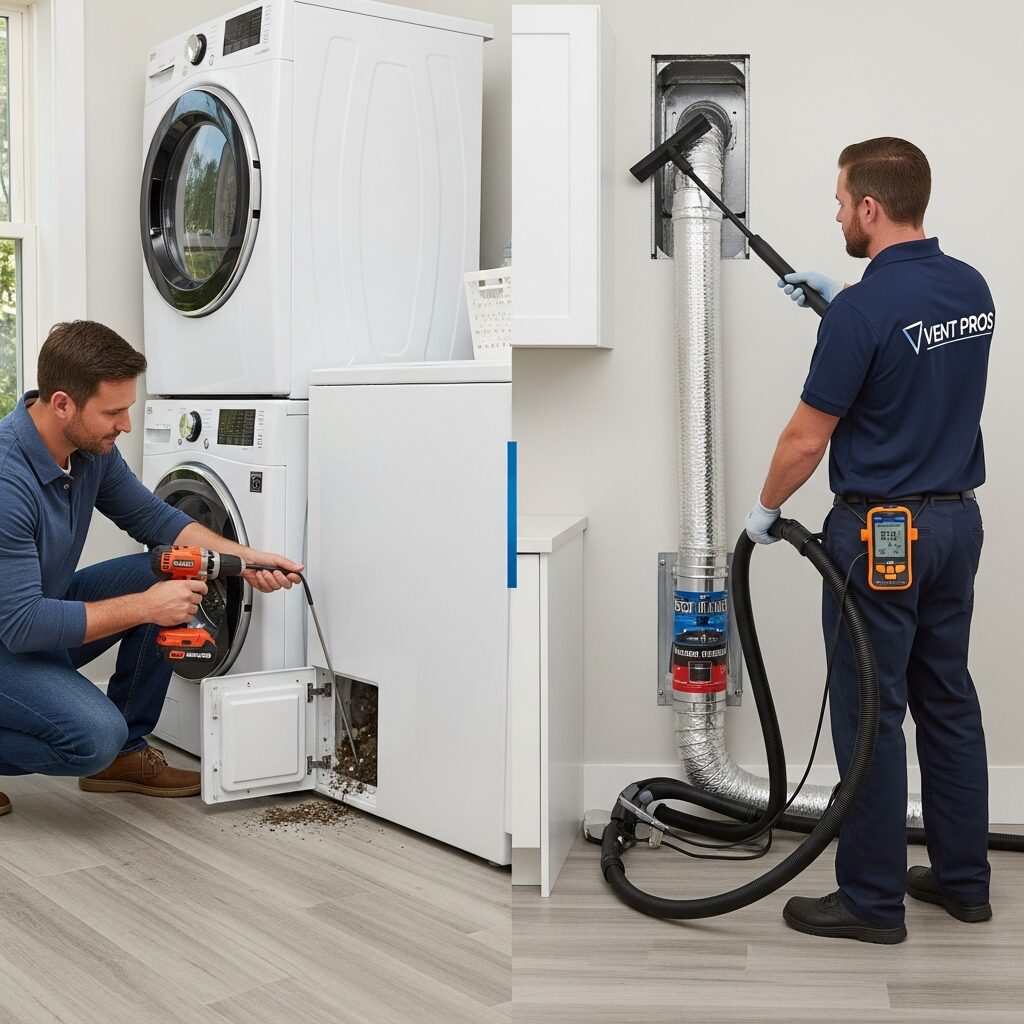
The question comes up often in Sherman Oaks laundry rooms and condo hallways: should you tackle your dryer vent with a store-bought kit or bring in a professional? Our neighborhood’s homes vary widely, from single-story ranches with a short path to the exterior wall to hillside houses where vents climb to roof caps through multiple bends. In multi-unit buildings, stacked laundry closets and shared chases add complexity that is not visible until you start exploring behind the appliance. Deciding between a kit and a pro is less about enthusiasm for do-it-yourself projects and more about understanding your vent’s design, your access, and the stakes for airflow, heat, and safety.
If you are just starting your evaluation, it helps to see what a careful, complete service should entail, and where kits tend to fit or fall short. A clear resource like dryer vent cleaning can give you that foundation so you can match the approach to your particular home, not a generic scenario.
How kits work and where they can help
Most kits include flexible rods that connect to a household drill and a brush head designed to agitate lint along the interior of a vent. On a short, straight run where the dryer sits against an exterior wall and the vent exits a few feet away, these kits can dislodge light to moderate buildup. When the path is simple, the risk of a brush head snagging or a rod detaching is lower, and a careful homeowner can make some improvement. If you choose this route, slow, controlled motion and frequent clearing at the exterior hood help prevent packing lint into dense plugs.
Kits are also a way to learn about your vent’s behavior. By removing the exterior hood temporarily and observing how lint moves, you can gauge whether the pathway is short and direct or if resistance builds quickly, hinting at elbows or longer distances. That said, a kit is a tool, not a full strategy, and knowing its limits is essential.
Where kits struggle in Sherman Oaks homes
Challenges appear when the vent route includes multiple bends, long vertical sections, or fragile materials. In hillside homes where vents climb to a roof cap, several elbows can limit how far a kit’s brush can travel effectively. Garden-style apartments and condos with interior laundry closets often have a longer path to the exterior, with turns that invite lint to compact. In these scenarios, a brush can loosen material without fully removing it, allowing it to gather in an elbow and form a stubborn blockage. Worse, aggressive drilling can separate older joints or tear delicate foil connectors, creating leaks that are difficult to spot from the laundry closet.
Another concern is debris management. Kits agitate lint, but without high-filtration collection, dislodged material can drift into the laundry area. On stacked units, limited space makes it harder to control and contain what is released during brushing. Without a plan to verify airflow before and after, it is difficult to know whether you have improved performance or just moved lint from one spot to another.
What a professional brings to the table
A seasoned local technician arrives with more than a brush. They begin by confirming the vent path, noting the transition connector behind the dryer, and measuring baseline airflow at the exterior. They select brush heads and flexible rods appropriate to your vent’s material and bends, and they often work from both ends—interior and exterior or roof—to ensure nothing remains packed in elbows. High-filtration vacuums capture debris as it is dislodged, keeping your space clean. If the transition connector is too long or kinked, they can recommend a safer, shorter replacement to preserve the gains made by the cleaning.
Verification is the defining difference. By measuring airflow both before and after, inspecting the exterior termination for free damper movement, and documenting what they found, a professional converts good intentions into confirmed results. In multi-unit buildings, they bring the coordination skills needed for elevator access and shared spaces, and they can provide simple notes for HOA records. On hillside properties, they are prepared for roof access and the safety considerations that go with it.
Risk, reward, and the hidden pathway
The risk in dryer vent maintenance arises from heat and hidden accumulation. Lint is a dry, fibrous material, and when airflow is restricted, it traps heat inside a tight pathway. Kits can help on simple vents, but they can also leave unseen plugs behind elbows, precisely where heat could build. A professional’s methodical approach reduces that risk by fully clearing the run and confirming the exterior damper moves as designed. Over time, calmer temperatures and steady airflow can reduce wear on your dryer and restore the predictability of one-and-done cycles.
For homeowners who love a DIY challenge, it can be tempting to view professional service as a last resort. In practice, the smartest path is to match the tool to the task. Short, straight vent to an exterior wall with minimal lint? A kit might serve as a stopgap between professional visits. Longer run with bends, stacked units, or a roof termination? Professional attention is the wise, efficient choice that protects your appliance and your home.
Local realities that shape your decision
Sherman Oaks’ combination of canyon breezes, mature trees, and dry spells means vents accumulate more than soft lint. Fine dust and pet hair bind into a denser material that clings to ridges and elbows. In spring, birds sometimes attempt to nest in quiet caps. In multi-unit buildings, several vents may terminate near each other on the roof, making identification and thorough cleaning a task best left to someone who handles it weekly. Professionals familiar with these patterns are not surprised by them; they anticipate and plan accordingly.
Another local factor is layout. Remodels that move laundry areas deeper into the home create longer vent paths. Hillside lots often mean roof access is part of the plan. Stacked laundry closets demand careful handling when moving appliances and inspecting connectors. Each of these realities adds complexity that narrows the scenarios where a kit makes sense.
How to think about timing and maintenance
Whether you choose a kit for a simple path or schedule a professional for a complex one, the goal is consistent: restore and maintain strong airflow. Many households in Sherman Oaks appreciate establishing a baseline with professional service, then deciding whether occasional kit use makes sense in between. This sequence ensures that elbows are truly clear and that your starting point is verified. From there, the cadence of attention depends on how much laundry you do, whether pets are part of your family, and the shape of your vent.
Between visits, avoid pushing the dryer back so far that it kinks the connector, periodically feel for strong exhaust at the exterior while a load runs, and keep the termination clear of leaves. Subtle changes—like a warmer laundry closet or a second cycle creeping into your routine—are signals to schedule service before small issues compound.
Comparing experiences: what you feel after each approach
After a careful professional visit, most homeowners notice predictable cycles, cooler air around the dryer, and a freely moving exterior flap or damper. The dryer’s sound often softens, free of the strained tone that accompanies poor airflow. After a kit-based effort on a simple vent, you may notice some improvement, but without airflow readings and a two-end approach, it can be difficult to know whether elbows are truly clear. That uncertainty is the main tradeoff: convenience weighed against confirmation.
Some homeowners find a hybrid approach works best. Establish performance with a professional, then rely on observation and periodic checks to decide when to call again. This puts the focus on results rather than on the tool used, which is a practical mindset for the long term.
Frequently asked questions
How do I know if my vent path is simple enough for a kit?
If your dryer sits against an exterior wall and the termination is just on the other side, chances are the path is short and direct. Removing the exterior hood briefly and observing how easily lint exits can offer clues. If there are multiple elbows, a long rise to a roof cap, or signs of compacted lint at the exterior, a professional is the safer choice.
Can a kit damage my vent?
It can if used aggressively or in delicate ducts. Over-spinning a brush may catch on ridges, separate older joints, or tear flimsy foil connectors. Controlled motion and restraint help, but in complex or older systems, the risk of unseen damage rises, which is why professional service is recommended for anything beyond the simplest route.
What does a professional do that a kit cannot?
Professionals verify airflow before and after, work from both ends when needed, capture debris with high-filtration vacuums, and address the transition connector to prevent new kinks. They also bring the coordination and safety experience required for roof access and multi-unit buildings, ensuring a complete, documented result.
Will I immediately notice a difference after professional service?
Typically yes. Drying times normalize, the laundry area runs cooler, and the exterior damper moves freely. The overall feel is one of relaxed, efficient operation, which stands in contrast to the drawn-out cycles and warmth that point to restriction.
Is there a role for kits after a professional cleaning?
On short, straight vents, some homeowners use kits cautiously between professional visits as a light touch. The key is to start from a confirmed baseline so you are not pushing lint deeper into elbows. When in doubt, rely on professional evaluation to keep your system performing safely.
How often should I revisit maintenance?
The interval depends on laundry volume, pets, and the vent’s length and complexity. Busy households or those with long, upward-venting runs often benefit from more frequent attention. A baseline professional service followed by observation helps set the right cadence for your home.
If you are weighing your options and want the confidence that comes from verified results, start by exploring what a complete, careful visit should include. A straightforward overview of dryer vent cleaning in Sherman Oaks will ground your decision, and a scheduled professional service will restore clear airflow so your dryer runs safely and efficiently season after season.