In a neighborhood as hands-on as Sherman Oaks, the do-it-yourself spirit runs strong. When the laundry starts taking longer and the exterior flap barely lifts, many homeowners wonder whether a rented brush kit or vacuum attachment can fix the problem. For some layouts, a rental tool can help. For others—particularly the long, bending paths that run up to a roof cap or snake behind built-ins—professional cleaning is the safer, more effective choice. Understanding the trade-offs helps you decide with confidence and keeps your home protected from avoidable risks. If you are weighing the pros and cons, start with what matters most: complete, verifiable results. Thoughtfully executed dryer vent cleaning is about far more than spinning a brush; it is about restoring airflow throughout the system without causing damage along the way.
What a Rental Machine Can and Cannot Do
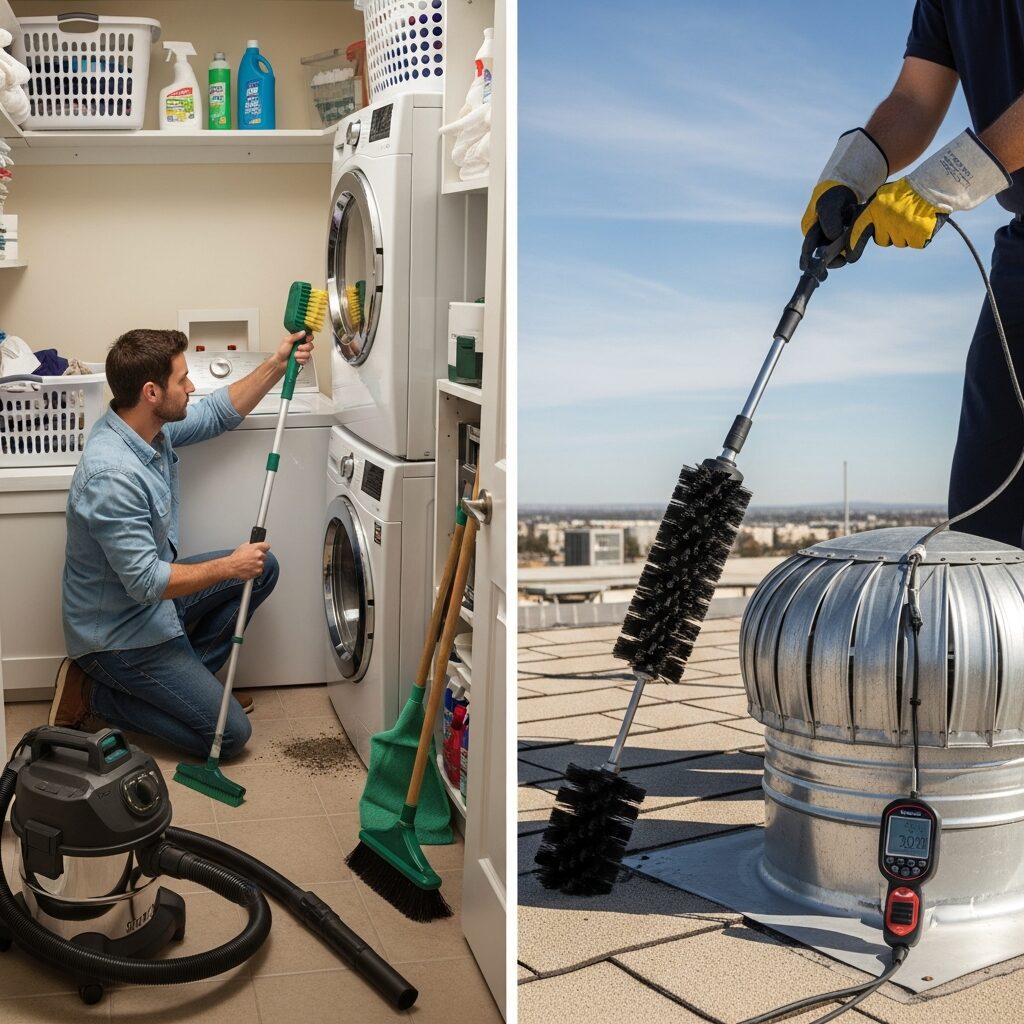
Rental brush kits and consumer-grade vacuums are designed for short, relatively straight vents with easy access to both ends. If your dryer sits against an exterior wall and the termination is a few feet away, a careful DIY effort may clear light buildup. The challenge begins when the route includes multiple elbows, long vertical rises, or older ducts joined with screws that protrude into the airflow. In those conditions, a rapidly spinning brush can compact lint into dense clumps at elbows or snag on screws, potentially separating a joint you cannot see behind drywall.
Common Sherman Oaks Layouts That Challenge DIY Efforts
Our area features plenty of multi-level homes and townhouses where the vent rises to a roof cap. Many apartment laundry closets near Sepulveda or Van Nuys Boulevard offer just enough space for the unit, making it hard to guide a brush with control. In hillside homes north of Ventura, tile roofs add another layer of complexity and risk for anyone attempting to reach a cap without the right safety gear. ADUs tucked behind main houses may have long horizontal runs through tight service corridors, where elbows are hidden and access is limited. These realities make DIY success uncertain and sometimes counterproductive.
Why Professional Tools and Technique Matter
A pro brings specialized equipment matched to the diameter and condition of your duct. Flexible rods maintain control through bends, brush speeds are managed to avoid over-agitation, and compressed air tools can move lint toward a capture device without packing it deeper. The technician also starts by clearing the dryer cavity and verifying the transition hose is sound and properly shaped. At the termination, they make sure the damper opens freely and that screens are not clogging airflow. Most importantly, they confirm improvement with airflow readings before and after the work, so you know the entire route is clear.
Protecting Your Home During the Process
Beyond the cleaning itself, professionals safeguard your space. Floor protection prevents scuffs, careful handling keeps baseboards and cabinetry intact, and dust capture reduces cleanup. Roof access is handled with safety in mind, protecting tiles and ensuring the cap is cleaned without damage. At the end of the visit, your dryer is returned to place with a smooth, unclamped arc on the transition hose rather than a kink or crush that would undo much of the benefit.
Time, Certainty, and Peace of Mind
DIY attempts can turn into weekend projects, especially if you discover a restriction you cannot reach or a cap you cannot safely access. Professionals complete the job efficiently, and because they test airflow, you have certainty that the problem is solved. If an issue such as a damaged flap or a crushed transition hose contributed to the restriction, they will point it out and address it, preventing a quick relapse of symptoms.
When DIY May Be Reasonable
If your vent is short, straight, and terminates on the same wall as the dryer, a careful homeowner may remove light buildup between professional visits. Work gently, avoid aggressive speeds, and stop if you encounter resistance that suggests an elbow, screw, or compacted lint mat. Always unplug the dryer, and never force tools around blind corners. If results are not obvious—if the exterior flap still barely opens during a cycle or dry times remain long—it is time to call in a pro.
When a Professional Is the Wiser Choice
Any layout with a roof termination, multiple elbows, narrow alcoves, or evidence of nesting at the cap calls for a seasoned technician. Homes with stacked units, older ducts, or signs of heat stress around the dryer also warrant professional attention. These scenarios benefit from controlled tool use, safe roof work, and the ability to verify success with airflow measurements rather than guesswork.
Long-Term Benefits of Doing It Right
Strong airflow keeps temperatures stable and reduces strain on the dryer’s components. Over time, that protection adds up to fewer breakdowns and a more predictable laundry routine. A complete, careful cleaning also minimizes the chance of lint escaping into walls through loose joints, a problem that can be tough to detect until it becomes serious. By restoring the entire path from appliance to cap, you make each cycle shorter and safer.
How to Prepare for a Professional Visit
Clear a path to the laundry area, move fragile items, and secure parking if your block fills quickly. If your vent exits onto a shared courtyard, notify neighbors or your building manager so access is easy. Share any history of DIY attempts or previous restrictions with the technician; this context helps them plan the safest, most effective approach.
Frequently Asked Questions
Below are straightforward answers to the most common questions Sherman Oaks residents ask when choosing between rental tools and a professional visit.
Will a rental brush damage my duct?
It can if used aggressively or forced around elbows and screws. Over-spinning a brush may compact lint into hard plugs or snag on hardware, potentially loosening joints you cannot see. If you feel resistance, stop and reassess.
How do professionals prove the vent is clear?
They measure airflow at the termination before and after cleaning, clear the cap, and run the dryer briefly to confirm strong exhaust and normal temperatures. The improvement is visible at the flap and noticeable in shorter dry times.
Is roof access really necessary?
If your vent terminates at the roof, then yes, inspecting and clearing the cap is part of a complete job. Skipping this step can leave a hidden restriction that undermines all other efforts.
Can DIY maintain results between professional visits?
In short, straight runs, light DIY brushing can help extend the benefits of a professional cleaning. For more complex routes, it is better to monitor dry times, keep the lint screen clean, and book routine service on a sensible schedule.
What should I do if I smell a burnt-lint odor?
Stop using the dryer and schedule service soon. That odor is a clear indicator of restricted airflow and rising temperatures. A professional will clear the blockage and verify safe operation.
How often should I schedule professional cleaning?
Most households benefit from annual service, while large families, pet owners, or homes with vertical roof runs often do best on a six-to-nine-month cycle. Your day-to-day results—dry times and laundry room temperature—are the best guides.
Make the Smart Choice for Your Home
If you value certainty, safety, and lasting results, choose professional dryer vent cleaning in Sherman Oaks. With the right tools, careful technique, and verifiable airflow improvements, you will enjoy faster cycles, a cooler laundry room, and confidence that your system is protected from lint-related hazards.