
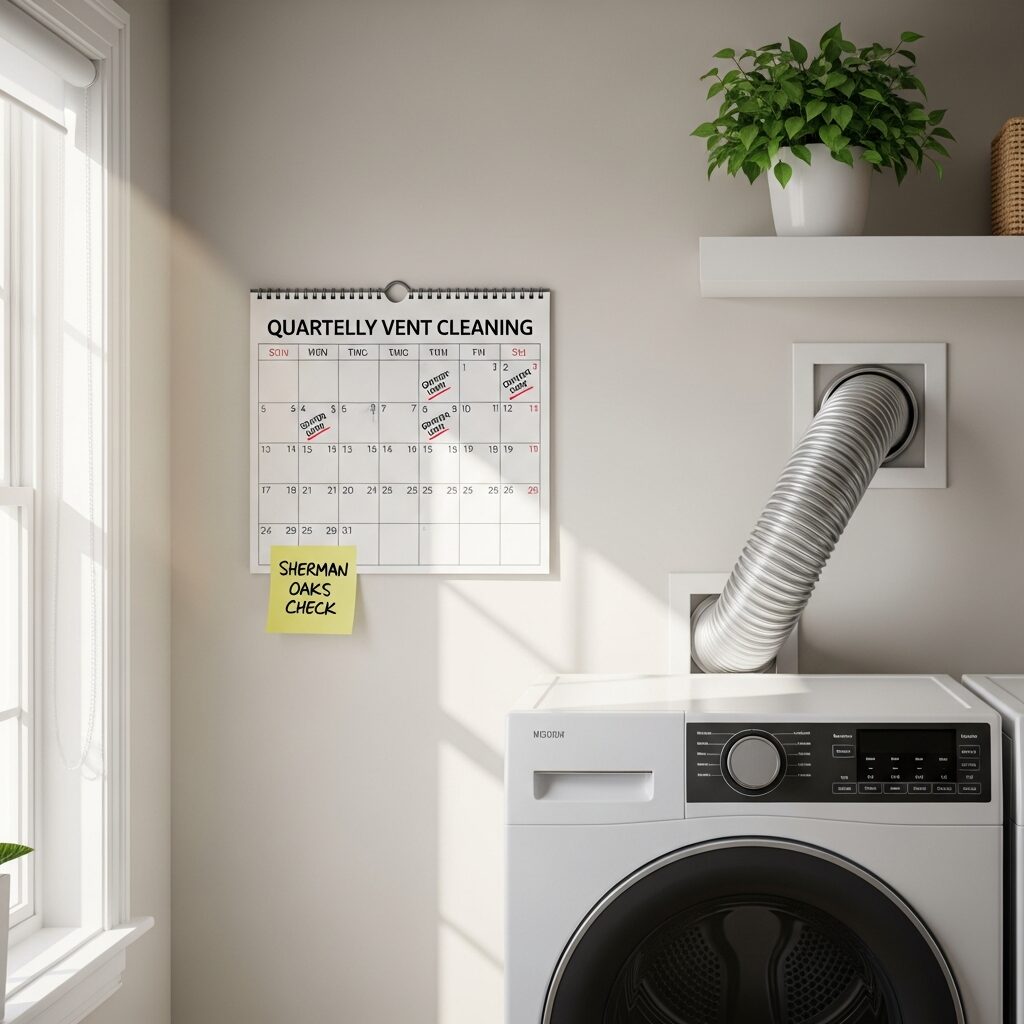
Finding the Right Cleaning Rhythm for Your Home
In Sherman Oaks, where the pace of life can shift from quiet canyon mornings to lively evenings along Ventura Boulevard, home maintenance works best when it settles into a rhythm. The question of how often to schedule dryer vent cleaning does not have a single answer for every household. It depends on the length and complexity of your vent run, the number of loads you do each week, whether you have pets that shed, and even our local weather patterns. The goal is simple: keep airflow strong, drying times short, and peace of mind high.
The first step is to learn your home’s baseline. After a thorough professional visit, pay attention to how quickly your laundry dries and how the laundry room feels during and after a cycle. Over time, as loads add up, you may notice a gradual shift—slightly longer cycles, warmer air near the machine, or a faint lint smell. Those are gentle reminders that your vent could use attention. If you are setting up a schedule for the first time, consider speaking with a local team experienced in dryer vent cleaning who understands the range of layouts found in Sherman Oaks.
Usage Patterns and Household Size
Households vary widely. A busy family running several loads a day accumulates lint faster than a single resident with a modest weekly routine. Towels, bedding, and pet blankets shed more fiber than lightweight apparel. If your home sees frequent, heavy-duty laundry, aim for more frequent cleanings. If your use is light to moderate, let performance guide you between scheduled visits.
In homes where laundry is stacked in a closet or tucked into a hallway, the transition hose behind the dryer is prone to kinking when the unit is moved for cleaning or maintenance. Even when the main duct is clear, a crushed connector can add minutes—or more—to every cycle. Building a schedule that includes a quick check of the transition during service helps keep your baseline consistent all year.
Vent Design and Access
Design matters as much as use. Short, straight vents that exit through a nearby wall tend to stay cleaner longer. Long runs with multiple elbows accumulate lint faster because airflow slows at each bend. Roof terminations common on hillside homes bring their own considerations, from sticky dampers to wind-blown debris at the cap. If your Sherman Oaks home includes these features, plan on a more proactive cadence and partner with a professional comfortable with roof access and safety.
In multi-unit buildings, shared shafts and limited access windows call for coordinated scheduling. A building-wide plan—sometimes organized by stack or floor—keeps airflow consistent for everyone and makes it easier to spot unusual conditions as they arise.
Local Climate and Seasonal Nuances
Our valley climate has a say. Warm months can mean more laundry and more lint. Santa Ana winds push dust toward exterior hoods and roof caps, where it binds with lint and creates a stubborn plug near the termination. After wet winters, vegetation near wall hoods can crowd the damper. A seasonal glance at the exterior, done safely from the ground, helps prevent surprises, and timing service shortly after a period of heavy use or windy weather can be smart.
Wildfire seasons can also contribute fine particulates to the air, and while your vent primarily moves lint from inside to outside, those particulates can accumulate near the termination and the first interior elbow. If air quality has been poor, it is worth checking airflow strength at the hood or scheduling a quick professional look.
Performance Cues You Should Not Ignore
Your dryer speaks in subtle ways. If a mixed load that once finished in a familiar timeframe suddenly needs more cycles, or if the top of the machine feels hotter than normal, attention is due. Weak airflow at the exterior hood while the dryer runs is another clear signal. A reliable schedule uses these cues as guideposts between planned visits, so you address restrictions before they become stubborn blockages.
Listen for changes in the dryer’s sound, too. Strained fans, repetitive cycling, or frequent automatic shut-offs can indicate restricted ventilation. These hints can precede bigger problems and are far easier to address when caught early.
After-Visit Baselines and Recordkeeping
Each time your vent is serviced, take a moment to note the date and how your dryer performs afterward. A simple record—digital or on paper—helps you see patterns across seasons and usage changes. If you add a new family member, adopt a pet, or start air-drying less, your laundry volume may jump and your schedule should adjust accordingly.
Technicians who work regularly in Sherman Oaks often share airflow readings or qualitative notes about your specific layout. Hold onto those details; they provide a benchmark for future visits and help you decide when to move your next appointment earlier or later.
DIY Between Professional Visits
Some households use gentle DIY steps to bridge the gap between professional service—cleaning the lint screen, confirming the exterior damper moves freely, and ensuring the transition behind the dryer is not crushed. While these habits help, they do not replace a thorough, tool-driven cleaning of the entire run, especially in longer vents with multiple bends. If you attempt DIY brushing, keep speeds low, work from both ends when possible, and stop if you feel resistance you cannot explain.
When in doubt, call a local professional to avoid pushing lint into a clump at the termination or leaving a rod section stranded in the duct. A quick consultation can save a long afternoon of frustration.
Right-Sized Scheduling Recommendations
For light-use homes with a short, straight vent, a longer interval may be reasonable as long as performance stays strong. For busy households, long runs, or roof terminations, more frequent visits keep airflow consistent and reduce wear on the dryer. Multi-unit buildings benefit from coordinated plans so that shafts and shared routes are maintained evenly across units. The essence of a good schedule is flexibility guided by evidence: how your dryer behaves and what a trusted technician observes.
Many Sherman Oaks residents pair service with life events—before welcoming guests, after a renovation, or as part of a spring refresh. Others simply choose a cadence that matches their laundry rhythm. The best schedule is the one you will keep, tuned by the feedback your home provides.
Middle-of-the-Year Check-Ins
Even if your official appointment is months away, a mid-year check pays dividends. A quick look at the exterior hood while the dryer runs, a hand near the exhaust to feel airflow, and a peek behind the machine to confirm the transition is intact can reveal early changes. Catching a loose clamp or a sluggish damper now prevents compounded lint build-up later.
For hillside homes where exterior access is difficult, do not take risks on ladders or roofs. A phone call to a local provider comfortable with these access points is the safer path, and it ensures the right tools are used when a closer look is needed.
FAQ: Scheduling Dryer Vent Cleaning
Q: Is there a universal timeline that fits every home?
A: No. Frequency depends on usage, vent design, and local conditions. Use your dryer’s performance and professional guidance to set the cadence.
Q: What signs mean I should move my next appointment sooner?
A: Longer dry times, a hotter laundry area, or weak airflow at the exterior hood while the dryer runs are reliable cues.
Q: Do multi-unit buildings follow a different schedule?
A: They benefit from coordinated maintenance so shared routes are addressed evenly. Building managers often organize by stack or floor.
Q: Can DIY maintenance replace professional visits?
A: DIY habits help, but a full run typically requires professional tools and technique, particularly in long or complex vents.
Q: What role does the exterior termination play?
A: A clean, freely moving damper is critical. Wind-blown dust and nearby vegetation can clog this point, making mid-season checks helpful.
Set a Schedule That Works for You
If you are ready to build a simple, reliable plan tailored to your home and lifestyle, connect with local experts who focus on dryer vent cleaning. With a practical schedule in place, you will enjoy shorter cycles, better airflow, and steady peace of mind—season after season in Sherman Oaks.