
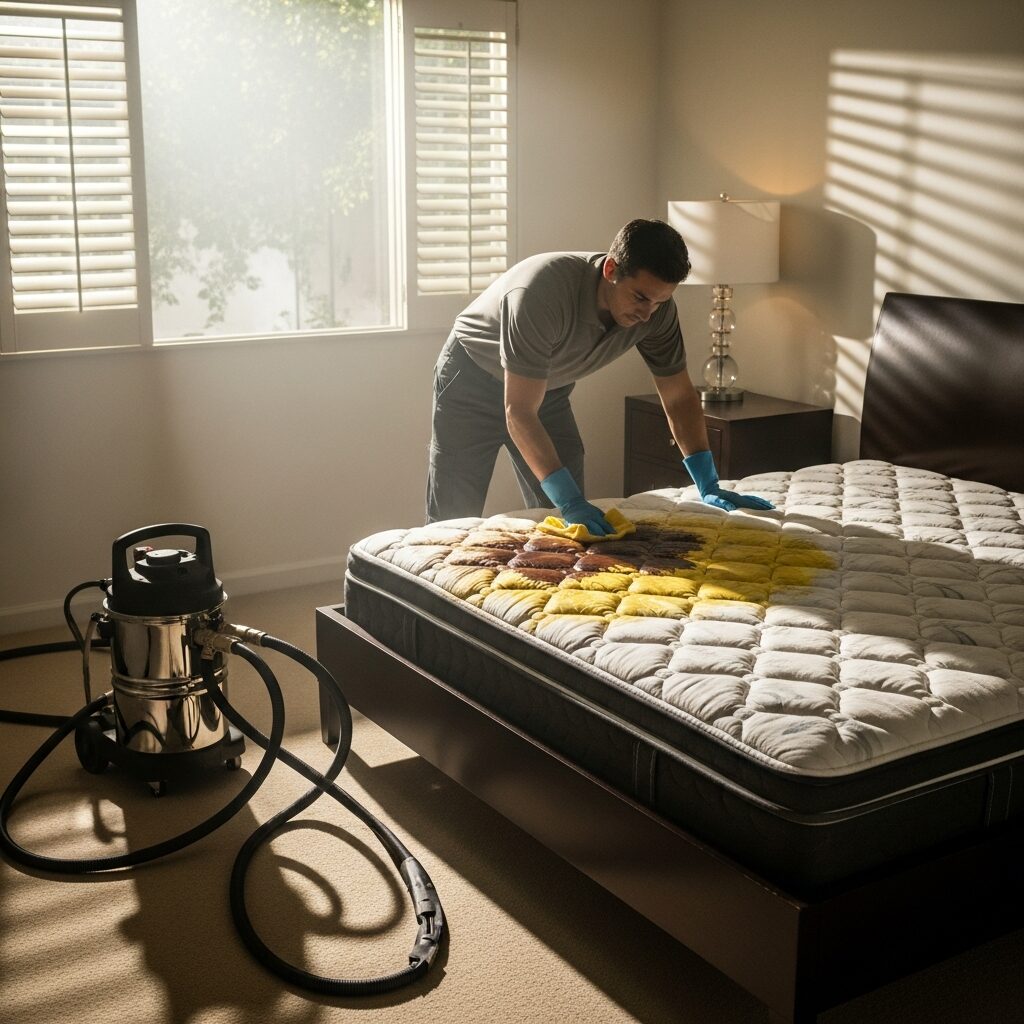
Mattresses carry the rhythm of our lives in Sherman Oaks—afternoon naps after a Fryman Canyon hike, movie nights propped against pillows, and the deep rest that resets us for the week ahead. Because our beds see so much use, they inevitably gather problems that show up as odors, stains, or that indistinct “stale” feeling in the room. The good news is that most issues have clear causes and practical solutions, especially when you understand how Valley conditions shape what happens inside the mattress. With the right approach and professional mattress cleaning, your bed can feel newly welcoming again.
Body oils and perspiration salts
The most common culprit behind discoloration and odor is simply us. Natural body oils and nighttime perspiration migrate through sheets, lodging in pillow tops and quilting. As summer builds heat in Sherman Oaks bedrooms—particularly those that face west and collect late-afternoon sun—oxidation speeds up, deepening yellowing and amplifying a sour note. Regular laundering helps, but over time residues bond to fibers and foam. Professional cleaning uses targeted solutions to break that bond and lift the residue, restoring a neutral smell and a cleaner, calmer look to the surface.
Pet naps that turn into pet problems
We love our pets like family, and in many homes they earn full bed privileges. Dander accumulates invisibly even with routine grooming, and the occasional accident or hairball leaves behind proteins that cause lasting odor if not thoroughly removed. DIY spotters often take out the immediate stain but leave a trace that resurfaces in heat. The solution is a two-part approach: dissolve and flush what you can see, then address what you cannot by treating deeper layers and drying diligently. A careful process reduces the chance of recurring marks or scents each time the room warms up.
Spills, late-night snacks, and morning coffee
Modern life follows us to bed. Coffee, tea, and the occasional glass of wine leave tannins and dyes that can be stubborn, especially on light fabrics. Sugars and dairy set up sticky residues that attract dust and feed microbes, accelerating odor. The worst mistake is over-wetting in a panic; pushing liquid deeper spreads the problem and leads to bloom-through days later. Professional techniques aim to keep moisture controlled, extracting as they treat so soils travel out, not in. Quick calls and calm, methodical handling preserve both appearance and hygiene.
Sherman Oaks microclimate and moisture
We live between dry Santa Ana episodes and cool, slightly humid mornings that ease over the Sepulveda Pass. That rhythm sneaks into bedrooms. Exhaled moisture concentrates near the head of the bed, and if the mattress presses against a wall or sits on a solid platform with minimal ventilation, dampness can linger. The result is a faint mustiness or, in stubborn cases, mild surface speckling. Good cleaning not only resets the mattress but also comes with airflow guidance—small shifts in bed placement, breathable protectors, and morning airing habits that prevent problems from returning.
Powders and perfumes that backfire
It is tempting to pour on powders or sprays that promise a fresh mattress. Unfortunately, many products leave films that trap dust and create a chalky feel, or they introduce scents that clash in small rooms. These residues demand heavier cleaning later and can interfere with fabric hand. A simpler path works better: remove the sources of odor and soils, then let the mattress and room air speak for themselves. Neutral is the clean you can live with night after night.
Over-wetting and the myth of more water
Water is essential for rinsing, but too much is the enemy of mattresses. Deep saturation swells foams, softens adhesives, and invites prolonged drying times that encourage mustiness. In the push to “thoroughly clean,” DIY attempts often overshoot and create new issues worse than the original stain. Trained technicians use controlled application and strong extraction to move soils out efficiently, then manage airflow so the bed returns to service the same day in most Sherman Oaks homes.
Residue that attracts dust and leads to re-soiling
Any cleaning agent left behind will grab particles. That is why one corner of a mattress can look dingier than the rest a few weeks after a hasty DIY session. Residue also changes the fabric’s glide, making sheets feel tacky. Professional cleaning focuses on full removal: treat, agitate as needed, and rinse until the fiber’s natural feel returns. When properly finished, the mattress resists dust cling and stays cleaner longer, even in rooms that see daily dust from nearby traffic corridors.
Allergens that outpace your laundry routine
Dust mite debris, pollen, and fine particulates settle in mattress surfaces where they wait to be stirred up at night. Fresh sheets are wonderful, but they do not change the internal load. If you wake with congestion or irritated eyes, the bed may be part of that story. Deep cleaning paired with smarter morning routines—brief airing before making the bed, breathable protectors, and seasonally adjusted window habits—knocks the allergen clock back so sleep is less of a negotiation with your sinuses.
Stitching, zippers, and delicate details
Mattresses are more intricate than they look. Embroidered tops, piping, and zip-on covers require a mindful approach so cleaning does not distort lines or blur dye. A local pro familiar with the fabrics common in Sherman Oaks homes will adapt treatments to protect both aesthetics and structure. That attention to detail is what keeps premium beds looking premium after service.
Guest rooms and the closed-door problem
Spare bedrooms often stay shut, allowing dust to settle and a faint closed smell to build. When guests arrive, hurried refreshes with sprays cannot reverse months of still air. Periodic cleaning, combined with occasional door-open days and a little airflow, maintains readiness. Your welcome should be the first thing visitors notice, not the scent of stale textiles.
Kids’ beds and the pace of family life
Children’s mattresses see spills, colds, art projects, and generous helpings of bedtime stories. Quick responses matter, but so does periodic resetting to remove residues that a busy week hides. Because kids spend so much time in bed, especially on weekends and afternoons, a cleaner mattress is both a comfort and a quiet health measure. Thoughtful scheduling keeps rooms steady without turning care into a chore list.
Choosing solutions that match materials
Memory foam, latex, hybrids, and classic innersprings all respond best to slightly different treatments. Good cleaning respects foam density, quilting composition, and cover fabrics. The goal is to remove soils while preserving the hand and resilience that make a mattress supportive. With careful technique, even stubborn problems respond without risking swelling or delamination.
Drying discipline and same-day comfort
The final stage often makes the biggest difference. Once residues are removed, guided airflow accelerates evaporation so the mattress returns to a dry, neutral state. In our Valley homes—where evenings cool down nicely even after hot days—this can usually be achieved within hours. Finishing well is what prevents musty surprises the next afternoon.
Sherman Oaks timing and habits that help
Local rhythm suggests a sensible schedule: a post-spring-pollen cleaning and, for many, a late-summer reset after peak heat. If pets share the bed, increase frequency. Morning routines matter too. Delay making the bed for a short time, let the mattress breathe, and rotate seasonally if recommended by the manufacturer. These modest practices pay back with calmer rooms and longer intervals between bigger interventions. A midyear appointment that includes a focused mattress cleaning can resolve lingering issues before they become stubborn problems.
How should I handle a fresh spill on my mattress?
Blot gently with a clean, absorbent cloth to lift moisture without pushing it deeper. Avoid scrubbing or saturating. If you can, keep air moving to support surface drying and call a professional for guidance. Quick, calm steps prevent spread and make thorough removal much easier.
Why do odors return after I thought I cleaned the spot?
Residual material often remains below the visible surface. When the room warms, odors wick upward and reappear. Proper cleaning dissolves and extracts deeper sources while managing moisture and drying. Masking with fragrance temporarily hides the issue but rarely solves it.
Is baking soda safe for mattresses?
Used sparingly, it can absorb minor surface odors, but it tends to settle into seams and can be difficult to remove completely. Over time, leftover powder attracts dust and dulls fabric feel. Professional odor removal targets the source instead of layering on absorbers.
How often should I schedule professional mattress cleaning?
For many Sherman Oaks homes, once per year is enough. Increase to every six to nine months if pets share the bed, allergies are present, or windows are frequently open during high pollen periods. Match timing to our local seasons for best results.
Will cleaning change the feel of my mattress?
When techniques are matched to materials, cleaning should improve the surface feel by removing sticky residues, not alter support. Communicate your mattress type and any sensitivities so the process can be tailored. The goal is a neutral, refreshed surface that welcomes rest.
When your bed begins to tell you it needs help—through stubborn spots, a stale scent, or restless sleep—listen and act. With a locally informed plan and careful service, those common issues give way to true comfort. To bring your bedroom back to its calm baseline, arrange a visit and enjoy the difference the first night. For attentive care grounded in Sherman Oaks conditions, schedule your professional mattress cleaning now and rest easier.