
Ask any longtime Sherman Oaks homeowner and they will tell you that the Valley has a rhythm all its own. Warm afternoons give way to crisp evenings, and on those cooler nights—especially when the first hint of fall drifts in from the Sepulveda Pass—many of us reach for the fireplace remote or stack a bit of seasoned oak. Before that first cozy glow, it helps to understand how professional care keeps your system safe, efficient, and reliable over the long term. Around here, the conversation often turns to what shapes the overall investment in professional service, and why a thorough approach matters more than anything. From hillside homes above Valley Vista to classic ranch styles near Chandler Estates, I’ve seen how the design of a chimney, its age, and our local climate all play a part in planning smart maintenance. If you are getting your bearings and want a quick, trusted starting point, many neighbors rely on professional chimney cleaning as the baseline service that sets up the entire system for safe, dependable use throughout the season.
Understanding Local Conditions in Sherman Oaks
Sherman Oaks sits at the heart of the San Fernando Valley, with microclimates that can look different from one block to the next. Warm, dry stretches amplify soot accumulation when fireplaces see frequent use on cool winter nights, and occasional Santa Ana winds can stir debris that settles atop caps and in screens. In parts of the neighborhood where mature trees provide shade, leaves and small twigs find their way to the roofline, and animal activity can spike during late summer and early fall as critters look for shelter. All of this influences the scope of work when a professional arrives to service your flue and firebox.
Just as important are the building styles we see here. Midcentury masonry chimneys built with local block and brick may have very different needs from factory-built systems installed in more recent remodels. Masonry units can develop small mortar voids and hairline cracks over time, particularly after heat cycles and minor seismic activity. Prefabricated units usually rely on specific, listed components that must be kept in good condition—spark arrestors, caps, storm collars, and chase covers—to perform as designed. When a technician evaluates a Sherman Oaks chimney, the neighborhood’s architectural mix and our climate inform every step.
What Shapes the Scope of Professional Care
Every appointment begins with access, safety, and a visual assessment. In Sherman Oaks, that often means considering roof pitch, the presence of solar arrays, skylights, and the type of roofing material, whether it is composition shingle, tile, or metal. A steep or high roof calls for careful staging and additional time to ensure safe access to the termination point. Once positioned, a technician inspects caps, screens, and the crown or chase cover, noting any rust, missing fasteners, or gaps that could allow water or animals to enter. In the firebox, they will look for mortar erosion, spalling, and any signs of heat stress, while also checking the damper for smooth operation.
Another factor is the condition of deposits. Creosote is not one thing; it appears in different stages depending on how the fireplace has been used and how well the system drafts. Fluffy soot typical of lighter use responds quickly to mechanical brushing and vacuum collection. Glossier, more condensed layers—often a sign of cooler flue temperatures, smoky low burns, or restricted airflow—require specialized tools and greater care to remove. If the flue includes offsets or elbows to route around framing, the work calls for additional passes and careful maneuvering to make sure every surface is properly treated.
Wildlife and wind can also play quiet roles. We see bird nests and the occasional rodent intrusion in certain pockets of Sherman Oaks, especially where tall trees stand close to the ridge line. Clearing this debris is important, not just because of airflow and odor, but to maintain a safe pathway for exhaust. The technician will also watch for water staining around the crown and flashing—signs that wind-driven rain has pushed past defenses, an issue that can contribute to masonry deterioration and odd odors in humid spells.
Why Thorough Inspection Matters
A comprehensive appointment is more than a quick brush and go. It includes a top-to-bottom view so you understand the condition of your system. Many pros use bright illumination, mirrors, and, where appropriate, camera scans to document areas that are otherwise hard to see. This helps you make informed decisions about maintenance and repair, especially in older masonry stacks where small imperfections are easier and more economical to address early. Even in newer prefab systems, inspection helps catch loose storm collars, worn gaskets, or caps that have shifted after a windy night, long before these minor issues become headaches.
Homeowners often ask whether gas fireplaces need the same attention as wood-burning units. While the deposit profile is different—gas does not create creosote in the same way—these appliances still benefit from periodic inspection and cleaning. Dust, pet hair, and lint can gather in the firebox, and spiders are notorious for nesting in pilot assemblies and orifices. A clean, well-adjusted system looks better, smells fresher, and runs more reliably, which matters when you are hosting company or lighting the first flames of the holidays.
Timing Your Appointment Around Valley Seasons
In the Valley, the calendar has its sweet spots. Late summer and early fall are excellent times to get ahead of the rush, but spring cleanings also have their virtues. Many of us burn more frequently around the holidays, and by spring, the flue can hold onto odors when the weather turns damp. A post-season service helps the house smell clean through June gloom and beyond. It also allows time to address small masonry touch-ups or component replacements well before the next cool-down.
On the scheduling front, there is also the simple matter of peace of mind. It is far better to plan than to wait until the first chilly weekend, when demand can spike. By putting a reminder on your calendar—perhaps alongside other seasonal checks like changing HVAC filters—you create an easy rhythm that keeps your fireplace ready without drama. And when life gets busy, experienced local teams are adept at coordinating around school pickups, street sweeping days, and the afternoon traffic window along Ventura Boulevard.
As part of that planning, many homeowners choose to schedule routine chimney cleaning before the first real cold snap, using the appointment to confirm that caps, dampers, and flue sections are in great shape. This small bit of forethought means you can light the season’s first fire with confidence, knowing the pathway is clear and the draft is performing as designed.
Inside the Appointment: What to Expect
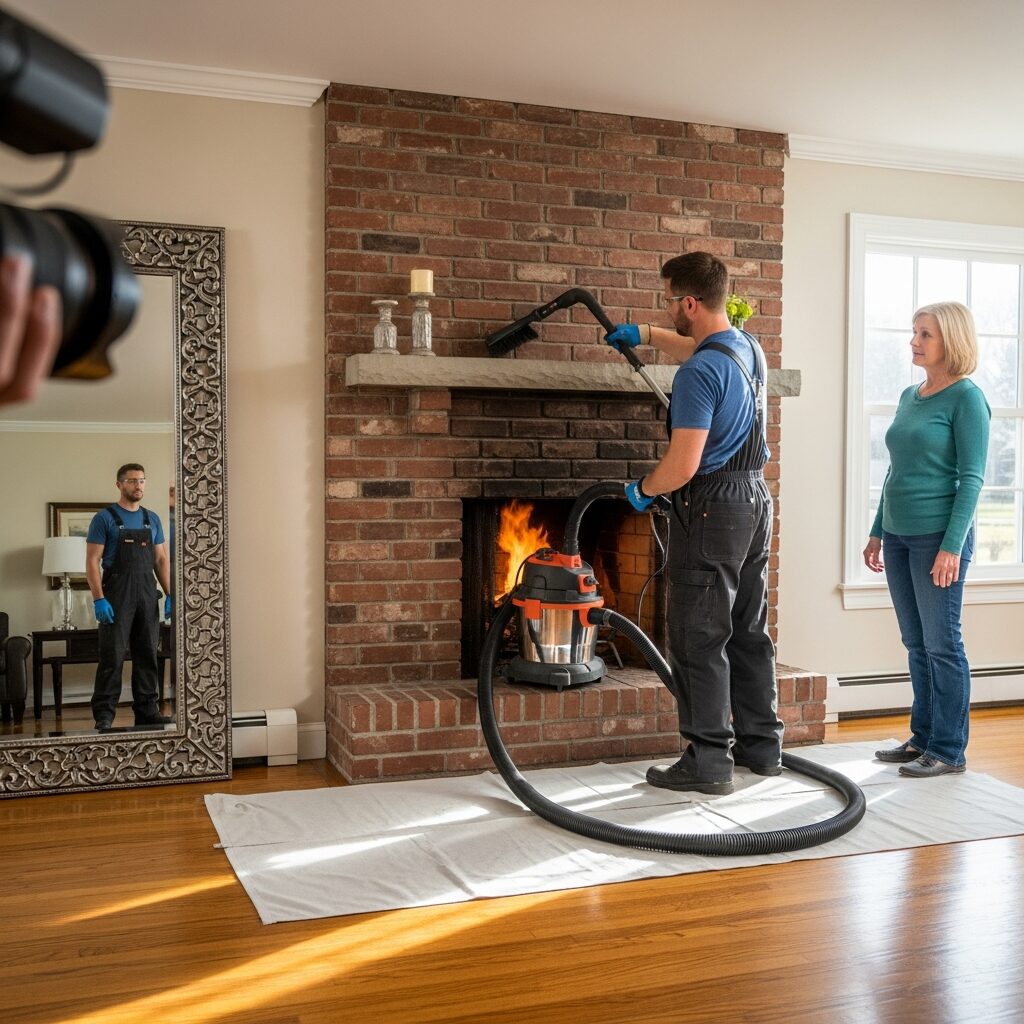
A good visit begins with floor protection and care for your living space. Technicians lay down clean drop cloths and use high-filtration vacuums to capture fine particulates at the source. They will remove loose debris from the smoke shelf, brush the flue with the right-size tools to match your liner or masonry dimensions, then re-check the draft and the firebox for any signs that deserve a closer look. If your home has a gas log set, they will typically clean dust from the burner pan and glass, verify that the pilot and thermocouple function as intended, and tidy up media so the flames present evenly.
At the end of the service, you should expect clear, plain-language notes and, where possible, photos. These become part of your homeowner record, useful for insurance documentation and helpful if you plan to sell your home. Over time, these records tell a story of care and attention that buyers appreciate, and they give you a simple way to track when your last service occurred.
Common Questions About the “Why” Behind Recommendations
Occasionally, a technician will suggest complementary maintenance, such as adding a cap where none exists, sealing a small crown crack, or adjusting a damper that has seen better days. These recommendations are not extras for extras’ sake; they aim to protect your system and the envelope of your home. A proper cap keeps embers off the roof and discourages animals. Crown sealing prevents water penetration that can freeze-thaw, accelerating masonry decay. A functional damper preserves energy by minimizing conditioned air loss up the flue when the fireplace is idle. Taken together, they help your fireplace work better and your home feel more comfortable year-round.
For homeowners in the hills, wind patterns and exposure can be especially influential. Gusts can push smoke back into a room if the flue is partially restricted or if nearby structures create turbulence at the termination. Small adjustments to cap design and height, paired with a clean, unobstructed flue, often make a noticeable difference in day-to-day enjoyment.
Signs It Is Time to Book
Odors after a damp day, difficulty starting or maintaining draft, visible soot falling into the firebox, and smoke spillage into the room are all clear signals. So is a damper that does not open or close smoothly. If you have recently moved into a Sherman Oaks home and do not have a clear service history, that is another prompt to schedule an evaluation. Even if the fireplace looks tidy, there can be enough accumulation higher up the flue to warrant attention.
Another trigger is a change in usage. Perhaps you added a gas log set to make evenings simpler, or you hosted more family gatherings and found yourself lighting the fireplace more often. Adjusting your maintenance cadence to reflect real-world use is smart stewardship. Households with pets may also notice dust and hair traveling into the firebox more quickly, a quiet reason to freshen things up before the next gathering.
Choosing a Local Professional
In a community where neighbors trade recommendations freely, reputation matters. Look for a team that explains things clearly, shows photos of their work, and treats your floors and furnishings with respect. It is reassuring to see technicians arrive on time with clean drop cloths, boot covers, and the right equipment to protect tile or hardwood. Transparent communication—before, during, and after the appointment—sets the tone for a long-term relationship based on trust.
Above all, remember that the goal of professional service is safety and performance. A reliable draft, a clean flue, and well-maintained components mean less worry and more enjoyment. Whether your home was built last decade or before Mulholland Drive had its modern makeover, routine care keeps the heart of your living room ready when family and friends gather.
Frequently Asked Questions
If you are like most Sherman Oaks homeowners, you have a few recurring questions about fireplaces and their care. Here are straightforward answers tailored to our local conditions and building styles.
How often should I have my fireplace serviced if I only burn a few times a year?
Even with light use, an annual check is a smart baseline. A quick season of holiday fires can leave fine soot and ash in the smoke shelf, and windblown debris at the cap can restrict airflow. An annual rhythm ensures everything remains in proper shape and gives you time to address small issues early.
Do gas fireplaces really need attention?
Yes. While they do not create creosote like a wood-burning fireplace, they collect dust and lint, and spiders are drawn to pilot assemblies. A periodic cleaning and safety check keeps the flames balanced, reduces odors, and helps components last.
What are signs of restricted draft?
Smoke backing into the room, a persistent smoky odor when the fireplace is not in use, and soot staining around the firebox opening suggest that airflow is not what it should be. These symptoms call for a professional look to clear obstructions and confirm proper ventilation.
My chimney looks fine from the street—do I still need a professional check?
Street views can be deceiving. The most important parts of your system are not visible from the curb. Inside the flue, in the smoke chamber, at the damper, and around the crown or chase cover, small changes add up over time. A professional assessment gives you real insight into those hidden areas.
Could nearby trees be affecting my chimney?
Yes. Overhanging branches drop leaves and twigs that gather at the cap. In some cases, they also disrupt wind flow, contributing to downdrafts. Prudent trimming and a well-fitted cap with a proper screen make a noticeable difference, particularly after windy weeks.
Is there anything I should do before the technician arrives?
Clear the hearth area, remove decorative items from the mantel, and avoid using the fireplace for at least 24 hours so surfaces are cool to the touch. If you have pets, consider a cozy space for them away from the workspace during the appointment.
What about earthquake concerns?
Minor seismic activity can contribute to hairline mortar cracks or shift caps out of alignment. Regular professional checks are a sensible part of local home care, providing early detection and straightforward remedies.
Will professional service make a difference in fireplace odors?
Very often, yes. Removing accumulated soot and debris, confirming the damper seals properly, and ensuring the cap and crown are sound all help reduce stale or smoky smells, especially during damp weather.
Ready to Enjoy a Safer, Cozier Fireplace?
If you are preparing for the season or simply want peace of mind about your system, there is no better time to schedule expert care. Reach out to a trusted local team and set a convenient time that fits your week. Your home will feel fresher, your fires will burn cleaner, and you will have clear documentation of the work performed. When you are ready, schedule your next chimney cleaning and step into the cooler months with confidence.