
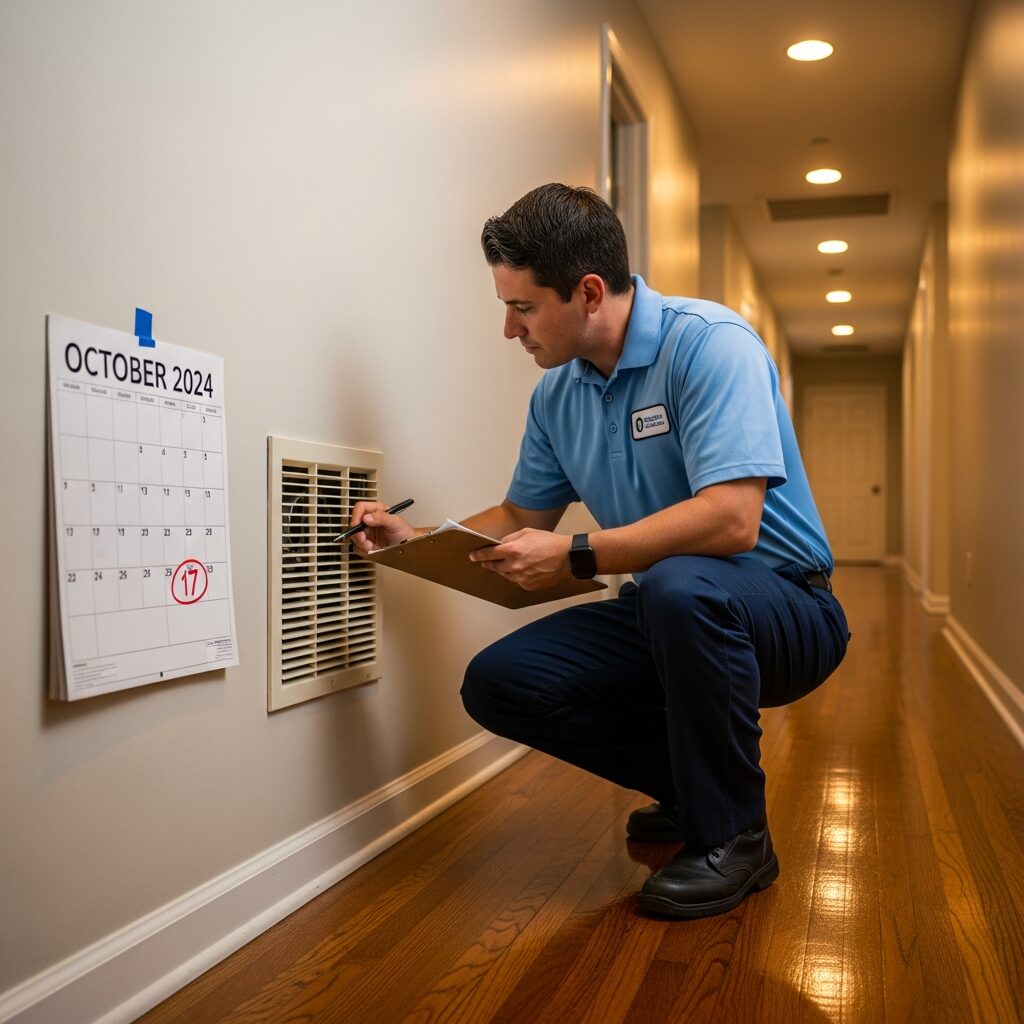
A Practical Question With a Local Answer
In Sherman Oaks, people often ask how often air duct cleaning should be scheduled as if there’s a single calendar rule. The truth is more personal than that. The right interval depends on your home’s conditions, your HVAC usage, and the specific things that happen in your household over time. A quiet home with minimal dust entry and consistent filtration can go much longer between cleanings than a busy family home with pets, frequent renovations, and an HVAC system that runs hard through the Valley summer.
If you’re considering air duct cleaning for the first time, think of it like setting a baseline. The first thorough cleaning, especially after moving into a previously owned home, helps you learn what your system is holding. After that, you can decide on a schedule based on real-life signs and the environment you live in, rather than guessing.
Sherman Oaks is a place where outdoor dust, traffic particulates, and warm-weather HVAC use all play a role. When the AC runs for long stretches, your ducts become an active pathway all day, moving air through every room. That constant circulation can make any buildup more noticeable, especially if you’re sensitive to dust or if the home has older ductwork that has collected debris over many years.
The “Right Frequency” Depends on What Your Home Has Been Through
One of the most overlooked factors is home history. If you just bought a house, even if it looks spotless, you don’t necessarily know how often filters were changed or whether construction work was done with vents sealed. In Sherman Oaks, it’s common for homes to go through periodic remodels, from kitchen refreshes to full additions. Renovation dust is incredibly fine, and it can slip into the HVAC system and settle where normal vacuuming will never reach.
If your home has had recent drywall work, sanding, new flooring installation, or heavy painting, it’s worth considering a cleaning sooner rather than later. That doesn’t mean you need to do it repeatedly; it means you’re removing a specific type of debris that can continue to circulate long after the renovation ends.
Another major life event is a roof or attic project. If insulation was replaced or attic spaces were disturbed, dust can shift around duct runs and returns. In the Valley heat, attics can be harsh environments, and debris can break loose and find its way to registers. A post-project inspection can help you decide whether cleaning is justified.
Everyday Clues That Your Ducts May Need Attention
Instead of treating duct cleaning like a routine chore, many Sherman Oaks homeowners do best by watching for patterns. If you notice that certain rooms get dusty faster, or that you’re wiping surfaces more often even though your habits haven’t changed, your HVAC system might be contributing.
Odors are another clue. A musty smell when the AC starts isn’t always a duct issue, but it can be related to accumulated debris or conditions near the air handler. Similarly, if you see visible dust buildup along register edges or notice a faint puff of dust when the system starts after being off, it might be time for a closer look.
Allergy symptoms that feel worse indoors can also be a prompt, especially during seasons when you keep windows closed and rely heavily on HVAC. Duct cleaning isn’t a substitute for medical advice, and it’s not a guarantee of symptom relief, but it can reduce one potential source of circulating irritants if buildup is present.
How HVAC Usage in Sherman Oaks Changes the Timeline
Our local climate creates a unique pattern. Summers can be long and hot, and many households run air conditioning for extended stretches. When the HVAC runs often, the system is constantly pulling air through returns, through filtration, and out through supply lines. That means any dust in the system has more opportunities to move.
In homes where the HVAC runs lightly, ducts may accumulate debris more slowly. In a typical Sherman Oaks summer, though, the system can become the center of daily comfort. That doesn’t automatically mean you need frequent cleaning, but it does mean you should pay attention to the condition of your returns and the area around registers, because they act as visual indicators of what’s happening deeper inside.
Another local behavior is the on-and-off mixing of indoor and outdoor air. People open patio doors in the evenings, use outdoor spaces, and let in breezes when it cools down. That’s part of the charm of living here, but it can also bring in dust that the HVAC later cycles. If your home is near a busier corridor, you may find that fine particulates show up sooner.
Pets, Kids, and Busy Homes: The “Real Life” Factors
Households with pets often benefit from closer attention to HVAC cleanliness. Even with diligent grooming, pet hair and dander can collect near return pathways and at duct turns. If you’ve ever removed a return grille and seen a layer of lint-like buildup, you know how quickly it can happen.
Kids add energy and movement, and that movement resuspends dust. More foot traffic, more door opening, more activity in bedrooms and play areas all contribute to a home’s dust load. Again, this doesn’t automatically mean you need constant duct cleaning; it means you should look at how quickly your filters load up and whether dust patterns in the home suggest the HVAC is redistributing debris.
For many Sherman Oaks families, the best approach is to combine smart filter habits with occasional duct inspections. If the system is staying clean and filters are doing their job, you may not need cleaning often. If filters clog quickly and dust returns fast, it’s a sign to investigate deeper.
Why Inspections Matter as Much as Scheduling
People sometimes think the only options are “do it every year” or “never do it.” In reality, periodic inspections can be the most practical approach. A technician can check return areas, supply trunks, and accessible sections of ductwork to see whether there’s significant accumulation or if the system is relatively clean.
This is especially helpful for older Sherman Oaks homes where ductwork may have been patched over time. Disconnected or leaky ducts can pull dusty attic air into the system. In that situation, cleaning alone may help temporarily, but sealing and repairing leaks is what keeps the system from getting dirty again quickly.
In the middle of your decision-making, reading about what thorough air duct cleaning includes can help you understand whether you’re looking for a full system reset or simply trying to address a minor issue. The more clearly you understand the process, the easier it is to choose timing that makes sense for your home.
After the Cleaning: How to Extend the Benefits
Once you’ve had a thorough cleaning, the next step is protecting that investment with simple habits. Filters should be changed on a consistent schedule appropriate for your household. If you’re using higher-efficiency filters, make sure your system is compatible and the filter fits properly without gaps.
Keep returns unobstructed. In many Sherman Oaks homes, returns are placed in hallways or central areas, and it’s easy for furniture, baskets, or even curtains to partially block them. Proper airflow keeps dust from settling in unexpected places and reduces strain on the system.
Also pay attention to moisture. Musty odors and microbial concerns are often linked to condensation issues near coils or drainage problems. If a technician notices signs of moisture, address that promptly because it affects both indoor comfort and the cleanliness of the system over time.
FAQ
Q: Is there a standard schedule for air duct cleaning?
A: There isn’t a one-size-fits-all schedule. The right frequency depends on pets, allergies, renovation history, HVAC usage, filtration habits, and whether the ductwork is sealed and in good condition.
Q: When should I consider cleaning sooner than expected?
A: After a remodel, after moving into a previously owned home, if you notice musty odors at startup, persistent dust around registers, or visible buildup near returns. Those are common prompts in Sherman Oaks homes.
Q: Can I rely on filter changes alone?
A: Good filtration is essential, but filters don’t catch everything and they don’t remove debris that’s already settled inside ductwork. Filters and cleaning serve different roles, and sometimes both are needed.
Q: Does living near a busy street affect how often I should clean ducts?
A: It can. Homes that take in more outdoor dust and fine particulates may see faster accumulation in returns and filters, especially if windows and doors are opened frequently.
Q: Should I schedule cleaning if the system seems fine?
A: If you’re unsure, an inspection can be a smart middle step. It helps you avoid unnecessary work while still catching problems like heavy accumulation or duct leaks that can affect comfort.
Plan Your Next Cleaning With Confidence
If you want a schedule that fits your home rather than a generic rule, start with an inspection and a conversation about your household’s needs. Sherman Oaks living brings its own mix of dust, HVAC demand, and remodel activity, and your plan should reflect that reality. When you’re ready to take the next step, explore air duct cleaning and set up a visit that helps you breathe easier and keep your system running smoothly.