
Pet Stains and Your Rugs in Sherman Oaks: A Local Guide to Real, Lasting Freshness
On any given morning in Sherman Oaks, you’ll see leashes, coffee cups, and friendly nods as neighbors pass on walks. Our pets mean everything to us, which is why the occasional accident or muddy sprint through the living room feels like a small crisis. When it happens on a favorite rug, it’s more than a blemish on beauty; it’s a fabric challenge with chemistry at its core. If you’ve searched for help with rug cleaning near you after a pet mishap, you already know the internet is full of quick fixes. The truth is simple and encouraging: with the right professional approach, most pet-related issues can be resolved in a way that restores both appearance and peace of mind.
Rugs in the Valley lead busy lives. Windows open to welcome afternoon breezes, patios invite foot traffic in and out, and pets find their favorite warm patch of sunlight by the sliding door. This relaxed lifestyle adds fine dust, dander, and the occasional pawprint to our textiles. When an accident happens, it often travels deeper than the surface, wicking through the pile into the rug’s foundation. Handling it correctly requires more than blotting and a spritz of deodorizer. It calls for a plan that respects fibers, dyes, and the invisible pathways liquid follows inside a woven structure.
Why Pet Odor Lingers—and How to Solve It
Pet urine is complex. It contains urea, salts, and proteins that, as they dry, crystallize and draw moisture back from the air. That’s one reason odors seem to “wake up” on humid days or when the heater first turns on. On a rug, this contamination often settles into the cotton warps and wefts beneath the pile, areas household spotters rarely reach. Masking scents only compete with the source for a little while. True relief requires fully flushing the textile so those residues release and rinse away.
Professional decontamination involves immersion in a controlled bath. Before that step, technicians perform dye tests to safeguard color, then address stained zones with targeted solutions. Once color is stable, the bath’s purpose is to equalize the textile—no part remains untreated—so the foundation and pile share the same clean slate. Rinsing continues until water runs clear and the nose knows: freshness comes from removal, not coverup.
Understanding Your Rug: Fiber, Weave, and Pet Behavior
Different fibers react differently to accidents. Wool is remarkably forgiving thanks to its natural structure and protective oils, but it still needs proper pH care to avoid texture changes. Silk and viscose show spots more dramatically and can matte if rubbed or over-wet. Tufted rugs with latex backings can trap contamination between the primary face yarns and the secondary backing, making professional attention even more important. Flatweaves can let liquid travel sideways along yarns, spreading the affected area beyond what your eyes first register.
Your pet’s habits matter too. Cats often return to a marked area if even a faint trace remains, and puppies can fixate on a particular corner of a room. A thorough clean breaks that cycle by removing the invisible cues pets follow. Alongside professional work, simple home strategies—closing doors temporarily, refreshing litter boxes, or adjusting routine—support long-term success.
Spotting Myths That Make Things Worse
It’s natural to reach for whatever is under the sink when a mess happens. Unfortunately, many common products complicate professional cleaning later. Oxygen bleaches can brighten a stain momentarily while weakening fibers or shifting dyes. Vinegar and baking soda combinations might neutralize a smell at the surface but often leave residues that gum up yarn. Fragrance-heavy sprays can embed in pile and take multiple rinses to remove, all while doing little to reach the foundation where odor lives.
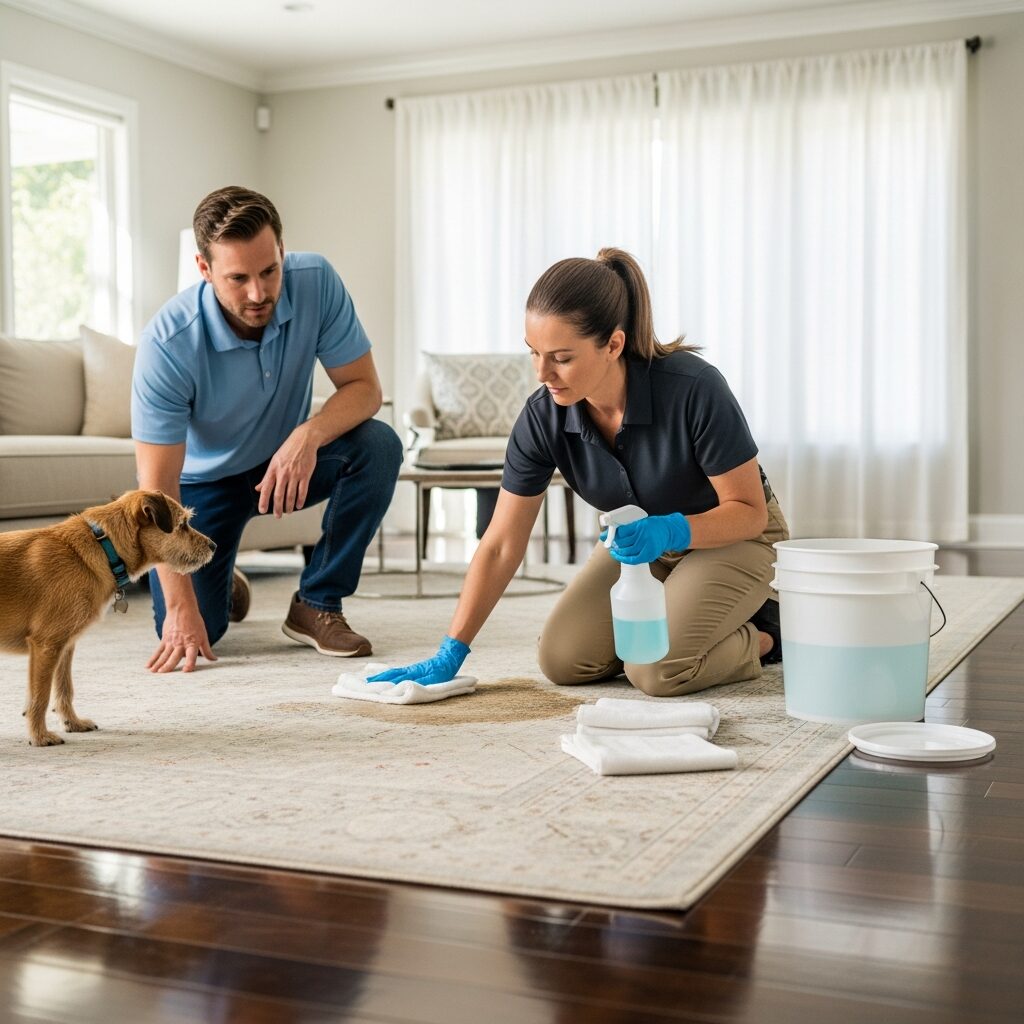
If a fresh accident occurs, blot—don’t scrub. Use a white towel, apply steady pressure, and trade out cloths as they load up. Avoid heat. Snap a photo and reach out to a local expert for next steps. That brief call helps you avoid turning a manageable issue into a complex restoration.
The Professional Path: From Pickup to Perfectly Dried
When you schedule a service for pet concerns, expect a calm, methodical process. At pickup, technicians document the rug’s condition and confirm the spots you’ve noticed. Back at the facility, dry soil removal frees the fine dust that binds to sticky residues. Dye testing informs chemistry so that color stays where it belongs. Stain-specific pre-treatments target visible marks before the bath begins.
Immersion allows for complete rinsing—top, bottom, and everything in between. During this stage, odor-causing residues dissolve and release from fibers. The team monitors rinse clarity and pile response, adjusting as needed. After the bath, controlled drying prevents mustiness and maintains rug shape. Airflow, temperature, and dehumidification work together so the rug finishes crisp, flat, and soft. Grooming sets the pile, and fringes receive careful attention without harsh bleaching. The outcome is a rug that looks better and smells like itself again—clean, not perfumed.
In the middle of this journey, the quality of the workflow matters more than any single product. That is why choosing true rug cleaning services from a focused local team makes such a difference. Experience shows in small choices—how to balance agitation with fiber protection, when to extend rinsing, or how to coax luster back into a dulled pile. These are the details that separate a temporary fix from a lasting solution.
Living With Pets and Rugs: Practical Harmony
There is no need to choose between a beautiful rug and a life with animals. The key is rhythm: predictable care, quick attention to mishaps, and occasional professional resets. Rotate rugs a couple of times a year so a pet’s favorite sleeping spot doesn’t shoulder all the wear. Use a quality pad to cushion joints and prevent sliding when a dog pivots enthusiastically to greet you at the door. Vacuum gently, keeping tools away from fringes, and open windows on cool mornings to let fresh air move through the space.
Sunlight is part of Sherman Oaks charm, but it can fade color and warm fibers, intensifying odors if contamination remains. Sheer panels or timed shades help, and rotation shares the exposure. If your pet tends to scratch at corners, a small furniture reconfiguration or a well-placed throw can redirect the habit without sacrificing style.
Special Cases: Old Spots, Repeated Marking, and Mystery Odors
Not all pet issues are new. Older spots may have set, oxidized, or bled color, especially if household cleaners were applied in the past. These require patience and realistic expectations. Complete odor removal is still achievable in many cases, but visual evidence might remain faintly where dyes shifted. Your technician will discuss what success means for your specific textile so you feel informed before work begins.
Repeated marking often stems from a lingering trace left in the foundation. A thorough decontamination bath breaks this cycle by eliminating the cue. After cleaning, reinforce new behavior with small changes: a relocated water bowl, a baby gate for a few days, or a positive reward routine. Mystery odors—those you can’t locate—sometimes reveal themselves under UV inspection during the initial evaluation, helping target exactly where treatment should focus.
Questions to Ask Your Cleaner
Good service thrives on good questions. Ask how they test dyes, what chemistry they use for protein-based contamination, and how drying is controlled. Inquire about blocking and grooming, and how they protect floors upon return. A confident professional welcomes the conversation and explains methods in plain language. They’ll also discuss realistic outcomes for particularly delicate fibers like silk or viscose so you are never caught off guard.
Frequently Asked Questions
How fast should I act after a pet accident?
Blot as soon as possible to limit wicking and surface staining, then contact a professional for guidance. Early intervention reduces the chance of odor setting in the foundation and improves the likelihood of a nearly invisible result.
Can every pet odor be removed?
Most can, especially when the rug receives full immersion decontamination. Long-standing contamination, prior home remedies, or sensitive dyes may limit perfection, but significant improvement—and true freshness—is typical with a careful process.
Will cleaning harm my rug’s fibers?
On the contrary, proper washing protects fibers by removing abrasive soil and sticky residues. The key is tailoring chemistry and technique to the rug’s construction. A trained cleaner will test, plan, and monitor each step to preserve texture and color.
What if my rug keeps getting re-marked?
Repeated marking often indicates residual odor cues in the foundation. Comprehensive decontamination breaks the cycle. Complement cleaning with short-term changes at home—access management and positive reinforcement—to encourage new habits.
How should I maintain the rug after cleaning?
Use a pad, rotate regularly, vacuum gently, and manage sunlight. Blot new spills promptly and avoid harsh spotters. These habits extend freshness and help ensure pet incidents don’t become long-term issues.
Is in-home cleaning enough for pet contamination?
Surface methods rarely reach the foundation where odor lives. A dedicated wash at a facility allows complete rinsing and controlled drying, which are essential for lasting results.
Bring Back Freshness and Comfort
When your favorite room smells like your pet rather than your home, it’s time for a reset rooted in expertise. Choose local rug cleaning for pet stains that respects fibers, understands dyes, and clears odors where they begin. Schedule your next rug cleaning and enjoy the simple pleasure of a rug that looks beautiful, feels soft, and smells like a welcome you’re proud to share.