
When Pets Are Family, Your Rugs Need Extra Care
In Sherman Oaks, we love our pets the way we love our sunshine and weekend walks under jacaranda blooms. Dogs lounge where the afternoon light hits the living room rug, cats invent secret napping spots behind the sofa, and accidents—well, they happen. The challenge is that pet stains aren’t just visible marks; they’re chemical events that can alter dye, attract soil, and leave behind odors that reappear on humid days. A tailored approach to rug cleaning for pet households focuses on neutralizing the source of the problem, protecting fibers, and restoring the clean, comfortable foundation that makes a home feel good again.
Why Pet Stains Are Different from Ordinary Spills
Pet accidents contain a complex mix of acids, salts, and organic compounds. As they dry, crystals form that can rehydrate with moisture, releasing odor even after a surface wipe. Some spots may look gone one day and return the next because residues wick up from the foundation. Enzymes can help, but using the wrong product on wool, silk, or delicate blends can cause texture changes or dye shift. That’s why we start with mapping, moisture detection, and fiber identification. We want to know where the contamination traveled, what the rug is made of, and how its dyes behave before we attempt a thorough corrective wash.
Inspection, Blacklight, and Smart Mapping
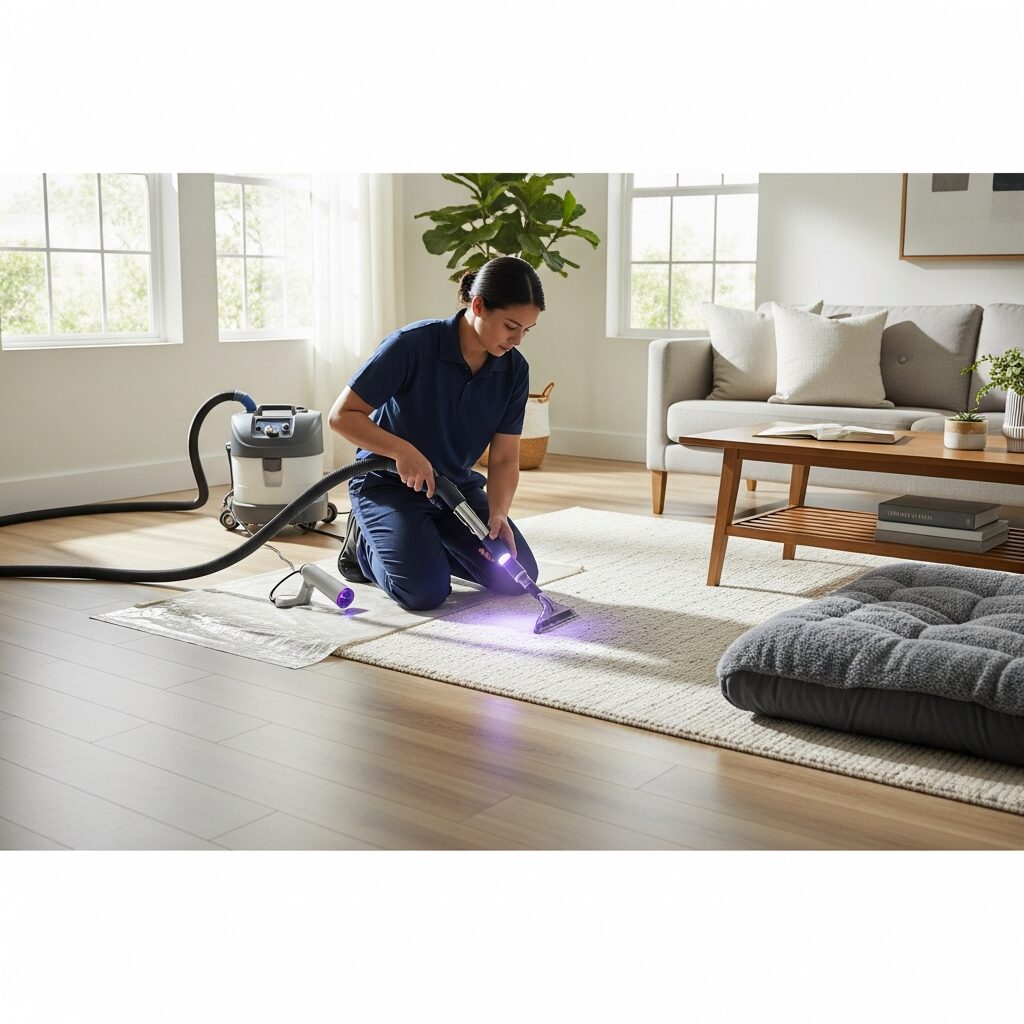
Pet issues hide. In Sherman Oaks homes with open floor plans and soft natural light, it’s common to miss older accidents until the room warms up. We use UV inspection to reveal dry stains, moisture meters to check the foundation, and nose-to-fiber assessment to verify odor sources. If a rug sits on hardwood or concrete, we look beneath for haloing or pad saturation. The goal is to create a treatment plan that addresses what’s on the surface and what’s below it, so odors don’t boomerang and marks don’t ghost back after drying.
Wool, Silk, Cotton, and Synthetic: Treating the Right Way
Fiber determines everything. Wool is resilient and responds well to pH-balanced care, but over-the-counter spotters can strip natural lanolin and set stains. Silk and viscose need low-moisture strategies and careful grooming to avoid pile distortion. Cotton flatweaves can absorb quickly and may require extra flushing. Synthetics like nylon or polyester release much of their contamination with the right dwell time and rinsing but can hold onto oily residues that demand targeted chemistry. A professional process matches solutions to fibers and stains, prevents color bleed, and restores softness without perfume-heavy coverups.
The Power of Proper Dusting Before Any Wash
It may seem counterintuitive to worry about dust when facing a pet stain, but dry soil is half the battle. Embedded grit creates abrasion during cleaning and makes residues harder to remove. We start with controlled dusting to shake out what vacuums miss. That way, when we treat pet spots and wash, we’re not grinding sand into fibers or pushing soils deeper. Think of it as preparing the stage so stain removal can succeed without collateral damage.
Neutralizing Odor at the Source
Eliminating odor requires reaching the foundation. For many rugs, a full immersion-style wash is the most reliable route, because it allows safe, thorough saturation that dissolves and carries away the salts and organics that cause smell. For rugs whose construction can’t handle immersion, we use targeted flood-and-flush zones, suction recovery, and barrier techniques to clean deeply without over-wetting. Drying is done under measured airflow to ensure that no dampness remains—critical for stopping odor cycles and protecting hardwood floors when the rug returns home.
Protecting Dye Integrity During Pet Stain Removal
Some dyes are more likely to migrate when exposed to alkaline products or prolonged moisture. That’s why we test dyes before any broad treatment and use controlled chemistry for each stage. If a red border threatens to wander into a light field, we adjust pH, limit dwell, and create flow paths that move contamination toward rinse channels rather than across sensitive areas. This attention to detail prevents the haloing and unevenness that can age a rug prematurely.
Life Happens: Real-World Pet Scenarios from Sherman Oaks
One client near Hazeltine had a beloved rescue dog who favored the same sunny corner every afternoon. Months later, a faint odor lingered despite diligent blotting and spray treatments. UV inspection revealed an extended area of older accidents, and the pad beneath had a telltale outline. We removed the rug, isolated the affected zones for additional flush cycles, replaced the compromised pad, and returned a rug that smelled like nothing at all—which, for a home, is exactly the goal. Another family with two cats battled a recurring mark by the dining room sideboard; we discovered a wick-back issue from prior surface-only treatments. A controlled, fiber-safe wash resolved it where quick sprays had failed.
Mid-Life Maintenance Between Cleanings
Once a rug is properly reset, upkeep is simpler. Blot fresh accidents immediately with a white towel, pressing to lift moisture without scrubbing. A small amount of cool water can help dilute, but avoid over-saturating, especially on wood floors. Vacuum regularly with moderate suction and a smooth floor tool on delicate piles. Consider a breathable, washable pad that won’t trap moisture against hardwood. As months pass, schedule a professional assessment if a spot resists your first-aid steps; early intervention keeps fibers and colors safe. In the midst of your routine, a planned professional rug cleaning gives your floors the same fresh start your rooms get after a spring breeze sweeps through the neighborhood.
Why We Avoid Heavy Fragrances and Coverups
Masking an odor is not solving it. Heavily scented products can clash with indoor air quality, and worse, they often bond to fibers, attracting new soil. Our aim is neutral: remove the source, rinse completely, and dry to a clean finish so the rug smells like itself—quiet, undistracting, and ready for everyday life. That neutrality is what lets your home’s real scents—coffee brewing, a favorite candle, fresh flowers—shine through.
Sunlight, Traffic, and the Way Pet Homes Age
Pet-loving homes center around the comfortable zones: the sofa end where a dog curls up, the hallway runner where a cat watches birds, the nursery rug where the family gathers. Those concentrated areas show wear sooner and can hold more oils from paws and day-to-day living. Cleaning removes embedded residue so colors read true again, but we also talk about rotation, pads, and gentle grooming tools that lift pile without fuzzing. Small choices add up to big longevity, especially in a bright, airy Sherman Oaks home where sunlight and activity are part of the joy.
Frequently Asked Questions
Here are detailed answers to common questions we hear from pet owners across Sherman Oaks. If you don’t see your situation listed, reach out—we’ve likely seen a similar challenge and can help tailor a plan.
What should I do immediately after a pet accident on my rug?
Blot, don’t rub. Use a clean white towel and apply gentle pressure to lift moisture. If needed, add a small amount of cool water to dilute, then blot again. Avoid colored cloths, high-pH cleaners, and over-wetting. Once you’ve done simple first aid, let a professional handle the deeper correction so dyes and texture remain safe.
Can pet urine permanently damage a rug?
Yes, over time. Urine can alter dye chemistry, weaken fibers, and cause discoloration that becomes harder to correct the longer it sits. Quick attention improves outcomes dramatically. When addressed promptly with the right method, many stains and odors can be significantly reduced or eliminated without harming the rug.
How do you remove odor that keeps coming back?
We target the foundation, not just the face yarn. Depending on the rug, we use immersion washing or localized flood-and-flush with controlled suction recovery. By dissolving and removing the salts and organics bound to the foundation, we stop the odor cycle that reappears with humidity or temperature changes.
Is enzyme cleaner safe for wool rugs?
Some enzyme products are safe when used correctly, but many off-the-shelf versions are not formulated for fine wool. Overuse or the wrong pH can strip protective qualities or cause fuzzing and dye issues. Professional solutions are tailored and rinsed completely to protect the fiber and finish.
What if my rug has both old and new pet accidents?
We see that often. Older stains require mapping and targeted flushing to fully remove odor sources, while newer spots can be addressed with focused treatment during the same wash cycle. The combination approach resets the rug so you’re not chasing ghosts from the past every time the weather warms.
Do you handle area rugs in apartments with strict building rules?
Absolutely. We coordinate pickup and delivery around management requirements, protect common areas, and ensure the rug returns fully dry and neutral. For small elevators or tight stairwells, we plan transport methods that safeguard both your rug and your building.
From Stained to Serene: Your Next Step
Pets bring life and love to a home, and your rugs can keep up when they’re cared for thoughtfully. If you’re ready to erase the reminders of last month’s training mishap, quiet that stubborn odor, and bring back color and softness underfoot, schedule professional rug cleaning with a team that knows Sherman Oaks, understands pet chemistry, and treats your home with respect. We’ll handle the science; you enjoy the cuddle time.