
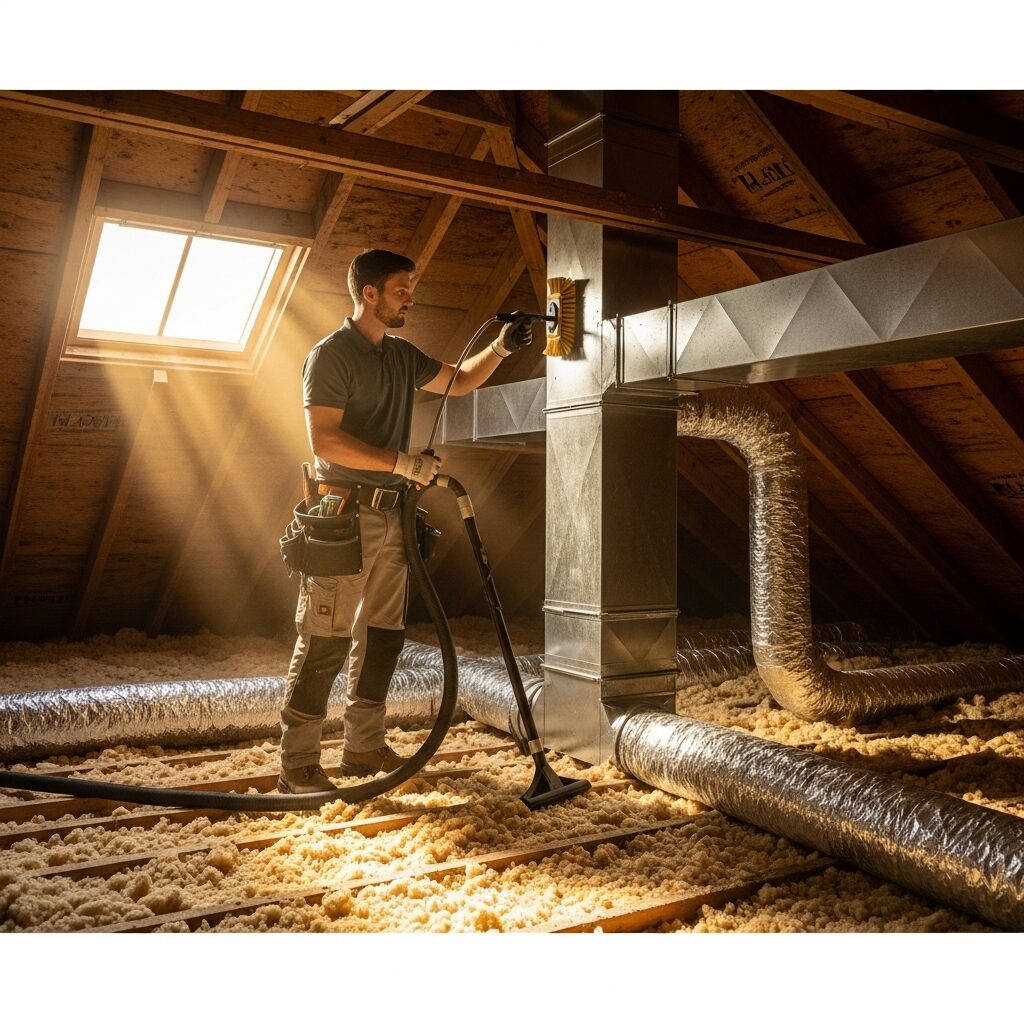
In Sherman Oaks, we spend a lot of time indoors—especially when summer heat pushes the AC to run long hours and wildfire season makes everyone think twice about opening windows. Over the years, I’ve found that many homeowners only start paying attention to their ductwork when they notice dust collecting faster than usual, a lingering musty smell, or airflow that feels uneven from room to room. When that happens, people often ask what really determines the scope of an air duct cleaning and why one home can be straightforward while another takes a more careful approach. If you’re exploring air duct cleaning in Sherman Oaks, understanding the factors that shape the work itself helps you set realistic expectations and make smarter choices about your home’s air system.
Sherman Oaks homes are wonderfully varied. You’ll see classic ranch-style properties, hillside homes with additions, mid-century layouts, and newer builds tucked into quiet streets. That variety matters because duct systems are designed around the home’s architecture, and the more complex the duct layout, the more time and specialized access the job can require. A single-story home with a short, direct trunk line is usually simpler to work through than a multi-level home where duct runs snake between floors, around beams, or into tight attic corners. The point isn’t that one is “better” than the other—it’s that the duct configuration changes how the cleaning is performed and how thorough a technician can be without taking shortcuts.
One of the biggest influences on the overall effort is the condition of the ductwork itself. In many Sherman Oaks neighborhoods, HVAC systems have been upgraded over time, but the ducts may be older than the equipment. Older duct material can be more fragile, with seams that have shifted, insulation that has aged, or flex duct that has compressed in spots. When ductwork is delicate, a responsible professional works more cautiously, using appropriate agitation tools and suction levels to avoid tearing, collapsing, or dislodging connections. A careful approach takes more attention, and it’s also the difference between a cleaning that improves your system and one that creates new problems.
Another factor is what kind of debris is actually inside. “Dust” sounds simple, but what you find in ducts often reflects the story of a home. If you’ve lived through remodels, drywall dust and fine particulate can settle deeply into the system. If you have pets, you may see fur and dander collecting near returns and in low spots along the runs. If there’s been moisture at any point—like a small roof leak into an attic duct chase or a condensation issue—debris can cling more stubbornly to surfaces. The type and amount of buildup affects not just how long the cleaning takes, but also what kind of containment and filtration a crew needs to keep particles from migrating into living spaces.
In Sherman Oaks, seasonal conditions add their own layer. During hot months, systems can run constantly, and return air pulls in everything that’s floating around the house. When outdoor air quality dips—whether from nearby freeway traffic or regional smoke—homes often stay closed up, and the HVAC system cycles air repeatedly. That continuous circulation can accelerate how quickly fine particles gather at returns, grilles, and within the duct network. It’s one reason I encourage homeowners to think of duct hygiene as part of a broader indoor air routine that includes filter changes, humidity control, and keeping supply and return areas unobstructed.
Access is another practical element that shapes the work. Some homes have easy-to-reach attic platforms and wide service openings; others have tight crawlspaces, steep rooflines, or ductwork buried beneath insulation. If technicians can’t access key points of the system—like the main trunk, the plenum, or the return drop—it’s harder to do a complete cleaning without creating new access panels. In a well-done job, access openings are planned thoughtfully and sealed properly afterward so the system remains airtight. Airtightness matters in Sherman Oaks because any leakage into attics or wall cavities can pull in dust and insulation fibers, which then circulate through your living areas.
When people ask what affects the overall complexity of a duct cleaning, I also bring up the number of vents and returns. Each register is a connection point where air enters or leaves the duct system, and each one has to be addressed to prevent “missed pockets” of debris. More registers typically mean more time spent protecting surfaces, removing grilles, cleaning the immediate boot areas, and ensuring the vacuum system maintains consistent negative pressure throughout the network. Even in a modest home, the distribution of vents can be surprisingly intricate, especially in remodeled spaces where additions added new runs that branch off in unexpected ways.
Then there’s the HVAC equipment itself. Duct cleaning isn’t just about the metal or flex pathways; it’s also about the components that move and condition your air. The air handler, blower compartment, and coils can accumulate dust that reduces efficiency and contributes to odors. A complete approach pays attention to these areas because leaving them untouched can reintroduce particles back into freshly cleaned ducts. Still, the amount of access and disassembly required varies by system type. Some air handlers are designed with service-friendly panels; others are tight and require more careful work to avoid damaging insulation, wiring, or condensate drainage.
Filtration habits play a role too. If filters are frequently replaced and properly sized, the system has a better chance of capturing particles before they move deeper into the ducts. In contrast, a missing filter, a filter that doesn’t fit snugly, or a filter left in place long past its useful life can allow dust to bypass and settle where it’s harder to reach. In my experience, many indoor air complaints in Sherman Oaks come down to simple maintenance gaps that compound over time. Duct cleaning can help reset the system, but it works best when followed by a steady maintenance rhythm.
Household lifestyle matters more than people realize. A home with frequent cooking, candles, or fireplace use can introduce fine soot-like particles that travel through return air. A busy household with kids, pets, and constant foot traffic tends to stir up more particulate. Even the way you use your HVAC system—continuous fan mode versus cycling—can influence how particles distribute. None of these factors are “bad,” but they do affect what technicians find and how detailed the cleaning needs to be to get meaningful results.
One mid-project detail that often surprises homeowners is how much the return side of the system matters. Supply ducts push conditioned air out, but returns pull air back in—along with whatever is floating in the home. Returns can act like the vacuum of the house, and if return grilles are near high-traffic areas, you may see heavier accumulation. A thoughtful cleaning addresses return trunks, return boots, and the area around the filter housing to prevent debris from being redistributed. When you’re considering air duct cleaning, ask whether the process includes a full-system approach that treats returns with as much care as supplies.
In Sherman Oaks, I also pay attention to signs of duct leakage or poor sealing. Leaks can pull attic dust, insulation fibers, or crawlspace debris into the system, creating a cycle where ducts become dirty faster than they should. During cleaning, a technician may notice loose connections, missing mastic, or tape that has aged and peeled away. While cleaning itself is not the same as sealing, spotting these issues early gives you a chance to address them and protect the results of the work. Clean ducts paired with leaky joints can feel like trying to keep a room clean with a window cracked open all day.
Odors are another common concern. Some homeowners call because they notice a stale smell when the system first kicks on, or a musty note after the AC has been running. Odors can originate from dust buildup, moisture in the condensate area, microbial growth on a coil, or debris in a return chase. Proper evaluation matters, because deodorizing without cleaning, or cleaning without resolving moisture, can lead to frustration. In our climate, where warm days and cool nights can create condensation on HVAC components, controlling moisture and keeping drainage clear can be just as important as removing dust.
The integrity of the duct material influences tool selection, too. Metal ducts can often handle more robust brushing and agitation, while flex duct requires a gentler touch to avoid tearing the inner liner. Fiberglass-lined ducts bring their own considerations, since aggressive abrasion can damage the lining and release fibers. A professional approach matches tools to materials and aims to remove contamination without compromising the duct surface. This is one of the reasons DIY approaches can go sideways: without seeing the entire system and understanding its construction, it’s easy to do more harm than good.
Timing and preparation can also shape the experience. If vents are behind heavy furniture, if attic access is blocked, or if the HVAC closet is crowded, technicians may spend more time creating safe pathways and protecting your home. In Sherman Oaks, where many garages and closets double as storage, clearing a bit of space ahead of time can make the work smoother and help ensure all parts of the system are reachable. The best results come when the crew can focus on cleaning rather than navigating obstacles.
Finally, there’s the question of how “complete” the cleaning is intended to be. Some approaches focus only on visible vents and short sections near registers, but a comprehensive service aims for the full network: supply and return runs, main trunks, plenums, blower compartment, and other accessible HVAC interior surfaces. The more complete the scope, the more it supports consistent airflow and reduces the chances of dust reappearing quickly. In my view, the goal isn’t perfection—it’s meaningful improvement that you can feel and that supports the long-term health of your HVAC system.
FAQ
Q: What signs suggest my Sherman Oaks home might benefit from duct cleaning?
A: Dust accumulating quickly after cleaning, visible debris around supply registers, musty or stale odors when the system runs, uneven airflow, or increased allergy-like symptoms can all be clues. It’s also worth considering after major remodeling or if you’ve had a roof or moisture issue near duct pathways.
Q: Is duct cleaning mainly about dust, or does it help with airflow too?
A: It can help with both. Removing buildup in return areas, boots, and main trunks may support steadier airflow, especially if debris was restricting passages. However, airflow issues can also come from duct sizing, dampers, blower performance, or leaks, so a good provider looks at the whole picture.
Q: Do older ducts require a different approach?
A: Yes. Older metal ducts may have seams that need careful handling, and older flex duct can be more prone to tearing. A careful technician adjusts tools and methods to avoid damage while still removing debris effectively.
Q: Will duct cleaning eliminate odors permanently?
A: It can reduce odors caused by dust and debris, but if the odor source is moisture, a dirty coil, or a drainage issue, those causes need attention too. A thorough inspection helps identify whether cleaning alone is likely to resolve what you’re smelling.
Q: How can I keep ducts cleaner after a cleaning?
A: Use correctly sized filters, change them on a consistent schedule, keep return grilles clear, manage humidity, and consider addressing duct leakage if it’s present. These habits help protect the results and keep particles from building up quickly again.
Ready to improve your home’s air system?
If you’ve been noticing dust, odors, or inconsistent comfort in your Sherman Oaks home, a well-executed duct cleaning can be a practical reset—especially when paired with better filtration and moisture awareness. To explore a thorough, professional approach to air duct cleaning, schedule a visit and ask for a walkthrough of what will be cleaned, how your duct materials will be protected, and what steps will help keep your system performing well afterward.