
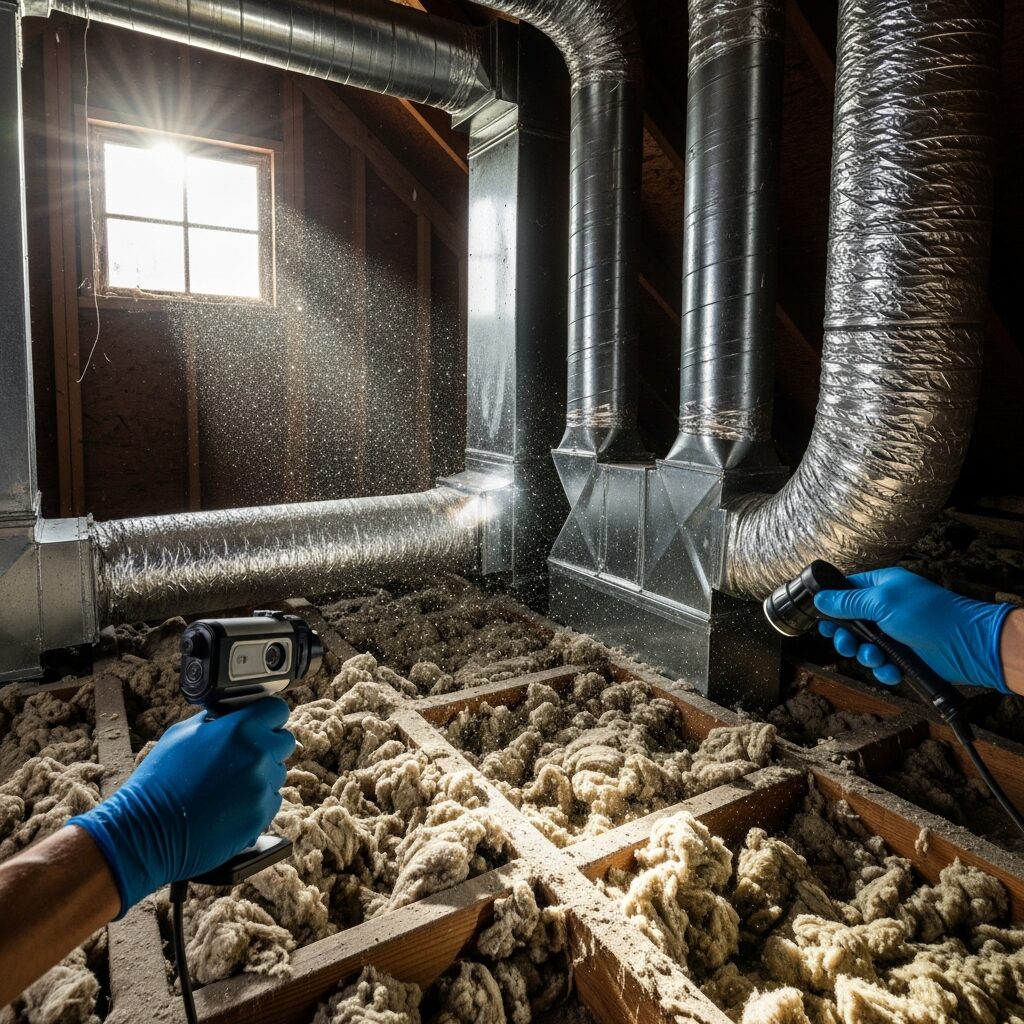
The Hidden Airway of Your Home in Sherman Oaks
Most Sherman Oaks homeowners think about comfort in terms of what they can feel immediately: the AC keeping the living room cool during a hot Valley afternoon, the heater taking the edge off a chilly morning, or the ceiling fan helping air circulate when the windows are open. But there’s a less visible factor shaping day-to-day comfort that often goes unaddressed for years: the condition of the ductwork. Your ducts are essentially the respiratory system of your house, moving air from room to room and returning it back to the HVAC equipment to be conditioned again.
Because ductwork is tucked away in attics, crawl spaces, and wall cavities, it’s easy to assume it stays clean on its own. In reality, ducts can collect dust and debris over time, and they can also develop leaks that pull in unwanted air from dusty attic spaces or wall voids. Even in homes that look spotless, the HVAC system may be circulating particles that you don’t notice until the air feels stale, surfaces get dusty quickly, or family members start reacting to the indoor environment.
Learning what duct cleaning does—and what it doesn’t do—helps you decide when it’s worth prioritizing. When done correctly and for the right reasons, air duct cleaning can support cleaner indoor air, more consistent HVAC performance, and a home that feels fresher through the seasons. In Sherman Oaks, where HVAC use can be heavy for much of the year, that kind of maintenance can be especially relevant.
Why Ducts Get Dirty in a Place Like Sherman Oaks
Sherman Oaks sits in the San Fernando Valley, and the Valley has its own rhythm. Warm, dry periods can last for months, and the dryness makes dust more mobile. Outdoor air carries fine particles from roads and landscaping, and those particles find their way inside. Even if you keep windows closed and rely on HVAC, air still moves through tiny gaps around doors, windows, and building materials. Over time, that background particulate becomes part of household dust.
Once dust is in the home, the return side of your HVAC system acts like a collection point. Air is pulled toward return grilles, passes through a filter, and then travels through ductwork to the blower and coils. Filters help, but they’re not perfect, especially if the filter isn’t seated tightly or if the system has minor bypass gaps. That’s how fine debris can start lining the ducts, sticking to surfaces and collecting at turns and transitions.
Local lifestyle factors matter too. Many households have pets, and pet dander is light and easily airborne. Busy households create more lint and fibers from clothing, bedding, and upholstery. And in a community where remodeling and upgrades are common, construction dust is a major contributor. Drywall sanding residue, sawdust, and insulation particles can travel quickly if the HVAC runs during a project. When that happens, the ducts can store remnants of renovation long after the last tool has been put away.
What’s the Practical Impact of Dirty Ducts?
The impact isn’t always dramatic, and that’s part of why duct cleaning can be misunderstood. It’s rarely about one big problem you can see. More often it’s about a steady, low-level effect: dust that returns quickly, air that feels slightly stale, or rooms that never seem to get as comfortable as they should. In some homes, dirty ducts can contribute to odors that appear when the HVAC turns on, especially after the system has been off for a while.
There’s also the issue of distribution. Ductwork is designed to deliver conditioned air efficiently. When dust and debris accumulate, especially at registers and in certain sections, it can subtly affect airflow patterns. That doesn’t necessarily mean the system stops working, but it can make performance less consistent. Homeowners sometimes describe it as “the bedrooms are never as cool as the living room,” or “the back room always feels stuffy.” Those symptoms can have multiple causes, including duct sizing and insulation, but duct cleanliness and leakage are common pieces of the puzzle.
For families with allergies or asthma, the biggest concern is the recirculation of airborne irritants. Dust can hold pollen, dander, and other particles. When airflow stirs up what’s settled in the duct system, those particles can re-enter the living space. Again, it’s not always visible, but sensitive occupants tend to notice it in how they feel, especially at night when the HVAC is cycling and windows are closed.
How Duct Cleaning Fits into Whole-Home Maintenance
One of the most helpful ways to think about duct cleaning is as part of a broader maintenance strategy, similar to changing filters, keeping the outdoor condenser clear, and ensuring bathroom fans vent properly. It’s not something most homes need constantly, but it can be a useful reset when conditions call for it. A proper cleaning addresses accumulated debris in the supply and return pathways so the system isn’t pulling air over layers of settled dust.
In Sherman Oaks, I often encourage homeowners to consider timing. If you’ve just purchased a home, you don’t always know the history of the HVAC system. A previous owner may have had pets, smoked, or completed renovations. Duct cleaning can be part of making the home feel like yours. If you’re planning a remodeling project, scheduling duct attention afterward can help reduce lingering fine dust that otherwise seems to “reappear” no matter how much you clean.
It also pairs well with checking the basics: making sure the filter fits correctly, confirming that return grilles aren’t blocked by furniture, and ensuring supply vents aren’t closed off in ways that force the system to work harder. When you combine these steps, you’re not only improving cleanliness but also supporting more stable airflow and comfort.
Midway Insight: Why Professional Technique Matters
Homeowners sometimes try to handle ducts by vacuuming what they can reach from the vent opening. That can help with visible dust at the register, but it doesn’t address the length of the duct run or the areas where debris collects more densely. Professional methods typically involve creating controlled airflow through the duct system so loosened material is captured rather than dispersed. The difference is not just convenience; it’s containment and thoroughness.
When you’re evaluating air duct cleaning, consider whether the approach focuses on the entire air pathway, including both supply and return sides. In many homes, the return side can be the bigger dust collector because it pulls air from the living space toward the HVAC equipment. A careful cleaning also respects the type of ductwork in your home. Older metal ducts handle cleaning differently than flexible ducts, and both require the right tools and techniques to avoid damage.
Technique matters for another reason: you want the cleaning to improve indoor conditions, not create a temporary dust storm. Proper sealing of access points, attention to registers, and a method that captures debris are what make the difference between “we did something” and “the home feels better afterward.”
Common Sherman Oaks Scenarios Where Duct Cleaning Makes Sense
There are certain situations where duct cleaning tends to be especially relevant. One is moving into a previously occupied home, particularly if the home sat vacant for a while with dust settling. Another is after construction or major repairs. Even careful contractors can’t completely prevent fine dust from moving through a house, and HVAC systems can pull that dust toward returns.
Another scenario is persistent dust despite good housekeeping. If you’re regularly wiping down surfaces and still feel like a fine film returns quickly, it may be worth looking at the air distribution system. That doesn’t automatically mean the ducts are the culprit, but ducts are part of the system that can store and redistribute fine particles. Odors during startup, especially musty or stale air smells, can also suggest that dust or organic material has accumulated somewhere in the HVAC pathway.
Finally, homes with heavy HVAC use—common in the Valley—simply have more air passing through the system. More airflow means more opportunities for particulates to travel and settle. Over years, even a well-run system can accumulate a noticeable layer of dust in parts of the ductwork. Cleaning can be the step that brings the system closer to a baseline again.
What Duct Cleaning Does Not Replace
It’s just as important to be clear about limits. Duct cleaning doesn’t replace filter changes; filters are your ongoing daily defense. It doesn’t fix duct leaks, which can be a major reason dust enters the system from attics or wall cavities. If leakage is present, sealing and repairing ducts may be needed to prevent rapid re-accumulation. Duct cleaning also doesn’t solve moisture problems that can lead to microbial growth. If there’s an underlying drainage or condensation issue, that should be addressed so the system stays dry and stable.
In other words, duct cleaning is best viewed as one piece of responsible home care. When you pair it with good filtration, sensible housekeeping, and HVAC checkups, you give your home a better chance of maintaining cleaner, more comfortable indoor air—especially when the weather keeps you inside with the system running.
How to Keep Ducts Cleaner After a Cleaning
After a cleaning, the goal is to slow the rate at which dust returns. Start with the filter: use a quality filter that fits snugly, and check it regularly during heavy-use months. Keep the area around return grilles clean and unobstructed so the system can pull air freely without creating unusual pressure that might draw air from unintended gaps.
If you’re doing home projects, consider turning the HVAC off during the dustiest phases and sealing off work areas where possible. Vacuum with a machine that has effective filtration, because vacuum exhaust can otherwise reintroduce fine particles. If you have pets, regular grooming and washing pet bedding can reduce the amount of dander circulating through the home.
It can also help to pay attention to attic conditions. Many duct systems run through the attic, and attics in Sherman Oaks can be dusty. If there are gaps around return plenums or duct connections, attic dust can be pulled into the system. Sealing those gaps is often the step that makes the cleanliness last longer, and it can help the HVAC system operate more predictably.
FAQ: Air Duct Cleaning for Sherman Oaks Homeowners
Q: How often should a Sherman Oaks home consider duct cleaning?
A: There’s no single schedule that fits every home. It depends on HVAC usage, pets, remodeling, indoor air concerns, and whether ducts are sealed well. Many homeowners consider it after moving in, after renovations, or when dust and odors persist.
Q: Will duct cleaning improve airflow?
A: It can help if buildup at registers or in certain duct sections is contributing to restriction, but airflow issues can also come from duct design, leaks, or equipment problems. A good assessment looks at the whole system.
Q: Is dust around vents always a sign of dirty ducts?
A: Not always. Some dust accumulation is normal. Rapid or heavy buildup can indicate high dust load, filter bypass, or leakage pulling in debris from the attic or walls.
Q: Can duct cleaning help with odors when the HVAC turns on?
A: It may help when odors are tied to dust and debris in the air pathway. If odors come from moisture issues, the moisture source should be addressed as well.
Q: Should I change my filter after the ducts are cleaned?
A: Yes. A fresh, properly fitted filter helps maintain the benefit and captures lingering airborne particles.
Make Your Home Feel Fresher, Season After Season
Your home’s comfort isn’t just about thermostat settings—it’s about the quality of the air moving through the rooms where you live your life. If your system has been running hard through Sherman Oaks summers and you’re noticing dust, odors, or that persistent “stale air” feeling, it may be time to look at the ductwork that’s been quietly doing its job in the background.
When you want a meaningful reset and a cleaner air pathway, consider professional air duct cleaning as part of your home maintenance plan. With the right follow-through—good filters, smart housekeeping, and attention to leaks—you can keep your indoor air feeling cleaner and your HVAC system working the way it’s meant to.