
Understanding What People Really Mean by “Cost” in Sherman Oaks
If you’ve lived in Sherman Oaks for any amount of time, you’ve probably noticed how quickly a home can collect dust, especially when the Santa Ana winds roll through, when traffic on the 101 is backed up for hours, or when you’ve had the windows open during a warm stretch. It’s common for homeowners to start wondering about air duct cleaning and, naturally, what the “cost” might be. In reality, most people aren’t only asking about money. They’re asking what they’re getting for their time, what kind of disruption to expect, whether the results are noticeable, and how to tell a legitimate service from a too-good-to-be-true offer. Those are the questions that matter most in day-to-day Sherman Oaks life.
From the perspective of a local who’s seen every type of home layout in the Valley—mid-century ranch houses, hillside properties with tricky access, updated condos near Ventura Boulevard—the “cost” question is best explained by looking at the full picture: the condition of your system, the size and complexity of the ductwork, the type of contamination involved, and the quality of the cleaning method. When you understand those factors, it becomes easier to evaluate quotes, ask the right questions, and decide when it’s worth scheduling air duct cleaning for your home.
Why Sherman Oaks Homes Often Need More Attention Than You’d Expect
Sherman Oaks sits in a spot where indoor air issues can sneak up on you. We get long stretches of dry weather that keep dust airborne, occasional wildfire smoke that finds its way into tiny gaps, and plenty of pollen from landscaping and nearby hillsides. Add in the everyday realities—pets, kids coming in and out, home renovation projects, and a busy schedule—and your HVAC system becomes a kind of collector for whatever is moving through the air.
Even when you run your system normally and change filters, ducts can still accumulate debris over time. In many houses, supply vents deliver air to rooms that don’t get vacuumed as often under furniture. Return vents can pull in lint and hair from hallways. If you’ve got older ductwork, tiny leaks can draw in dust from attics or crawl spaces. None of that automatically means a crisis, but it does mean that the “cost” of cleaning is influenced by how much there is to remove and how accessible your system is.
What Actually Drives the Scope of a Professional Cleaning
When you hear wildly different numbers tossed around from neighbor to neighbor, it’s usually because the scope of work isn’t the same. One home might need a straightforward cleaning of main trunks and branch lines. Another might require careful attention to returns, registers, and the air handler area, especially if there’s visible buildup. The “cost” people feel most strongly can also be time: how long technicians are in the home, whether furniture needs to be moved, and how quickly the system can be put back into normal operation.
In Sherman Oaks, duct layouts vary a lot. Some homes have ducts routed through an attic that’s easy to access; others have tight, low-clearance areas that demand extra care. Condos can have shared or stacked systems that require coordination. Homes on slopes may have equipment tucked into utility spaces that are difficult to reach. All of that affects how extensive the job is, and what a reputable company needs to do to complete it properly without cutting corners.
Why “Too Fast” Is Often the Most Expensive Outcome
One of the most important things I tell friends locally is that speed isn’t always a good sign. A quick in-and-out visit can feel convenient, but if the cleaning is superficial, you may end up right back where you started—still dealing with dusty surfaces, stale airflow, or an ongoing musty smell that seems to return after the first hot week of summer.
Good duct cleaning is methodical. It’s not just sticking a vacuum hose in a vent for a few minutes. It involves protecting your home, creating appropriate negative pressure, agitating and dislodging debris so it can be captured, and addressing key components that influence indoor air. When the work is rushed, debris can be left in place or redistributed. In the long run, that’s a “cost” that shows up as frustration and wasted time, not to mention the hassle of scheduling another visit.
How Home Size and Duct Complexity Affect What You’re Buying
In Sherman Oaks, square footage is only part of the story. Two houses might be similar in size, but one could have a simple single-zone system and the other could have multiple zones or additions that created extra branch lines. A home that has been remodeled several times might have ducts added in ways that aren’t straightforward, with longer runs, older segments, or transitions that collect buildup.
Complexity matters because cleaning is about reaching and thoroughly addressing the full network. A professional approach accounts for how air moves through the system and where debris settles. Longer runs, multiple returns, and systems with more registers require more steps, more setup, and more careful verification. When you evaluate the “cost,” focus on whether the company is describing a complete, whole-system approach rather than a limited, vent-by-vent surface treatment.
What Contamination Type Changes the Level of Effort
Not all duct debris is the same. Some homes have a normal mix of dust and lint. Others have heavier buildup from years of deferred maintenance, from older filters that didn’t seal properly, or from construction dust after a renovation. There are also homes where odors are the main issue, such as after a pet accident, a roof leak that introduced moisture, or a period of vacancy where the system wasn’t used regularly.
When contamination is heavier or more complicated, the effort required increases. A reputable provider will spend time identifying what’s present and how to remove it without damaging ductwork. That might include paying closer attention to the return side, where larger debris often accumulates, or ensuring that the air handler area is clean enough that freshly cleaned ducts aren’t immediately re-contaminated. The “cost” you should care about here is quality: you want the result to last and to feel like a real reset of the system.
What Professional Equipment and Process Should Look Like
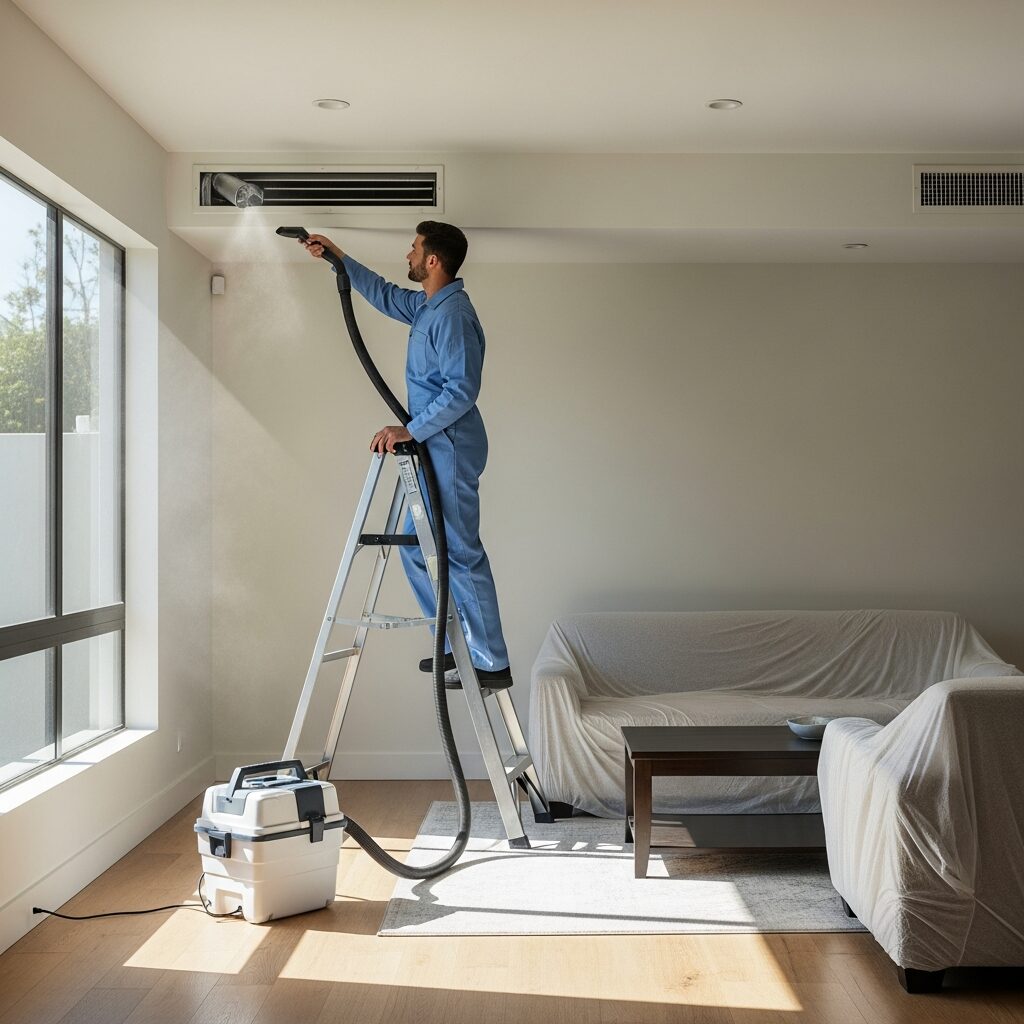
Homeowners often ask what they should expect to see during a real cleaning. Without turning your living room into a construction zone, professionals typically set up equipment designed to capture loosened debris rather than blow it around. They should protect flooring and take care around walls, vents, and furniture. They should also be able to explain what they’re doing in plain English, because the process should make sense.
A thoughtful provider treats your home like a place people live, not just a job site. In Sherman Oaks, where many families juggle work-from-home calls, school pickups, and evening traffic, it matters that technicians communicate timing, noise expectations, and how they’ll move through the home. The “cost” of stress and disruption can be as real as anything else, so clarity and respect are part of what you’re purchasing.
Where the Middle of the Job Makes the Biggest Difference
The middle portion of a duct cleaning is where quality is either proven or lost. This is when debris is dislodged from the walls of the ducts, when technicians make sure each branch line is addressed, and when they pay attention to the points where buildup tends to be stubborn. It’s also when the provider’s experience becomes visible: they know how to work efficiently without skipping sections, and they can adjust based on what they find.
If you’re trying to understand the “cost,” ask yourself whether the company is describing this middle phase with confidence and specifics. A vague promise of “we’ll clean your vents” isn’t the same as a whole-system approach that includes attention to the return side and sensible steps to prevent dust from being reintroduced. This is also a good place to connect the service to a broader indoor air plan, which may include better filter habits and periodic check-ins. Homeowners who treat air duct cleaning as part of regular home care often report that the home simply feels easier to keep clean afterward, especially during the driest months.
How to Evaluate Legitimacy Without Getting Lost in Technical Jargon
Sherman Oaks has no shortage of ads, mailers, and online promotions for duct cleaning. Some are perfectly legitimate; others rely on a low-commitment offer that shifts once technicians arrive. The best way to protect yourself is to listen for how the provider talks about scope. Are they willing to explain what is included? Do they discuss the system as a whole? Do they ask about your home, your concerns, and your HVAC setup?
Another strong indicator is whether they focus on outcomes you can verify. A credible provider can describe what you should notice after service—more consistent airflow, less visible dust around registers, reduced stale odors—without making unrealistic promises. They should also be comfortable answering questions about how they prevent dust from spreading during cleaning and how they ensure debris is actually removed, not just stirred up.
Why Timing Matters in the Valley
People often schedule duct cleaning right before peak cooling season, when the first heat wave reminds everyone that the AC is about to run for months. That can be a smart move because you’re preparing the system for heavy use. Others do it after a renovation, when they’re tired of fine dust reappearing no matter how often they wipe surfaces. Some families schedule after a smoky period, when the air just hasn’t felt “fresh” indoors.
Timing also affects how much disruption you experience. If your household is busy, you may prefer a day when you can be home to let technicians in and keep pets comfortable. Sherman Oaks is a neighborhood where schedules can be tight, so planning ahead can reduce the “cost” of inconvenience. A good company will work with you on timing and will give you realistic expectations about how long the job takes.
What Results Should Feel Like After a Proper Cleaning
It helps to set a realistic baseline. Duct cleaning won’t make your home feel like a sealed laboratory, and it won’t eliminate outdoor dust that comes in through doors and windows. What it can do is reduce one major source of recirculated debris. In many homes, people notice that the air smells cleaner when the system turns on, that certain rooms feel less stuffy, and that dust doesn’t accumulate as quickly on surfaces near vents.
Another subtle benefit is peace of mind. If you’ve ever looked into a return vent and seen a layer of gray buildup, it’s hard not to think about what’s moving through the system. After a quality cleaning, you should feel more confident that your HVAC is starting from a cleaner baseline, which can be especially reassuring for households with kids, older relatives, or anyone who is sensitive to dust.
How to Keep the Benefits Going Without Overthinking It
After cleaning, the easiest way to maintain results is to stay consistent with filter changes and make sure filters fit properly. In Sherman Oaks, where dust can spike during certain weather patterns, it’s worth checking filters a bit more frequently during those times. Keeping vents unblocked by furniture and rugs also helps airflow and reduces the chance of debris settling in certain sections.
If your home has older ductwork, it may also be worth paying attention to any signs of leakage, such as dust streaks near vent edges or persistent dust in a particular room. You don’t need to become an HVAC expert, but noticing patterns can help you decide when it’s time to follow up. Think of duct cleaning as one part of a larger routine, like deep cleaning carpets or servicing the AC before summer.
FAQ: Air Duct Cleaning “Cost” Questions Sherman Oaks Homeowners Ask
Q: When people ask about cost, what should I ask back to get a clear answer?
A: Ask what parts of the HVAC system are included, how the company prevents dust from spreading, and how they confirm the job was thorough. Clarity about scope is the best way to compare options.
Q: Will duct cleaning fix uneven temperatures between rooms?
A: It can help if buildup is restricting airflow, but uneven temperatures can also come from duct leaks, insulation issues, or system sizing. A reputable provider will discuss possibilities without overpromising.
Q: Is it worth cleaning ducts if I already change my filters regularly?
A: Filters help a lot, but they don’t capture everything and they don’t remove existing buildup. Cleaning can be worthwhile when there’s visible debris, persistent odors, or after remodeling.
Q: How do I know the results are real?
A: You should notice less dust around registers, cleaner smell when the system runs, and a generally fresher feel. You can also look inside vents with a flashlight to see whether buildup has been removed.
Q: Does duct cleaning make a home completely dust-free?
A: No. Dust also comes from outdoor air, fabrics, pets, and daily living. The goal is to reduce recirculated buildup inside the HVAC network.
Ready to Make Your Home Feel Fresher?
If you’ve been thinking about the “cost” of duct cleaning in Sherman Oaks, it helps to reframe it as an investment in comfort, cleanliness, and confidence in the air moving through your home. The right provider will explain the process clearly, respect your home, and deliver results you can actually feel when the system kicks on.
When you’re ready to schedule service, take a look at air duct cleaning and choose a time that fits your household. A well-done cleaning can make the whole season—whether it’s summer cooling or winter heating—feel noticeably more comfortable.