
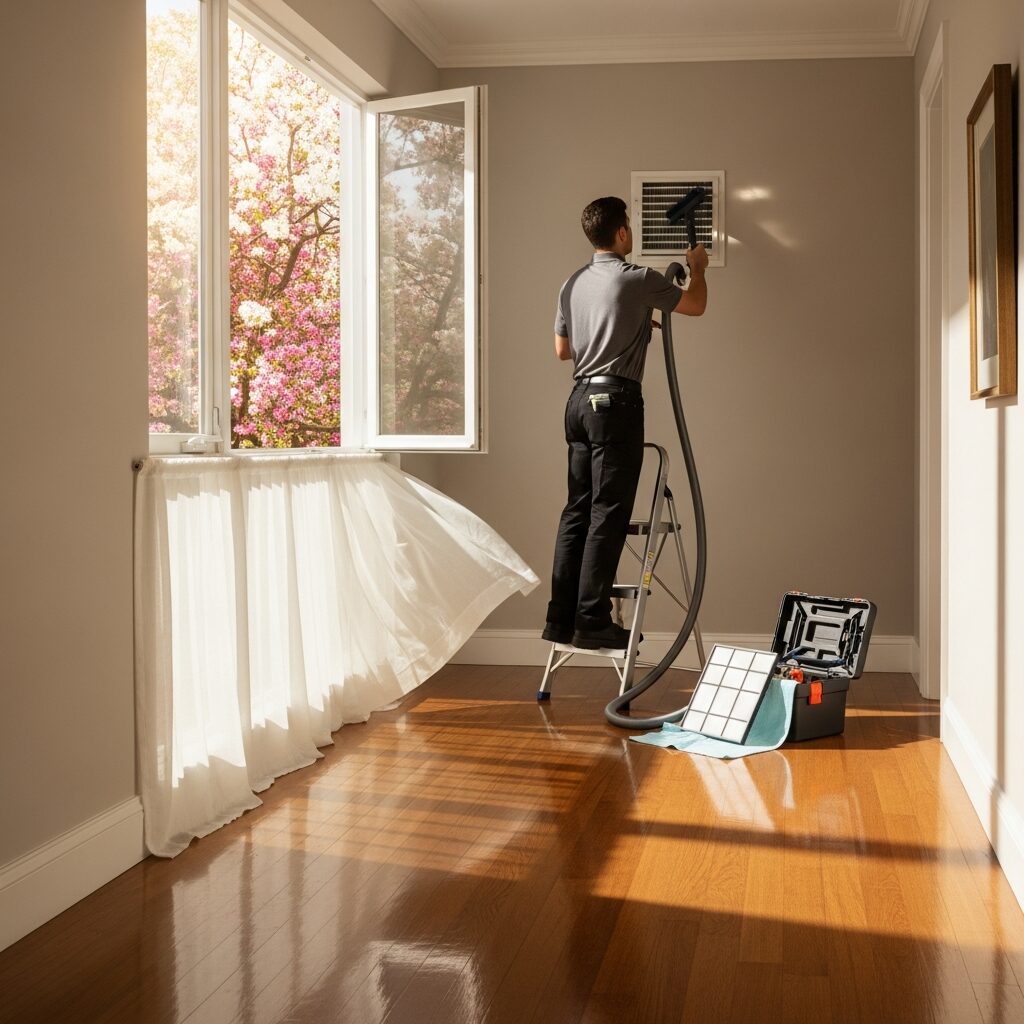
Why Seasonality Matters for HVAC Homes in Sherman Oaks
In Sherman Oaks, we don’t live with the kind of hard winter that forces everyone into one predictable routine. Instead, we bounce between warm afternoons, cool evenings, dry stretches, and occasional windy days that carry dust down the Valley. That variability makes seasonal HVAC maintenance feel less like a once-a-year chore and more like a rhythm you settle into. Your air ducts sit quietly behind walls and ceilings, but they respond to every season because your system’s airflow patterns change as the weather changes.
When homeowners think about maintenance, they usually start with filters and thermostat settings. Those are important, but ducts are the pathways that determine how effectively all that conditioned air is delivered. Seasonal maintenance isn’t only about cleaning; it’s also about noticing what changed since last season—more dust, new odors, uneven airflow, or a return vent that suddenly looks dirtier than it used to. Many local residents add air duct cleaning to their maintenance plan when they realize that filters alone aren’t addressing what they’re seeing and feeling inside the home.
In a community where HVAC can run a lot of the year, the goal is simple: keep the system moving air efficiently and keep the air inside your home feeling clean and neutral. Seasonal attention helps you avoid the “surprise problem” that shows up at the first heat wave or the first Santa Ana wind event.
Spring: Reset After Rain, Allergens, and Closed-Up Months
Spring in Sherman Oaks often brings a mix of fresh days and the start of warmer afternoons. It’s also a time when pollen can be a real nuisance. Even if you keep windows closed, pollen still finds its way in through doors, clothing, pets, and small gaps. Once inside, some of it becomes part of household dust and can be pulled toward return vents.
A smart spring approach is to treat it as a reset. Replace filters, vacuum around return grilles, and pay attention to how quickly dust is accumulating on surfaces. If you had your system running during cooler months with less ventilation, you may notice that the first few times the AC turns on, the air smells a bit stale. That can be a sign that dust and organic particles have settled in the ductwork and are being disturbed by renewed airflow.
Spring is also when people deep clean, reorganize, and sometimes start renovation projects. Even smaller activities—like cleaning out a garage, shaking out rugs, or doing a big closet purge—can throw a surprising amount of dust into the air. If that dust is present while the HVAC is running, it can get pulled into the return and gradually build up in the system.
Summer: High Use, High Stakes
Summer is the season when your ducts do the most work. On hot days, the system cycles frequently, and air moves continuously through supply lines, into rooms, and back through returns. If there’s dust accumulation in the ductwork, that steady movement can keep particles in circulation, making the house feel perpetually dusty. You might also notice that certain rooms cool more slowly, which can feel especially frustrating when temperatures rise in the afternoon.
Seasonal duct maintenance during summer is often less about scheduling a big project in the middle of a heat wave and more about preparation. Early summer, before the busiest period, is a good time to look for signs that your ductwork is contributing to comfort problems. Are vents blowing with a musty smell? Do you see dust staining around registers? Does one side of the home consistently feel warmer? Those observations help you decide whether to focus on cleaning, sealing, balancing airflow, or improving insulation.
During summer, it’s also common for households to keep doors closed to hold in cool air. This can reduce fresh-air exchange and make indoor air feel “used” faster. Clean ductwork and clean registers won’t replace ventilation, but they can help keep the air that is circulating from carrying extra debris with it.
Fall: The Transition Season and the Best Time to Pay Attention
Fall in Sherman Oaks often arrives gently, and that’s exactly why it’s a great time for HVAC attention. You may run the system less, which makes it easier to notice changes. When the HVAC isn’t masking everything with constant airflow, you can detect subtle odors, listen for changes in sound, and observe how dust behaves in the home.
Fall is also a time when many residents open windows more often, especially in the evenings. That fresh air feels great, but it can also bring in fine dust, leaf debris, and outdoor particles—particularly if you live near busy roads or construction zones. If your home’s return vents are close to the floor, they can pull in whatever settles in those areas, including dust from shoes and pet traffic.
This is the season when many homeowners choose to schedule a more thorough cleaning if it has been a while. In the middle of the year—right when you’re thinking about the next stretch of HVAC use—an evaluation and, if needed, a air duct cleaning can help keep the system from carrying summer’s buildup into the cooler months.
Winter: Short Bursts of Heat and the “Stored Dust” Effect
Winter heating in Sherman Oaks tends to happen in short bursts—cool mornings, a chilly week here and there, and then back to mild afternoons. That on-and-off pattern can create an effect homeowners often notice: when the system turns on after sitting idle, there’s a brief dusty smell or a feeling of dry, slightly stale air.
Part of that is normal seasonal change, but if the odor is persistent or you see visible dust movement from vents, it’s worth paying attention. During winter, many households keep windows closed, which reduces fresh air exchange and can make any indoor air quality issues feel more pronounced. If you have holiday gatherings, cooking, candles, and more people in the home, you also generate more airborne particles. Those particles can be drawn into returns and contribute to buildup over time.
Winter is also a good time to check humidity-related issues. While Sherman Oaks is generally dry, indoor moisture can still show up from cooking, showers, and laundry. If there’s any dampness near the HVAC system or around vents, it’s important to address the cause. Clean ducts are helpful, but moisture management is essential to keeping the system healthy over the long term.
Seasonal Maintenance Isn’t Just Cleaning: It’s Observation
The most effective seasonal routine is one that combines simple habits with occasional professional help. Homeowners can do a lot by keeping the area around returns clean, using well-fitted filters, and paying attention to dust patterns. If a filter gets dirty unusually fast, that can be a clue. If one room suddenly has more dust on furniture than the rest, that can be a clue too.
It’s also helpful to think in terms of “events” rather than just the calendar. A pet adoption, a nearby road project, a home renovation, smoke in the region, or even a long windy stretch can change what’s in your indoor air. Seasonal maintenance should be flexible enough to respond to those changes.
When homeowners in Sherman Oaks talk about feeling comfortable at home, they usually mean more than temperature. They mean the house feels clean, it doesn’t smell stale when the HVAC starts, and they’re not constantly battling dust. Seasonal duct attention supports that bigger picture.
Mid-Season Tune-Ups: Why the Middle of the Year Matters
There’s a point in every year when the HVAC has already worked hard for a while, but you still have more heavy-use days ahead. In Sherman Oaks, that mid-season point often arrives during the warm months, after the system has been running regularly and before the hottest late-summer days. That’s when people start to notice that the house isn’t staying as crisp and comfortable as it did in early summer.
A mid-season check can include filter replacement, register cleaning, and a look at return vents for buildup. If dust is accumulating in layers or you can see debris around the vent edges, it may be time for a deeper service. A thorough air duct cleaning can be a practical mid-year reset, especially for homes with pets, high foot traffic, or recent remodeling activity.
This approach is less about strict schedules and more about keeping your system from carrying last season’s debris into the next one. When you stay ahead of it, the home tends to feel more consistent—less of that cycle where you deep clean, feel good for a week, and then wonder why the dust is back so quickly.
How to Keep Seasonal Maintenance Simple and Sustainable
The best maintenance plan is the one you’ll actually follow. In Sherman Oaks, where life is busy and the seasons don’t always behave, simplicity wins. Make filter changes routine, keep return areas clear of furniture and clutter, and occasionally wipe down supply registers if you notice dust buildup. Pay attention after unusual events: a windy week, a long stretch of HVAC use, or a home project that created fine dust.
When you do consider professional duct cleaning, look for a process that feels careful and well explained. The goal is to remove built-up debris without turning the home into a construction zone. Good service supports cleanliness and comfort without drama.
FAQ: Seasonal Air Duct Maintenance in Sherman Oaks
Q: Is there a best season to have ducts cleaned?
A: Many homeowners choose spring or fall because those seasons are transitional and HVAC use is often less intense. That said, the best time is when you notice signs of buildup or after an event like remodeling, heavy dust, or long periods of system use.
Q: How can I tell if seasonal dust is getting into my ducts?
A: Watch for dust collecting quickly near vents, dust staining around registers, and filters that load up faster than usual. Also pay attention to how the air smells when the system turns on after sitting idle.
Q: Do I still need duct cleaning if I change filters regularly?
A: Filters help a lot, but they don’t catch everything, especially if the fit isn’t perfect or the home generates a lot of dust. Over time, some debris can still accumulate in ductwork and around registers.
Q: Can opening windows in spring and fall make duct buildup worse?
A: It can increase the amount of outdoor particles that enter the home, especially during windy or high-pollen periods. That doesn’t mean you shouldn’t enjoy fresh air; it just means you may need a stronger filter routine and more frequent cleaning around returns.
Q: What should I do right after duct cleaning to keep ducts cleaner longer?
A: Replace filters on schedule, keep return vents clean and unobstructed, and consider how dust-producing activities—like projects or heavy foot traffic—affect indoor air. Consistency is what keeps the benefits lasting.
Make Seasonal Comfort Feel Effortless
Your HVAC system works hard to keep Sherman Oaks living comfortable through heat, breezes, and everything in between. If you want your home to feel cleaner and more consistent from season to season, schedule an evaluation and professional air duct cleaning when your home is telling you it’s time—through dust patterns, odors, or uneven airflow. A well-timed service, paired with simple seasonal habits, helps your home stay fresh and comfortable no matter what the forecast brings.