
Ask anyone in Sherman Oaks who shares a home with a dog that loves the backyard or a cat who treats the sofa like a lookout perch, and they will tell you: pets make life better, and they make carpets work a little harder. Between the occasional accident, the slow build of oils and dander, and muddy paws from a quick jaunt under the jacaranda, our floors become a record of their adventures. Effective pet stain carpet cleaning is not just another pass with a machine; it is a thoughtful process that understands biology, fiber construction, and the realities of Valley living. When done right, it restores freshness, calms discoloration, and keeps your home feeling like the close, comfortable refuge it should be. Early in the process, it helps to bring in a local expert skilled in carpet cleaning who can assess the true extent of an issue and create a plan that works.
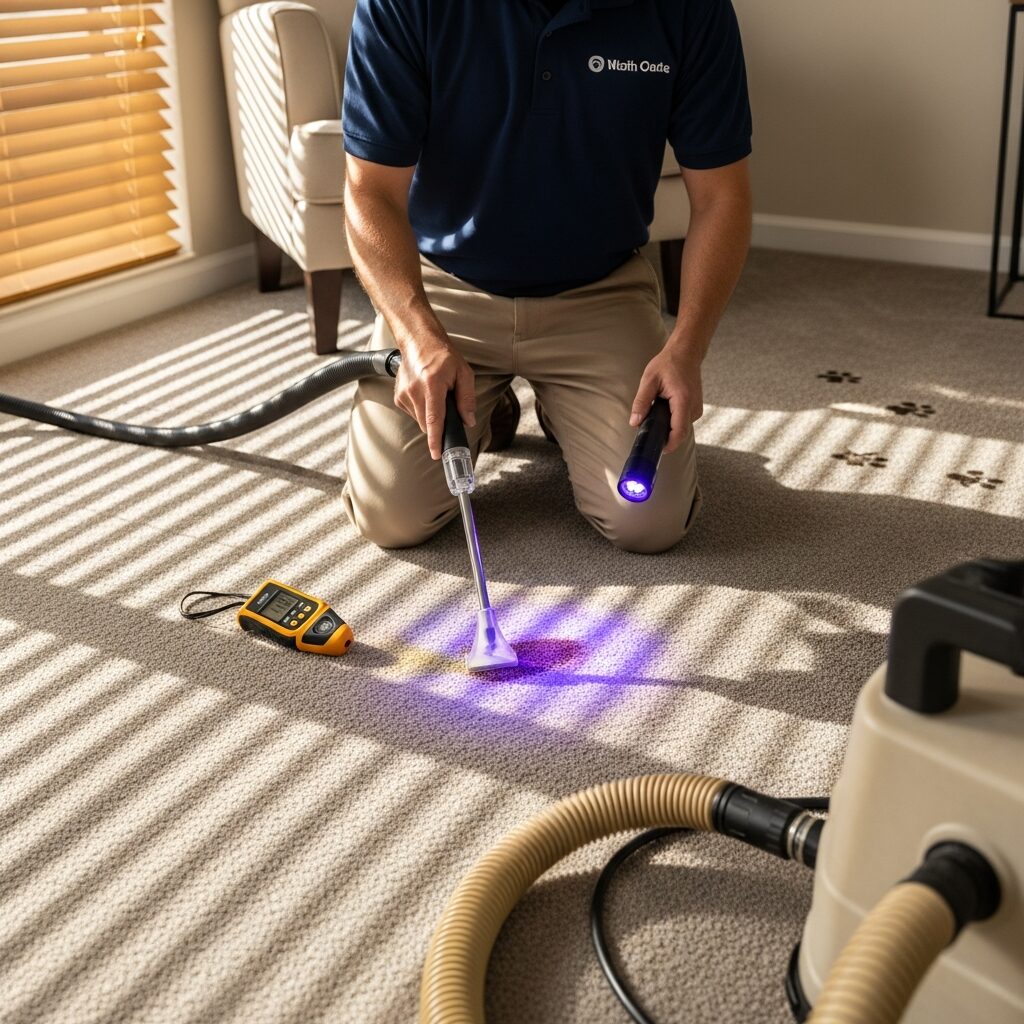
The first thing to acknowledge is that pet stains are not all the same. A recent puppy mishap is a very different challenge from a long-ago accident that soaked into padding or a high-traffic area where natural oils have quietly attracted soil. That is why a careful inspection matters. Professionals start with a visual review, then may use UV illumination or moisture meters to identify hidden contamination. This step ensures that any treatment targets the source, not just the visible mark. It also frames expectations honestly, because some discolorations or fiber damage cannot be fully reversed even when odor and hygiene are restored.
Understanding the Science Behind Pet Stains
Pet accidents introduce a mix of organic compounds and salts that can bond with fibers and, over time, with padding. As these materials dry, crystals form that attract moisture from the air and can reactivate odor, especially on humid days or when someone tries a quick surface clean that leaves residue. The right approach breaks down the compounds at a molecular level, lifts contamination, and removes it through controlled extraction. Just as important, it avoids setting stains by using the wrong chemistry or too much heat at the wrong moment.
Odor control hinges on addressing what you cannot see. Surface treatments may make a room smell better for a day or two but do little if the backing or pad is affected. Professionals assess migration and recommend solutions that reach the layers involved, whether that is a targeted subsurface flush, a specialized treatment for the backing, or, in severe cases, pad replacement coordinated with cleaning. Honest evaluation means you are not chasing the same issue again and again.
Method Matters: From Spot Care to Deep Restoration
There is a spectrum of response depending on what the inspection reveals. For recent, contained spots, technicians apply a protein-compatible treatment that digests organic material, followed by a careful rinse. They work patiently to prevent rings by neutralizing as they go and by controlling moisture so that contaminants do not travel further into the backing. For set-in issues or areas with repeated accidents, the process grows more intensive. A subsurface tool may be used to pull contamination from beneath the face fibers, and the rinse becomes a multi-step sequence to ensure residues are removed rather than spread.
Coupled with this, a thorough prespray and hot-water extraction in surrounding zones addresses the oils and dander that anchor soil. In Sherman Oaks homes where pets relax on carpeted stairs and in family rooms, this broader reset makes the difference between a spot fix and a home that truly feels fresh. Airflow then finishes the job, using our Valley’s warm afternoons to advantage so that fibers dry quickly and evenly.
Protecting Delicate Fibers and Sensitive Dyes
Many Sherman Oaks remodels incorporate looped wools or premium synthetics. These fibers deserve care. Professionals test dyes in inconspicuous spots, select gentle agents, and monitor agitation closely. They understand when to reduce water and when a low-moisture approach is best in a particular room. The objective is to eliminate odor and remove contamination without compromising texture or color. Where a stain has permanently altered dye, a technician will make that clear and focus on achieving an overall even, clean appearance across the room so that the eye no longer gravitates to one spot.
Just as crucial is pH balance. Pet treatments can be active, and leaving residues behind invites re-soiling or color distortion. The final rinse must return fibers to a comfortable, neutral feel. Grooming aligns the pile for faster drying and a uniform look, a subtle step that pays off when sunlight slants across the floor later in the day.
Prevention and Everyday Habits
Prevention is kinder than cure, especially when energetic pets are involved. Entry mats catch grit from a morning romp in the yard. Regular vacuuming with a machine suited to your fibers lifts hair before it mats. Quick, gentle blotting of mishaps prevents spread. Enzymatic spotters designed for pet issues can help, but they should be used sparingly and with a light touch, followed by a plain water blot to reduce residue. A periodic professional reset ties it together, removing what daily routines cannot and reducing the attraction to revisit previous accident zones.
Training and environmental cues matter, too. Pets often return to familiar scent markers even after a room smells fine to humans. Deep treatments that reach the backing interrupt this cycle. Meanwhile, praising new habits, closing doors to previously affected rooms for a stretch, and reinforcing outdoor routines help the change stick.
Local Realities: Why Sherman Oaks Homes Need a Tailored Plan
The Valley’s climate makes a difference in how treatments perform and how quickly areas dry. Warm afternoons promote fast evaporation, allowing for deeper rinses when needed. We also contend with fine dust that drifts in even on calm days. That dust bonds with oils and pet residues, which is why a robust prespray and thorough extraction step in adjacent rooms pay dividends. Whether your home is a condo tucked off Moorpark or a single-family house closer to Mulholland, access, parking, and layout inform how a professional team sequences the work so that life can resume quickly.
Communication is part of that plan. Before starting, a good technician will map priorities with you, discuss rooms your pets favor, and set expectations for what can be improved versus what is permanently changed. They will show progress as they go, especially in high-visibility areas. This transparency builds confidence and prevents surprises later.
When DIY Is Not Enough
Household spotters and compact machines have their place, particularly for very recent spills on resilient synthetics. But DIY efforts often struggle with pet issues because they lack the vacuum recovery, subsurface tools, and rinse control to remove contamination completely. Over-application of products can leave residues that attract more soil, and aggressive scrubbing can damage fibers. If a spot reappears after a day or two or an odor lingers despite your efforts, it is a sign that deeper layers are involved and a professional approach is warranted.
Midway through professional service, I like to pause with homeowners at a previously troublesome area and compare it side by side with a pristine section. Seeing and smelling the difference confirms that the approach is working and guides any final touch-ups. If you are exploring options, it helps to enlist specialists in carpet cleaning who make pet concerns a central part of their craft.
FAQ
Can all pet stains be removed? Many improve dramatically, especially recent mishaps. Some older stains permanently alter dyes or fibers. A professional will separate what can be restored from what can be improved and set expectations before work begins.
How do you stop odor from coming back? Odor returns when contamination remains in the backing or pad. Treatments that reach these layers, combined with thorough extraction and correct drying, address the source rather than masking it.
Is it safe for my pets? Yes. Technicians choose appropriate solutions, rinse carefully, and manage drying so that spaces are comfortable to use again quickly. They will explain products and steps tailored to your home.
What if my pet keeps revisiting the same area? Deep cleaning interrupts scent cues in the backing, making the spot less attractive. Pair that with positive reinforcement of new habits and temporary access limits to break the cycle.
Will cleaning damage delicate fibers? Not in trained hands. Pros test dyes, moderate moisture and heat, and select gentle agents. The focus stays on removing contamination while preserving texture and color.
How often should I schedule professional care? Households with pets benefit from a regular cadence that accounts for activity levels and seasons. Your technician can recommend a schedule based on fiber types and daily routines.
When you are ready to reclaim your rooms from the signs of pet adventures, choose a local team that blends science, craftsmanship, and a deep understanding of Valley homes. With careful inspection, targeted treatments, and smart drying, your carpets can feel welcoming again without lingering reminders. Reach out to Sherman Oaks experts in carpet cleaning and enjoy the comfort of clean, fresh floors that stand up to life with the animals you love.