
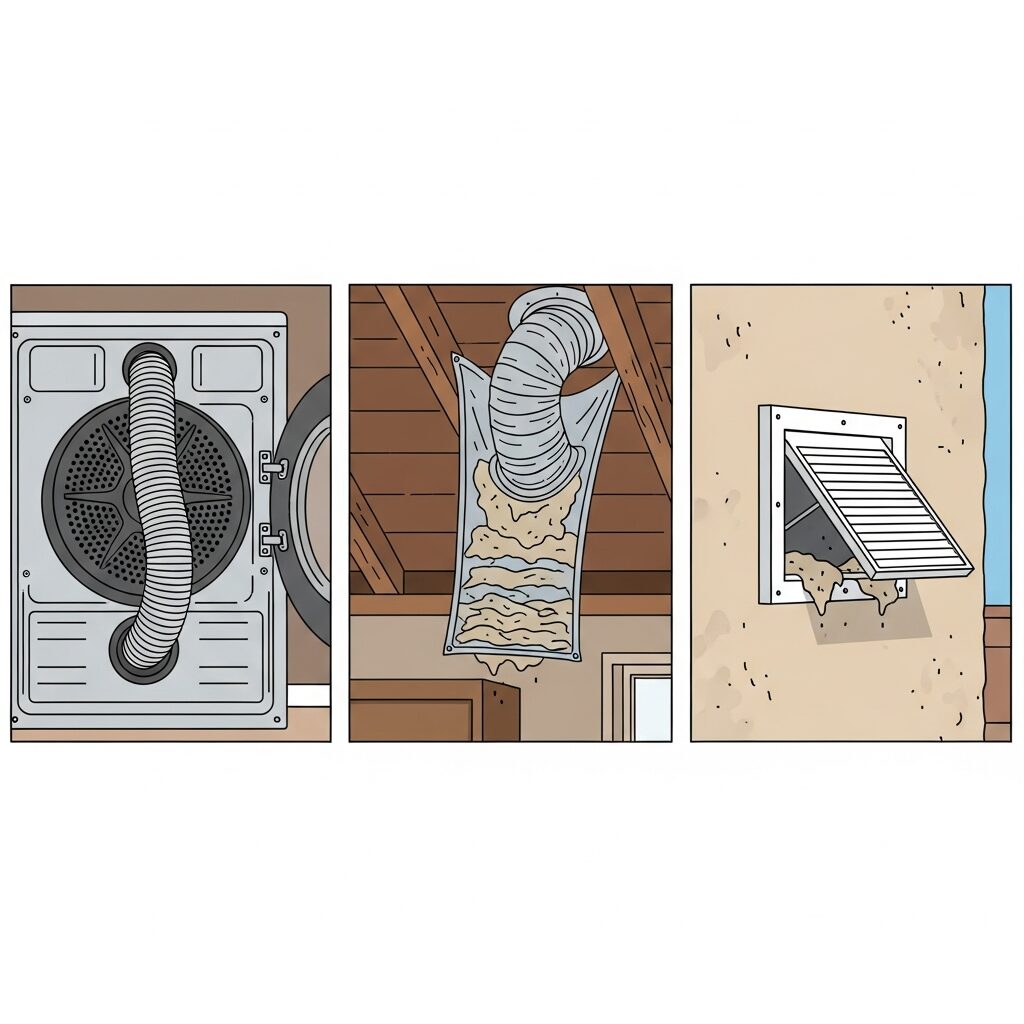
What We See Most Often in Sherman Oaks Dryer Vents
When you service dryer vents across Sherman Oaks week after week, patterns emerge. Homes here range from mid-century classics and cozy condos to renovated two-story additions and newly built ADUs, and yet the same handful of vent issues show up again and again. Each problem has a familiar cause and a straightforward path to resolution, but together they explain why regular dryer vent cleaning is more than a tidy-up—it is essential care for safety, efficiency, and comfort.
At the top of the list are crushed or kinked transition hoses. It is easy to push a dryer back after cleaning or rearranging and unknowingly pinch the hose against the wall. That pinch may look minor, but it slashes the vent’s effective diameter, amplifies resistance, and encourages lint to settle in the bend. In tight laundry closets—especially with stacked units—the issue is even more common. The cure is to replace thin, crushable hose with a rigid or semi-rigid option and to use a low-profile elbow that maintains full shape when the dryer slides back into place.
Long Runs and Too Many Bends
Sherman Oaks homes often route vents through attics or along long horizontal paths to reach a side wall or roof termination. Over time, flexible ducting can sag in those spans, creating pockets where lint accumulates first. Add sharp elbows, and the problem multiplies. During cleaning appointments, we not only remove the existing buildup but also look for opportunities to reduce the route’s length and smooth out the geometry. Even small changes—a better-supported section, a gentler elbow—can transform airflow and reduce the likelihood that debris will return quickly.
Within those long runs, we also find screws or fasteners that protrude into the duct. They may have been used to secure a joint during installation, but they act like lint hooks. Once lint snags, a small tuft becomes a larger mat, narrowing the passage further with each load. Where possible, joints should be secured externally with proper clamps or foil tape rated for HVAC use, leaving the interior smooth and obstruction-free.
Exterior Hoods that Do Not Do Their Job
A healthy dryer vent ends at a termination that opens fully during a cycle and closes snugly when the machine stops. Unfortunately, we encounter stuck flappers, damaged springs, painted-shut caps, and hoods that were never intended for dryer use. Some have screens meant to keep pests out, but screens quickly clog with lint and starve the vent of airflow. The fix is simple: choose a hood designed for dryers, keep the interior clear, and confirm during cleaning that the flap opens wide and closes completely. A quick monthly glance at the hood can save weeks of sluggish cycles.
On roof terminations, sun exposure and heat can warp plastic components, and wind can rattle loose-fitting caps. We also see evidence of nesting attempts during quieter months. Clearing lint during a professional visit is only part of the job; restoring smooth, reliable motion at the exit fortifies the system against future trouble. The difference is tangible—once the hood swings freely, you will often see and hear stronger airflow the very next cycle.
Lint Where It Should Not Be
Another recurring problem is lint leakage into attics, crawl spaces, or even interior walls. This can result from a loose connection, a punctured duct, or a route that was never sealed properly. Aside from slowing your dryer, escaping lint mingles with humid air and creates a stale smell that neighbors sometimes describe as “warm dust.” During cleaning, we check connections and the general integrity of the route. If we see evidence of leakage—lint blooms near a joint, dust trails along a seam—we recommend sealing or replacing that section so all air goes outside where it belongs.
Related to leakage is the presence of moisture. The air leaving your dryer carries water vapor that should dissipate outdoors. When a vent is clogged, the vapor lingers in the duct, condenses on cool surfaces, and can drip back toward the appliance or into wall cavities. Signs include musty odors near the laundry closet, faint water marks on nearby drywall, or a persistent humid feel in the hallway when the dryer runs. Clearing the line restores a one-way path and removes the conditions that allow that dampness to persist.
Booster Fans and Shared Chases
Condo and townhouse laundry setups in Sherman Oaks often rely on booster fans to help long vertical runs. These can become lint-catchers themselves if not maintained. After cleaning the main duct, we check that the fan responds to air pressure as intended and that it spins freely. In shared chases, equal attention to each unit in the stack ensures that one neglected line does not undermine airflow for a neighbor. Coordinated maintenance through an HOA is an effective way to keep these systems cooperative and predictable.
Another shared-building quirk is the use of non-dryer-rated components borrowed from bathroom or general ventilation systems. These parts may include fixed louvers or internal grilles that look tidy but become immediate bottlenecks when faced with lint. Identifying and replacing those pieces with dryer-rated alternatives is one of the fastest ways to restore proper performance.
The Mid-Cycle Frustrations Homeowners Feel
By the time we get a call, residents are often living with the same cluster of symptoms: a dryer that runs hot to the touch, a cycle that should take forty minutes stretching to seventy, and laundry that still feels slightly damp at the seams. The outside flap barely opens, or lint flecks pepper the stucco near the hood. During the appointment, we clear the obvious clogs, but we also look for the upstream cause so the relief lasts. For many households, that cause is an avoidable pinch behind the unit or a tired, low-quality transition hose. Replacing that one piece and confirming a smooth push-back saves months of annoyance. It is why routine professional dryer vent cleaning includes as much coaching as it does sweeping.
We also pay attention to the lint screen and the housing it rests in. Fabric softener and dryer sheet residues can film over the mesh and reduce airflow across the screen itself, which then accelerates lint accumulation downstream. A quick wash of the screen with mild soap and water, allowed to dry fully before reinsertion, restores its capture ability and supports the health of the whole vent path.
Fire Safety and Overheating Concerns
While rare, overheating incidents tend to share common precursors: restricted vents, blocked hoods, and extended high-heat cycles that keep temperatures elevated for too long. Lint is a ready fuel, and the safest path is to deny it the conditions that allow it to build and bake. Clearing the duct, confirming a free-moving exterior flap, and giving the dryer an easy route to breathe sharply lowers risk. Just as important, it restores the dryer’s ability to govern its own temperature effectively, reducing nuisance shutoffs and keeping the drum environment consistent.
Homeowners sometimes mention a faint burning smell. This can be as simple as lint contacting a hot surface and scorching lightly, or it might be a sign that the machine’s internal pathways need attention in addition to the external duct. A proper service plan keeps both sides in mind—the vent to the outside and the interior lint passages—so that the entire system is clean and balanced.
Preventable Wear and Tear
Appliances last longer when they are not constantly straining. Motors, belts, and bearings all operate within designed temperature and load ranges. When airflow is restricted, those components work harder and hotter, shaving life off the machine with each extended cycle. Clearing the vent returns the dryer to its intended workload. Many clients tell us that after cleaning, the machine sounds notably quieter, like it is no longer “fighting” to do its job. That calmer operation is your cue that wear and tear has been dialed back.
Finally, clothing and linens benefit. Overheated, slow cycles are tough on fabric fibers and elastics. With free airflow, your dryer can lean on lower heat for shorter periods, which is gentler on everything from athletic wear to favorite T-shirts. The improvement is subtle week to week but obvious over a season, as bright colors hold and towels stay plush.
Frequently Asked Questions
Why do my dry times keep increasing even after I clean the lint screen?
The screen only captures a portion of lint. The rest travels into the duct, where it adheres to rough surfaces, elbows, and any place the hose is pinched. Over time, that buildup narrows the pathway. A full vent cleaning clears the route the screen cannot reach.
Is it normal for lint to appear on the wall near the exterior hood?
No. Lint on the wall suggests air is exiting turbulently—often because the flap is not opening fully or because there is a partial blockage. Cleaning the duct and ensuring the hood swings freely typically resolves the issue.
Can I keep a screen on the exterior hood to block pests?
For dryer vents, screens cause more harm than good by trapping lint. Use a dryer-rated hood with a snug, swinging damper. It blocks pests while allowing air to move without snag points.
What causes the burning smell during a cycle?
Often it is lint contacting a warm surface due to restricted airflow. It can also indicate residue build-up on the lint screen or the need for an internal dryer cleaning. Stop the cycle and address the vent path before running the machine again.
How often should Sherman Oaks homes with long attic runs schedule service?
Annually is a good baseline, but long or complex routes, heavy laundry use, or multiple pets may justify cleaning every six to nine months. Watch the exterior flap and your average cycle length for early cues.
Do stacked units need a different approach?
They need careful attention to the transition hose. Low-profile elbows and semi-rigid connectors prevent crushing when the unit is moved, preserving airflow gains made during cleaning.
Give Your Dryer a Clear Path Forward
If any of these issues sound familiar—rising dry times, hot laundry spaces, or a stubborn exterior flap—it is time to restore airflow and reclaim smoother cycles. A focused service visit can eliminate clogs, correct weak spots, and leave your system breathing easily. Schedule reliable Sherman Oaks dryer vent cleaning today and feel the difference in comfort, safety, and the simple pleasure of laundry that finishes on time.