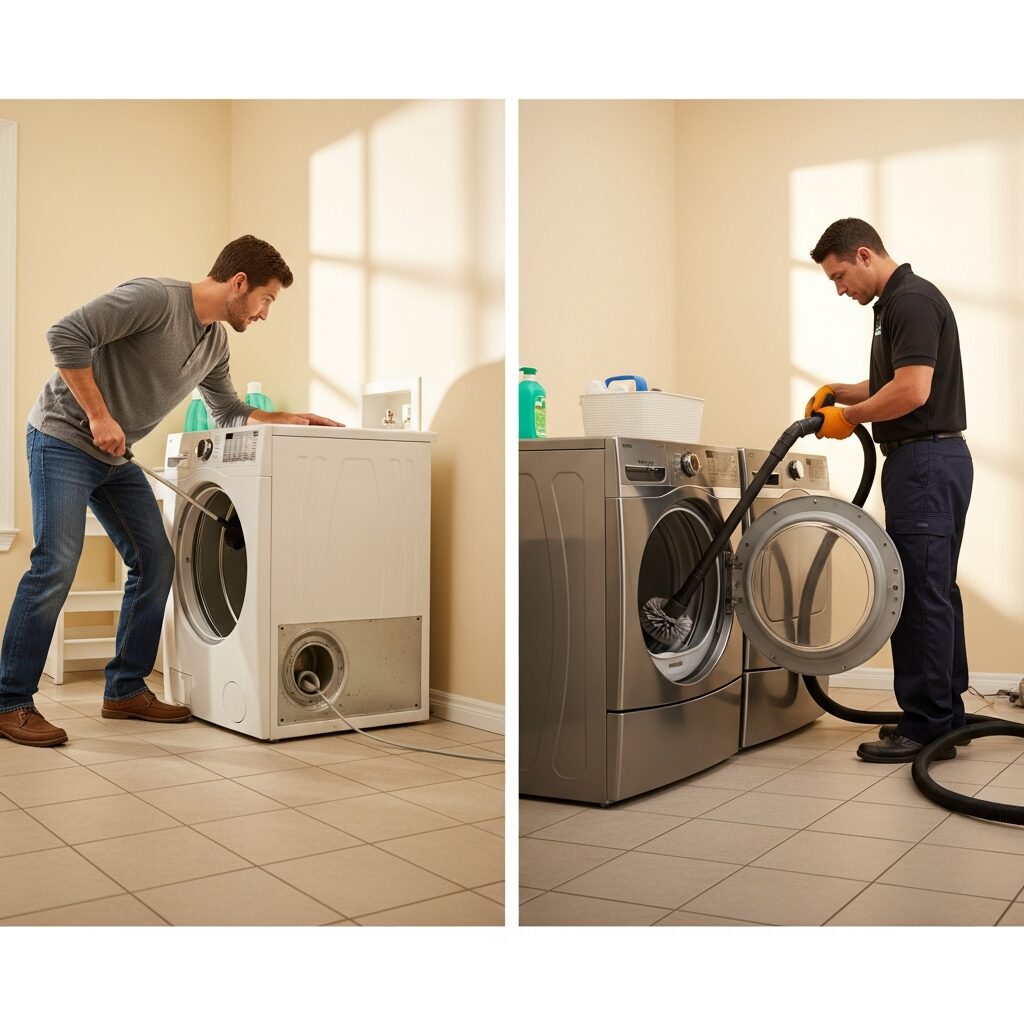
If you are weighing a dryer vent cleaning kit against hiring a professional in Sherman Oaks, you are not alone. Many homeowners first notice longer drying times or a warmer laundry room and wonder whether a quick DIY effort will fix the issue. The honest answer is: it depends on your vent layout, your home’s construction, and where your vent terminates. In a neighborhood like ours—where hillside residences with roof caps stand alongside mid-century ranches and remodeled condos—the path from dryer to outside can be simple or surprisingly complex. Understanding those differences helps you make the right call for safety, performance, and your own peace of mind. If you decide to go the professional route, experienced local teams provide thorough dryer vent cleaning tailored to Sherman Oaks homes.
DIY kits are designed for short, straight, and easily accessible vents. If your dryer sits on an exterior wall and the duct runs a few feet with minimal bends, a careful homeowner may be able to improve airflow with a brush-and-rod kit. You will want to move the dryer gently, avoid crushing the transition connector, and vacuum lint that loosens during the process. For these simple layouts, you might notice an immediate difference—stronger exhaust at the wall cap and shorter cycles right away.
When a Kit Struggles: The Realities of Local Homes
Many Sherman Oaks properties are not simple. Remodels often shift the laundry to an interior hallway or an upstairs closet, creating longer runs with multiple elbows to navigate beams and joists. Multi-level condos and townhomes frequently vent to the roof, which means a vertical path and a termination that demands safe access and careful inspection. In these situations, a DIY kit can push lint deeper into the line or snag on elbows, leaving deposits behind in the very places that create heat traps.
There is also the exterior termination to consider. Wall caps painted shut or roof caps with sticky hinges are common here, especially after summers of high heat. If that cap does not open freely, even a cleaned interior duct will not perform as it should. Inspecting, cleaning, and, when needed, updating the cap is a critical part of getting your system breathing again—an area where professional tools and experience pay off immediately.
Professional Service: What You Gain
A seasoned local technician begins by mapping the vent route, checking the transition connector for crush points, and locating the termination. They use purpose-built brushes matched to your duct size along with controlled air or vacuum to extract lint rather than simply moving it around. On roof-vented systems, they access the cap safely, clear any stuck flapper or screen, and verify free movement. The process ends with an airflow check so you can feel the difference the moment the dryer runs.
Equally valuable is the eye for details that only comes from daily local experience. A pro knows where remodelers tend to add elbows, which cap designs stick after paint jobs, and how to coordinate with HOAs that require documented service. If a non-compliant duct material appears in an older wall, you will get clear, practical advice on safer alternatives. The result is not just a cleaner vent—it is a system tuned to perform reliably day after day.
Safety, Efficiency, and Everyday Comfort
Clear airflow carries immediate benefits: faster drying, a cooler laundry area, and less strain on your dryer’s motor and heating elements. That means quieter evenings and fewer repeat cycles—small, meaningful wins in a busy household. There is a safety dimension, too. Lint is flammable, and when it accumulates at elbows or behind a stuck cap, it can trap heat. Professional cleaning removes those hidden deposits and restores the intended pathway for warm, moist air to exit the home.
For families with pets, thick bedding, or frequent athletic gear, maintaining a clear vent keeps up with heavier laundry demands. It also supports better indoor air quality because the dryer is less likely to leak warm, humid air back into the room through small gaps when a vent is restricted.
How to Decide: A Simple Self-Assessment
Ask yourself two questions. First, how long and complex is your vent run? If the line is short and nearly straight to an exterior wall, a kit may help. If you suspect several bends, a long path, or a roof termination, lean toward a professional assessment. Second, do you have the time and confidence to move the dryer safely, protect flooring, and work methodically? If not, a local pro will handle those logistics carefully and leave the space clean.
Remember that even when a kit improves airflow, it may not address cap function or hidden deposits deep in the line. If you still notice longer dry times, a warm laundry room, or a fluttering exterior flapper after a DIY attempt, consider that a sign your setup needs a more thorough approach.
Preparing for Either Path
Whether you choose a kit or a pro, start by clearing the area around your dryer. Remove items from the top, and if the unit sits in a closet, make space to slide it forward. Unplug carefully and, if applicable, close the gas valve before moving the appliance. Avoid crushing the transition connector when pushing the dryer back into place. If you go the DIY route, work slowly and avoid forcing brushes through tight bends where they could detach. If you choose a professional service, a cleared space will make the visit efficient and low-disruption.
After the work, run the dryer and step outside to feel the exhaust. You should notice a strong, steady push of air and a smoothly moving flapper. Inside, cycles should be shorter and the top of the dryer should feel cooler than before. If anything seems off, a professional can diagnose and correct the snag—often a minor detail like a bent connector or a sluggish cap hinge.
Local Nuances That Shape Your Decision
Sherman Oaks has micro-differences that only locals tend to anticipate. In hillside streets, roof pitches can be steep, making safe cap access essential. Along tree-lined valley blocks, stucco wall caps may be tucked in tight setbacks where brushes must be guided with care. In some condo stacks, an inline booster fan may be part of the vent system; when that fan is clogged or not functioning, airflow suffers across multiple floors. These are not roadblocks, but they do call for a practiced eye and the right equipment—exactly what a professional brings.
If you are still on the fence, consider the rhythm of your household. If time is tight and you need predictable results, the professional path removes guesswork. If you enjoy hands-on projects and have a simple vent layout, a kit can be a useful first step. Either way, the goal is the same: a safe, efficient dryer that finishes loads on time and keeps your laundry area comfortable.
Frequently Asked Questions
How can I tell if my vent is too complex for a DIY kit?
If your dryer is not on an exterior wall, if you suspect multiple elbows, or if the vent exits on the roof, a kit may struggle to reach and clear the deepest deposits. Professional tools and techniques are better suited to long or winding runs.
What if I try a kit and still have long dry times?
That usually means lint remains in elbows or near the termination, or the exterior cap is not operating freely. A professional cleaning addresses those areas directly and verifies airflow at the end.
Are roof terminations common in Sherman Oaks?
Yes. Many multi-level homes and condos vent through the roof. These systems require safe access, thorough cap cleaning, and a two-way approach to clearing lint. Local pros handle them routinely.
Can a crushed transition connector really make a difference?
Absolutely. A kinked or crushed connector creates an immediate choke point where lint accumulates. Replacing it with a smooth, code-compliant connector during cleaning restores a strong start to the airflow path.
How often should I schedule a professional cleaning?
Many households benefit from annual service. Heavy laundry usage, pets, thick fabrics, or longer vent runs may call for more frequent attention. A local expert will tailor a plan to your home and habits.
Will I see changes right away after professional service?
Most homeowners notice faster cycles, a cooler laundry area, and stronger exterior exhaust immediately. Those improvements reflect restored, unobstructed airflow from the dryer to the outdoors.
Ready to Choose the Best Path for Your Home?
Whether you are leaning toward a careful DIY attempt or prefer a guaranteed, low-disruption visit, the goal is clear airflow and a safer home. If you want a thorough outcome without the trial and error, schedule trusted local dryer vent cleaning in Sherman Oaks today and enjoy smooth, reliable laundry from your very next load.