
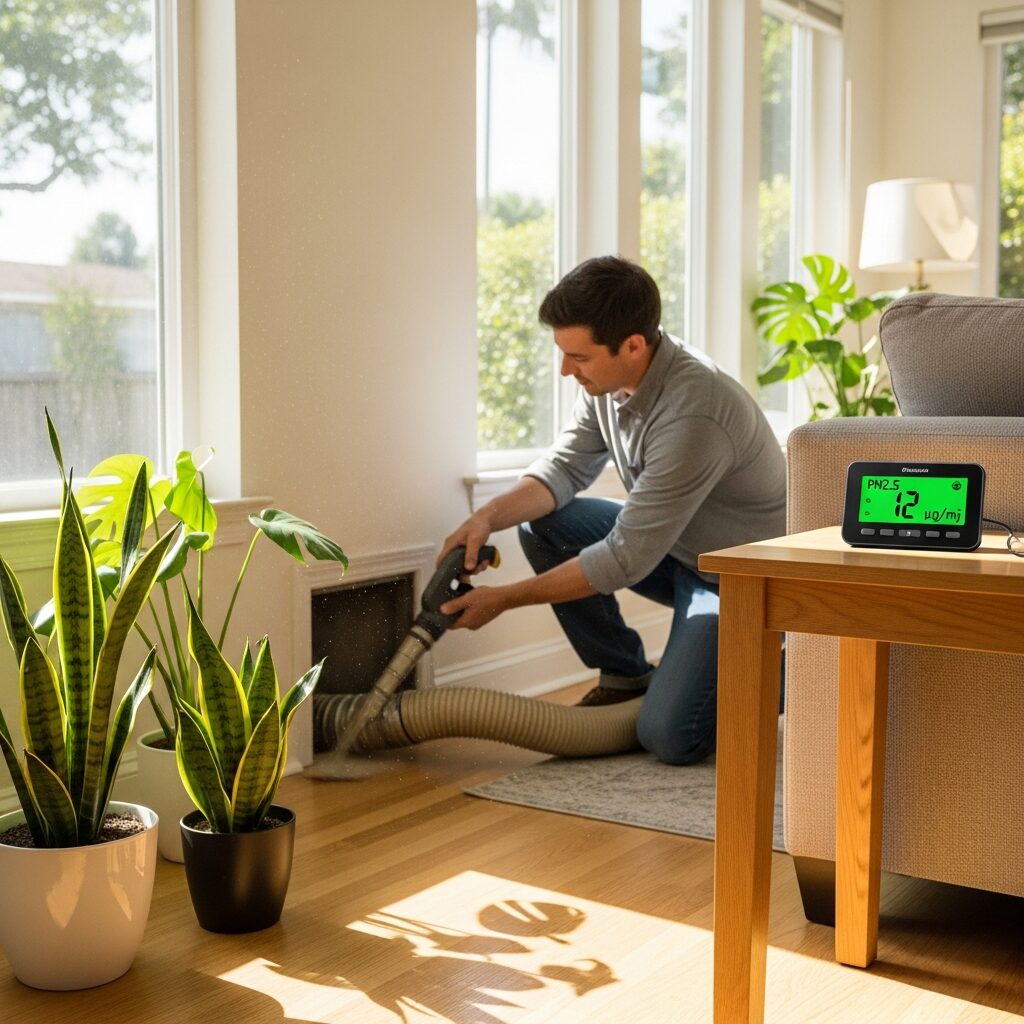
Thinking Green at Home in Sherman Oaks Starts With the Air You Move
Sherman Oaks residents are used to thinking about the environment in practical, everyday ways. We notice when the air outside feels hazy. We pay attention to heat waves and drought conditions. We try to keep our homes comfortable without wasting energy, especially during long stretches of warm weather when the AC becomes a daily necessity. In that context, air duct maintenance isn’t just a “clean house” topic—it can also be part of how a household reduces waste and uses energy more responsibly.
It’s easy to overlook ductwork because it’s hidden, but it plays a major role in how effectively your HVAC system does its job. When air pathways are dirty or obstructed, the system may run longer to reach the temperature you set, and that extended runtime can mean higher energy use. Homeowners who schedule air duct cleaning often do it for comfort and dust control, but there is also an environmental angle: keeping airflow pathways cleaner can support efficiency and reduce the need for premature equipment replacement due to strain and buildup.
Environmental impact isn’t only about electricity. It’s also about materials, indoor pollutants, and the small choices that add up over years. In a place like Sherman Oaks—where we run HVAC frequently and live close to traffic corridors—those small choices can matter.
Energy Use: Cleaner Airflow Pathways, Less Unnecessary Work
Your HVAC system is essentially an air-moving machine. The blower pushes air through ductwork and into rooms, then pulls it back through returns. If vents, returns, or accessible duct sections are loaded with dust and debris, airflow can be restricted. That restriction can contribute to longer run times as the system works to maintain comfort.
In the Valley, where summer cooling can be a major part of a household’s energy footprint, improving airflow consistency can make a meaningful difference in how the home feels. While duct cleaning is not a cure-all—insulation, windows, equipment condition, and thermostat habits all matter—keeping ductwork cleaner is one of the simpler ways to remove a potential bottleneck in the system’s performance.
There’s also a practical side to this: when a system has to work harder, components can wear more quickly. Extending the life of equipment reduces the environmental cost associated with manufacturing, transporting, and disposing of HVAC units and parts. From an environmental standpoint, using what you already have for as long as it can operate safely and effectively is usually the greener choice.
Indoor Air Quality and the “Pollution You Don’t See”
Environmental conversations often focus on outdoor air, but indoor air matters too. In Sherman Oaks, it’s common to keep windows closed during hot afternoons or when outdoor air feels dusty. That means the air inside circulates repeatedly through the same system. If ductwork contains layers of dust, lint, and particles, those materials can be disturbed and redistributed.
Reducing that reservoir of debris can help the home feel cleaner and may reduce the amount of particulate matter moving through living spaces. This isn’t about making a home sterile; it’s about limiting unnecessary exposure to built-up dust. Households with kids, pets, or allergy sensitivities often feel the difference most because the home’s “background” air feels less irritating when the system cycles on.
There’s also an indirect environmental benefit: when indoor air feels cleaner and more comfortable, people may be less tempted to overuse heavily scented products to mask odors. A neutral, clean baseline reduces the need for constant air fresheners and similar items that create packaging waste and introduce additional compounds into indoor air.
Filter Waste: Balancing Better Filtration With Smart Maintenance
Filters are a cornerstone of HVAC cleanliness, and many homeowners respond to dust by changing filters more frequently or choosing more restrictive filters. While that can help, it also increases filter consumption over time. The environmental goal isn’t to avoid filters—filters are essential—it’s to find a sensible balance where filtration is effective and the system stays clean enough that you’re not burning through filters unnecessarily.
When ductwork and return pathways are heavily loaded with debris, filters can clog faster, which can push homeowners to replace them more often. A thorough cleaning of the duct system, paired with good filter fit, can reduce the “extra load” on filters. That may help you stick to a consistent replacement schedule instead of reacting to sudden clogging.
In many Sherman Oaks homes, the biggest filtration issue is not the filter type but the fit. Small gaps can allow bypass, sending dust into the system even with regular replacements. Addressing that fit helps the filter do its job and reduces buildup downstream.
Local Dust, Traffic, and Seasonal Winds
Environmental impact is local as well as global. If you live near major routes or busy intersections, you may notice a fine layer of dust that settles quickly. Windy days can bring in particles, and warm, dry conditions can keep dust in motion. When you open doors, when pets go in and out, and when windows are cracked in the evening, outdoor particles make their way inside.
That doesn’t mean you should seal yourself off from the world—fresh air is part of enjoying Sherman Oaks. It simply means you need a home system that can handle local conditions without becoming a storage site for years of debris. Regular housekeeping helps, but because the HVAC system actively moves air, it can collect and distribute those particles unless the duct system is kept reasonably clean and well maintained.
Middle-of-the-Home Perspective: Environmental Benefits You Can Actually Feel
Sometimes environmental discussions get so abstract that it’s hard to connect them to daily life. With duct maintenance, the connection is immediate. If your home reaches a comfortable temperature more easily, you may rely less on constant adjustments or extended run times. If the air smells neutral when the system starts, you’re less likely to “cover it up” with disposable products. If dust settles more slowly, you may reduce the frequency of heavy cleaning routines that rely on paper towels and single-use supplies.
This is also where air duct cleaning fits into a broader eco-minded home strategy. It complements other choices like sealing gaps, using efficient thermostat habits, and keeping up with basic HVAC maintenance. None of these actions alone transforms your footprint, but together they create a home that’s easier to manage and less wasteful over time.
For many Sherman Oaks homeowners, the “greenest” home is the one that functions smoothly. When systems operate as intended, you’re less likely to replace equipment early, less likely to compensate with extra energy use, and less likely to rely on quick-fix products that generate waste.
Responsible Cleaning Practices and What to Ask About
Environmental impact also depends on how the cleaning is performed. A responsible approach prioritizes containment so debris is captured rather than released into the home. It also focuses on careful work that protects duct materials and keeps the home tidy. While every company has its own process, you can look for signs of professionalism: clear explanations, respect for the home, and a focus on results that are realistic.
It’s reasonable to ask how debris is contained and removed, and what steps are taken to prevent dust from spreading during the job. A thoughtful process is not only better for your home; it’s also a more responsible way to manage the material being removed from your duct system.
Another environmentally relevant point is avoiding unnecessary repeat work. If the ducts are cleaned but the filter fit problem remains, or if return areas are constantly pulling in debris from a dusty entryway, buildup will return quickly. The greener plan is the one that includes prevention, so the benefits last and you’re not repeating services more often than needed.
FAQ: Environmental Impact of Air Duct Cleaning in Sherman Oaks
Q: Can duct cleaning reduce my home’s energy use?
A: It can support efficiency by helping airflow move more freely, especially if vents, returns, or duct sections have significant buildup. Energy use depends on many factors, but reducing airflow restrictions is a sensible step in an efficiency-minded plan.
Q: Is duct cleaning environmentally beneficial if I already change filters regularly?
A: Regular filter changes are important, but filters don’t always prevent all buildup, particularly if the filter fit allows bypass or if there was a dusty event like remodeling. Cleaning can remove accumulated debris and help your filter strategy work better long term.
Q: Does duct cleaning help reduce indoor particulate matter?
A: It can reduce the amount of settled dust and debris available to be disturbed and redistributed through vents. For homes that feel dusty quickly or have visible buildup at registers, cleaning can improve the indoor baseline.
Q: How does duct cleaning relate to reducing household waste?
A: If a cleaner system helps reduce dust and odors, you may rely less on disposable cleaning supplies and odor-masking products. It can also help filters perform more predictably, reducing reactive, extra replacements.
Q: What’s the most eco-friendly way to keep ducts clean after service?
A: Focus on prevention: use properly fitted filters, keep return areas clean, address dust sources after renovations, and maintain good HVAC habits. A plan that reduces repeated buildup is generally the most responsible.
A Cleaner System Is Part of a More Responsible Home
If you’re trying to make your Sherman Oaks home more efficient, healthier to live in, and less wasteful over time, don’t ignore the hidden pathways that move your air every day. Professional air duct cleaning can help remove accumulated debris, support smoother airflow, and create a cleaner indoor baseline that reduces the urge to compensate with extra energy use or disposable products. When you’re ready, schedule a service that’s careful, thorough, and focused on long-lasting results—so your home feels better today and runs more responsibly season after season.