
Living With Valley Air: Why Residential Ducts Deserve Attention
Residential air duct cleaning in Sherman Oaks isn’t just a “nice-to-have” that people talk about when they’re already deep-cleaning the house. It’s one of those practical home-care steps that tends to matter more here than many homeowners expect. Our neighborhood sits right in the mix of warm, dry stretches, bursts of wind that push dust around, and the everyday rhythm of commuting corridors and busy streets. Over time, what’s in the air outside has a way of becoming part of the air inside—especially when your HVAC system is the engine that circulates it all day.
Many families first start thinking about duct cleaning when they notice dust returning quickly after cleaning, when a room feels a little stuffy, or when the system turns on and there’s a faint, stale smell that wasn’t there before. Other times it’s after a remodel, a new baby, or a shift to working from home, when indoor comfort suddenly matters more. In those moments, it helps to understand what residential air duct cleaning actually does, what a reputable process looks like, and how it can fit into normal home life in Sherman Oaks.
How Ducts Collect Debris in Real Homes
It’s easy to imagine ductwork as sealed and protected, but in most homes, ducts are more like a network of hidden hallways. Air moves through them constantly, and whatever is floating in the air—lint, hair, pollen, tiny bits of soil dust—can settle out over time. Return vents are particularly important, because they’re the system’s intake. They pull air back toward the equipment, and along the way they can collect whatever is on floors, furniture, and open surfaces.
Sherman Oaks homes come in a range of styles, and each has its quirks. Older houses may have ducts that have been patched or modified over decades. Some homes have attic runs that are exposed to temperature swings, which can make certain materials age faster. Some have additions where duct routing became complicated, creating spots where debris settles. None of this is meant to be alarming; it’s simply the reality of how a lived-in home and a working HVAC system interact.
What a Professional Residential Cleaning Should Include
A solid residential duct cleaning isn’t a quick pass over a few vents. The goal is to address the system in a way that actually reduces the dust load moving through your home. That means working through supply lines and returns, paying attention to areas where buildup tends to be heavier, and using methods that capture debris instead of pushing it deeper into the ductwork.
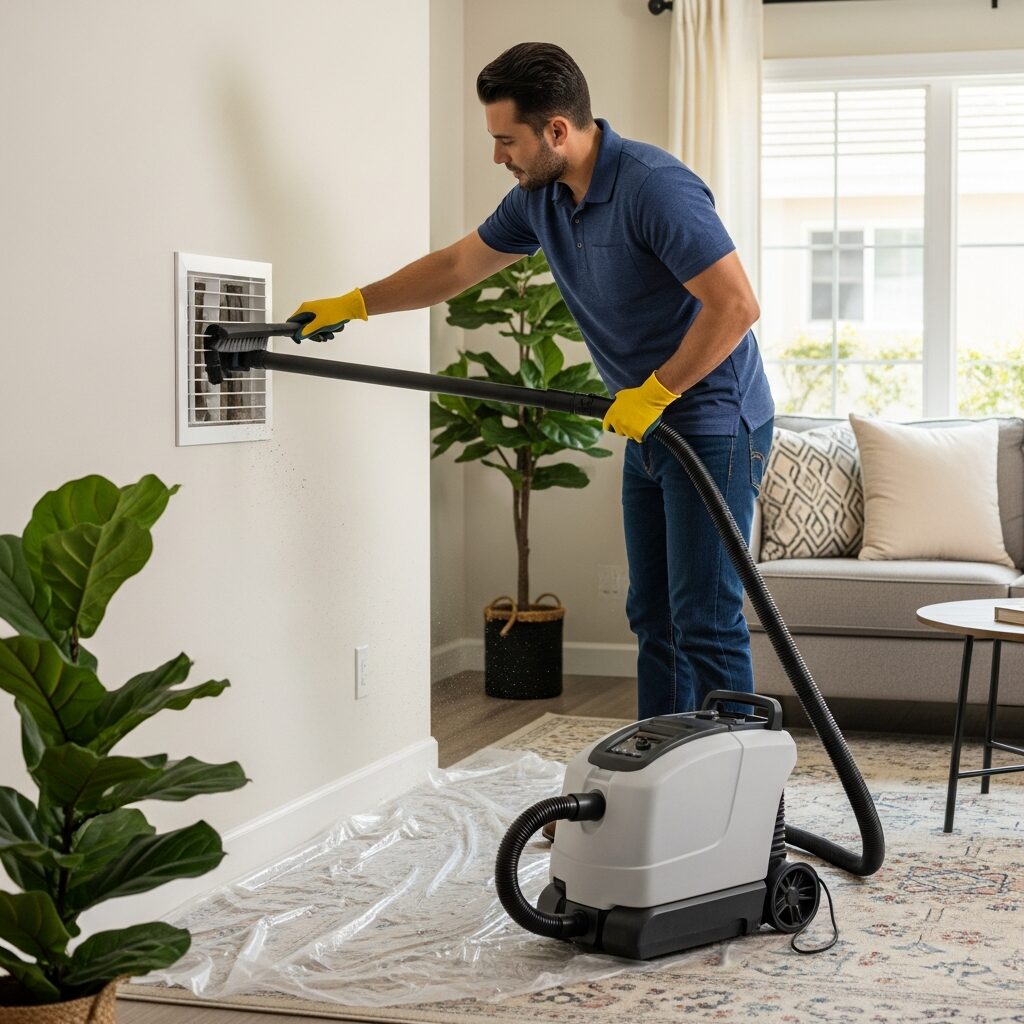
Equally important is how the work is done inside your home. Technicians should protect floors, be mindful of walls and corners, and communicate clearly about what will happen and how long it will take. In a Sherman Oaks household, someone might be on a work call, kids might be napping, or pets might be anxious around unfamiliar noise. A professional crew anticipates those realities and keeps the day manageable rather than disruptive.
Common Signs Your Home Might Benefit From Duct Cleaning
In real life, people rarely schedule duct cleaning because of a single dramatic sign. It’s often a pattern: the dust seems “stickier,” the air feels heavy when the AC runs, or allergies feel worse inside than you’d expect. Sometimes homeowners notice dust collecting around registers or on nearby furniture. After a renovation, you may find that fine dust continues to appear even after the construction area has been cleaned repeatedly.
Another common situation in Sherman Oaks is moving into a home that has been vacant or rented out. You might not know how consistently filters were changed, whether pets lived there, or how long the system ran with windows open during dusty periods. A thorough cleaning can be a reset that helps your home feel like your own space, not a continuation of someone else’s indoor air history.
Why Filters Help, But Don’t Do Everything
Changing your HVAC filter is one of the simplest and most effective habits for protecting indoor air, and it makes a real difference in many homes. But filters aren’t magic. They mainly protect the equipment and capture a portion of airborne particles, depending on the filter type and how well it fits. If a filter doesn’t seal properly, air can bypass it. If the system has small leaks in return pathways, dust can be pulled in from attics or wall cavities.
Even with good filters, dust that already settled in ductwork doesn’t disappear. A residential duct cleaning can remove that existing buildup so you’re not continually recirculating old debris. Think of it like cleaning behind and under furniture: you can keep the visible surfaces tidy, but deeper cleaning is what resets the baseline.
Mid-Cleaning Details That Separate Thorough Work From a “Vent Vacuum”
The heart of a good duct cleaning is the moment when technicians actively dislodge buildup from inside the duct runs and ensure it’s captured. This is where experience matters, because the system is a network, not a series of isolated openings. A careful crew understands how to move through branches, how to work around turns and transitions, and how to avoid simply stirring dust into the home.
This is also the stage where homeowners often ask, “Is it supposed to sound like that?” Some noise is normal, because equipment is running and debris is being pulled out. What shouldn’t happen is uncontrolled dust release into rooms. Professionals should have a plan for containment and should be able to explain what you’re hearing and why it’s part of the process. When done properly, residential air duct cleaning feels less like a messy project and more like a controlled, step-by-step service.
How Duct Cleaning Fits Into a Comfortable Sherman Oaks Home
In this part of Los Angeles, comfort is often about consistency. You want the bedroom to cool down at night without feeling damp or stale. You want the living room to feel fresh even when the sun has been beating on the windows all afternoon. You want the home to smell like your home, not like dust warmed up by the heater on the first cool evening.
Duct cleaning supports that by reducing one source of circulating debris and by helping air move through a cleaner pathway. It’s not the only factor—insulation, sealing, and regular HVAC maintenance matter too—but it’s a meaningful piece of the puzzle. Many homeowners notice that after a proper cleaning, they don’t feel as compelled to wipe down vent covers or dust nearby shelves as frequently, especially during the dry season.
Special Considerations: Pets, Kids, and Busy Schedules
Sherman Oaks is full of households with pets, and pet hair is one of the most common contributors to dust buildup near returns. Kids also change the indoor air equation, not because they’re “messy” in a negative way, but because life is active: doors open and close, floors are used constantly, and soft items like blankets and plush toys shed fibers that float into the air. If you’ve ever vacuumed a room and watched dust dance in a sunbeam, you’ve seen what your HVAC system is pulling back in.
Scheduling matters too. A residential duct cleaning appointment goes more smoothly when you choose a day you can be home to answer questions and keep pets comfortable. Clear communication about parking, access, and where equipment will be set up is especially helpful in neighborhoods where driveways can be tight or street parking fills quickly.
What You Can Do After Cleaning to Maintain the “Fresh Start”
After your ducts are cleaned, you don’t need to obsess over them. Instead, focus on a few simple habits. Keep filters on a consistent replacement schedule and make sure the filter fits snugly in its slot. If you notice dust lines around registers, it may indicate air leakage at the vent connection, which can often be addressed with straightforward sealing.
It’s also worth keeping return vents unobstructed. A couch pressed tight against a return can strain airflow and increase the chance of buildup in that area. When the system can breathe properly, it tends to run more smoothly, and the benefits of cleaning last longer.
FAQ: Residential Air Duct Cleaning in Sherman Oaks
Q: Will duct cleaning reduce dust on my furniture?
A: It can reduce one major source of recirculated dust, especially the fine material that collects and then gets pushed back into rooms. You’ll still get normal household dust, but many homeowners notice less buildup near vents and on surfaces over time.
Q: Is duct cleaning useful after remodeling?
A: Yes. Remodeling often creates fine dust that can travel beyond the work zone, even with good containment. Cleaning the duct system can help remove lingering debris that continues to circulate.
Q: Can duct cleaning help with odors when the AC or heat turns on?
A: It can, particularly if the odor is coming from accumulated dust, pet hair, or general buildup. Persistent odors may also come from other sources, so it’s important to discuss what you’re noticing.
Q: Do I need to leave the house during the cleaning?
A: Usually, no. Most homeowners stay home. There can be noise, and you’ll want to keep pets secure, but a professional service should be safe and manageable while you’re there.
Q: How can I tell if a company is doing a whole-system cleaning?
A: Look for clear explanations of what is included beyond just vent openings, and ask how they prevent dust from spreading. A reputable company is comfortable walking you through the process.
Make Your Home’s Air Feel Like Home Again
When the Valley gets hot and your AC becomes the heartbeat of the house, the quality of the air moving through your vents matters. Residential duct cleaning is a practical way to refresh that system, reduce circulating buildup, and make daily comfort easier to maintain—without turning your home routine upside down.
If you’re ready to take that next step, explore air duct cleaning and schedule a visit that fits your household. A cleaner duct system can make the air feel lighter, the home smell fresher, and the season ahead more comfortable.