
Why People in Sherman Oaks Ask About “Cost” Without Wanting a Price Tag
In Sherman Oaks, the question I hear most often isn’t really about a number. Homeowners and small business owners usually ask about “air duct cleaning cost” because they want to understand what they’re paying for, what separates a careful job from a rushed one, and how to avoid surprises. Our neighborhood has a mix of mid-century homes, newer builds tucked into hillside streets, and busy apartment corridors near Ventura Boulevard. Each type of property has its own duct layout, access challenges, and indoor air patterns. That’s why a one-size-fits-all quote rarely tells the full story. If you’re exploring air duct cleaning in Sherman Oaks, it helps to think in terms of scope, workmanship, and long-term value rather than a single figure.
Because we live with warm summers, occasional Santa Ana winds, and plenty of traffic flow, dust and fine debris don’t just stay outside. It moves through doorways, rides in on shoes, and circulates when HVAC systems kick on. Add in remodels, pet dander, and the everyday lint that comes from living in a home, and ducts can gradually become a collection point. When people ask about cost, what they’re really asking is: “What factors make a job more involved, and how do I know it’s being done correctly?” Let’s unpack that, Sherman Oaks style, from the perspective of how systems here are built and how homes here are lived in.
What “Air Duct Cleaning” Typically Includes (and What It Should Include)
When a technician says they’re cleaning ducts, the phrase can mean very different things. At a basic level, a thorough cleaning involves addressing the supply ducts that deliver conditioned air, the return ducts that pull air back to the system, and the registers and grilles that are the visible endpoints. In many homes, the air handler and blower compartment also play a big role in how clean your air feels, because those components can collect dust that then gets redistributed.
A quality visit usually starts with a careful look at the system and access points. Older Sherman Oaks homes often have duct runs that aren’t laid out as neatly as modern builds, and some have additions that were tied into the system later. That affects how much time it takes to reach and clean each section. The goal isn’t simply to “vacuum near the vents.” The goal is to remove settled debris from inside the ductwork so it doesn’t re-enter your living space when the HVAC cycles.
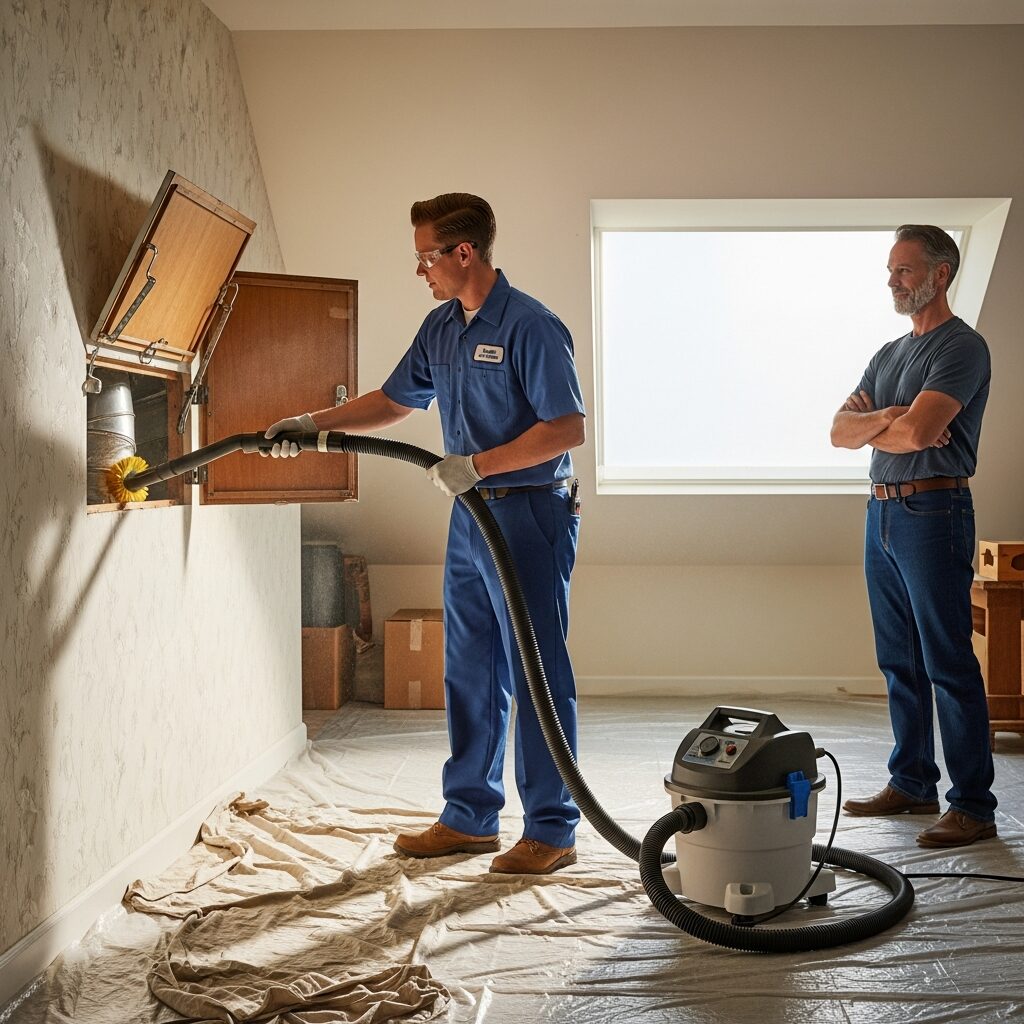
Another important part is containment. Proper negative pressure, the right agitation tools for the duct material, and attention to sealing access panels afterward are all part of doing the job without spreading dust into the home. When you understand that this is a system-based cleaning rather than a surface wipe-down, the “cost” conversation starts to make more sense. You’re not just paying for time; you’re paying for a method and the equipment that supports it.
Key Factors That Influence the Scope of Work in Sherman Oaks Homes
In practice, duct cleaning is highly dependent on the building and the lifestyle inside it. In Sherman Oaks, I regularly see four broad factors that change the scope of a project. The first is the size and layout of the duct network. A compact condo with a straightforward run is a different job than a multi-story home with long trunk lines and multiple returns. The second is accessibility. Some ducts are easy to reach in an attic or a utility space, while others are tucked behind tight framing, soffits, or hard-to-reach mechanical closets.
The third factor is the condition of the system. A home that has had steady filter changes and minimal construction dust will usually have lighter buildup than a home that recently went through drywall work, flooring replacement, or a kitchen remodel. Sherman Oaks has no shortage of renovation projects, and that fine dust can migrate quickly into returns if the HVAC was used during construction. The fourth factor is the household itself. Pets, frequent cooking, candles, or residents with sensitivity to airborne particles can all change the goals of the cleaning. Some homeowners want a general refresh; others want a deep reset after a specific event like smoke, construction, or a long period of vacancy.
These factors don’t exist in isolation. A large system that’s also hard to access and has construction residue simply requires more deliberate work. When you hear broad “low” or “high” estimates tossed around, they usually reflect these hidden variables. The most trustworthy approach is to get clarity on the process and what exactly will be addressed in your system.
The Difference Between “Vent Cleaning” and Whole-System Duct Cleaning
One of the most common misunderstandings I see is assuming that cleaning the visible vents is the same as cleaning the duct system. A vent cover can be dusty even if the ducts are relatively clean, and the reverse can be true as well. Cleaning registers and grilles can make a space look better and may reduce surface dust right around those openings. But it doesn’t necessarily address the debris that has settled deeper in the trunk lines, branch ducts, and return pathways.
Whole-system cleaning focuses on the pathways where air actually travels. It’s the difference between wiping the rim of a glass and washing the whole glass. In Sherman Oaks, where homes can be close to traffic corridors or exposed to seasonal wind-blown dust, returns often pull in fine particles that travel well beyond the first few feet. If your goal is to reduce that recirculation, you want a process that treats the entire airflow route.
Why Material and Duct Type Matter More Than Most People Expect
Ductwork isn’t all the same, and this matters for both results and the care required. Some systems are metal, some are flex ducts, and some include fiberglass-lined sections. Each responds differently to cleaning tools and agitation methods. Metal ducts are typically robust and can handle more aggressive brushing when done correctly. Flex ducts require a gentler approach to avoid tears or dislodged connections. Fiberglass-lined ducts need special care to avoid damaging the lining.
In Sherman Oaks, it’s not unusual to find mixed systems—an older metal trunk line with newer flex branches added during an HVAC update, or a remodel that introduced new runs. When a provider explains how they’ll handle each duct type, it’s a strong sign they’re approaching your home as unique rather than assuming a cookie-cutter setup. That kind of customization influences the time and skill involved, which is one reason “cost” can’t be reduced to a simple formula.
What Reputable Providers Look For During an Initial Assessment
A good assessment isn’t a sales pitch; it’s a diagnostic conversation. Expect questions about your HVAC filter habits, recent renovations, and whether you’ve noticed uneven airflow or persistent dust. In many Sherman Oaks homes, airflow complaints show up in rooms furthest from the air handler or in spaces affected by sun exposure and insulation differences. While duct cleaning isn’t a cure-all for every comfort issue, a thoughtful provider will help you separate duct-related concerns from equipment or insulation problems.
They may also look at the return pathway, which is often overlooked by homeowners. Returns tend to collect the most debris because they are constantly pulling air back through grilles and cavities. If return ducts are leaky, they can draw in attic dust or wall cavity debris, especially in older homes with less airtight construction. Identifying those issues early can prevent you from paying for a cleaning that won’t last because the system is still pulling debris from somewhere else.
Midway Through the Job: What a Thorough Cleaning Feels Like in Real Life
In the middle phase of a proper duct cleaning, you’ll often notice a rhythm: setting up equipment to maintain negative pressure, working through each register and branch, and moving methodically through the system. This is where homeowners can feel unsure because much of the work happens out of sight. The best teams explain what they’re doing and why, especially when they need to create access openings or spend extra time on returns that are heavier with debris.
This is also where choosing a specialist for air duct cleaning makes a practical difference. It’s not just about having a vacuum; it’s about matching tools to duct material, maintaining system pressure properly, and ensuring that loosened debris is captured rather than redistributed. When the process is done carefully, the home doesn’t end up with a new layer of dust on surfaces afterward, and the system is left sealed and functioning normally.
If you’re home during the service, you may hear changes in airflow sounds as sections are cleaned and registers are temporarily sealed or opened. That’s normal. What you should not see is uncontrolled dust drifting into rooms or technicians leaving registers loose and rattling. A meticulous team treats the duct system as part of your living environment, not as a construction zone.
Red Flags That Make “Cost” Less Important Than Avoiding a Bad Outcome
Sometimes the smartest “savings” is avoiding a service that doesn’t deliver. Be cautious if someone promises an instant whole-house cleaning with no need to inspect the system or discuss access. Another concern is a focus on upsells that don’t relate to your situation. A professional should be able to explain what they recommend and what they don’t, with reasons grounded in what they see in your home.
Another red flag is vague language about what will be cleaned. If the description is limited to “vents” without mention of supply and return lines, or if the air handler and blower area are never discussed, you may be looking at a partial job. And if the provider can’t explain how they protect your home from dust during the work, they may not be set up for a controlled, system-wide clean.
How Sherman Oaks Lifestyle and Environment Affect Duct Conditions
Even within the same ZIP code, duct conditions can vary. Homes near busier streets can see more fine particulate intrusion, and hillside properties may have different dust patterns depending on wind exposure and landscaping. If you’ve ever opened windows on a warm evening and noticed a thin layer of dust the next day, you’ve seen how quickly airborne particles settle. HVAC systems can amplify that effect by moving large volumes of air daily.
Indoor habits matter too. In many Sherman Oaks homes, cooking is a big part of daily life, and kitchens are often open to living areas. That means aerosols and fine particles can circulate more widely if ventilation isn’t ideal. Pet ownership also has a clear signature in ducts: hair, dander, and the fine fibers that cling to soft furnishings. None of this is “bad”; it’s simply real life. Duct cleaning is often about resetting the baseline so the system isn’t carrying last season’s debris forward.
What You Can Do Before and After Cleaning to Make Results Last
There are a few practical steps that help extend the benefits of a cleaning. First, keep up with filter changes and choose a filter that fits your system’s airflow requirements. A filter that’s too restrictive can reduce airflow and increase strain, while a filter that’s too loose can allow bypass. Second, pay attention to return grilles. If you see visible dust build-up on the return grille, that’s often a sign the return side is doing its job—pulling air back—but it also means you may want to clean that grille more frequently.
After a professional cleaning, it’s a good time to check for basic sealing issues around registers and returns, especially in older homes where gaps can develop. You don’t need to turn your home into a sealed box, but reducing obvious leaks helps keep attic dust and wall cavity debris out of the system. If you’ve had recent construction, consider whether the HVAC was running during the dusty phase and whether the return pathway was protected. That single decision often determines how quickly ducts get dirty again.
Understanding “Value” When You’re Comparing Providers
When people say they’re comparing costs, they’re often comparing trust. A provider who communicates clearly, respects your home, and treats the duct system thoroughly can feel like a different service entirely from someone who rushes through. Ask how they verify results. Some teams document before-and-after conditions at key access points. Others explain what they’re seeing as they go. The point isn’t to demand a performance; it’s to avoid the feeling that something invisible was promised and nothing changed.
Also consider scheduling and timing. Sherman Oaks gets busy during certain seasons when HVAC use spikes. If you can plan ahead—especially after a remodel or before heavy cooling season—you can often secure a more convenient appointment and a calmer, less rushed experience. A service performed with time and attention tends to feel more valuable, regardless of how you came into the conversation about “cost.”
FAQ: Air Duct Cleaning “Cost” Questions Sherman Oaks Residents Ask
Q: Why do estimates vary so much from one home to another?
Because duct systems differ in size, layout, accessibility, and condition. Even two homes of similar square footage can have very different duct designs and return pathways, which changes the time and complexity of the work.
Q: Is it worth cleaning ducts if I change my filters regularly?
Regular filter changes help a lot, but filters don’t catch everything, and they don’t prevent debris from settling over time. If there’s been construction dust, heavy pet shedding, or years of gradual buildup, a cleaning can still be useful.
Q: Will duct cleaning fix rooms that feel stuffy or don’t cool well?
Sometimes it can help if debris is restricting airflow, but comfort issues can also come from duct leaks, insulation gaps, thermostat placement, or equipment performance. A good provider will discuss these possibilities rather than promise a guaranteed fix.
Q: How do I know the cleaning was thorough if I can’t see inside the ducts?
Clear communication, methodical work through each supply and return, and careful containment are strong signs. Some companies also provide visual confirmation at access points. You should also notice less dust movement from vents over time.
Q: Should I leave the house during the service?
Most homeowners can stay home. If you’re sensitive to noise or prefer not to have doors opened frequently, stepping out can be more comfortable, but a properly controlled cleaning should not create a dusty environment indoors.
Ready for a Cleaner HVAC System in Sherman Oaks?
If you’ve been trying to decode what “air duct cleaning cost” really means, the most helpful next step is to focus on scope, method, and the specific conditions in your home. A thoughtful assessment and a careful system-wide approach tend to deliver the peace of mind people are actually looking for when they start asking about cost. When you’re ready to schedule air duct cleaning for your Sherman Oaks home, choose a team that explains the process clearly, protects your space, and treats your ductwork like the long-term part of your home comfort system that it is.
عشر