
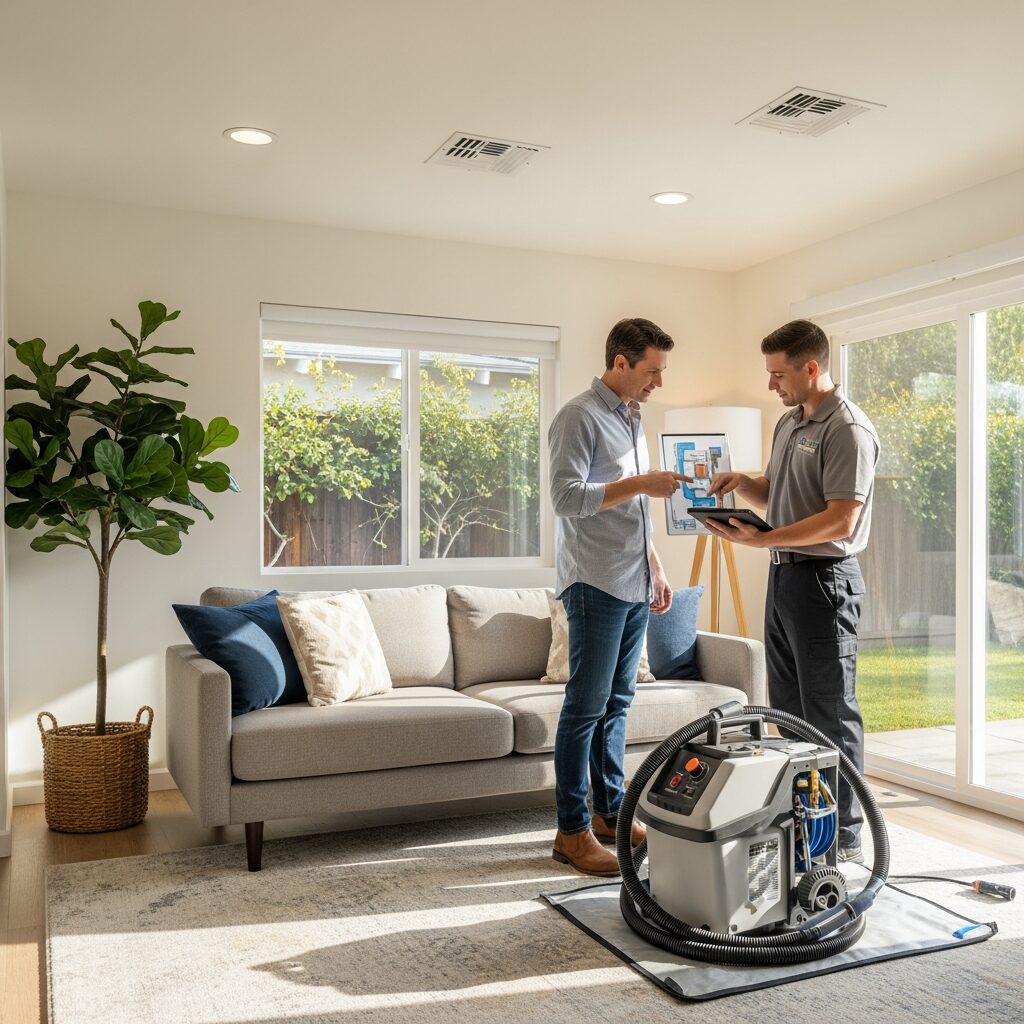
Why People Ask About “Average” Air Duct Cleaning in Sherman Oaks
In Sherman Oaks, conversations about home comfort tend to show up in the most ordinary places: chatting with a neighbor near the Chandler Bikeway, comparing notes at the coffee shop on Ventura, or talking with a contractor while the afternoon heat settles into the Valley. One question comes up again and again, especially after wildfire season, a remodel, or a long stretch of running the AC: “What’s normal for air duct cleaning around here?” Even when you’re not trying to pin down a number, you’re trying to understand what makes one job simple and another more involved, and what “good service” should actually include.
Local homes vary widely, from older properties with additions and patched-together duct runs to newer builds with tighter envelopes and sophisticated filtration. That variety is exactly why “average” is a tricky concept. What matters more than a single figure is knowing what affects the scope of work, what you should expect a reputable crew to do, and how to recognize the difference between a quick vacuum-and-go and a thorough system cleaning. If you’re starting your research, it helps to first understand what a real duct cleaning is, and what it isn’t. In Sherman Oaks, homeowners often begin by looking at air duct cleaning information so they can compare claims, ask better questions, and avoid services that sound comprehensive but aren’t.
Think of this guide as the local context behind the “average.” It’s written for homeowners who want clarity: what influences the time and effort, how to judge a proposal, and how to make sure the result is healthier air and a better-running HVAC system rather than just a cleaner-looking vent cover.
What a Thorough Air Duct Cleaning Should Include
A credible air duct cleaning is not just about dust you can see. Most of the meaningful buildup is inside the trunk lines and branch runs, on the interior surfaces where air moves every time your system cycles on. A thorough cleaning targets the supply side that sends conditioned air to your rooms and the return side that brings air back to the system. In many Sherman Oaks houses, returns are the big collectors, especially if the home has pets, a lot of foot traffic, or older carpeting that sheds fibers into the air stream.
Equally important is how the cleaning is performed. Professional-grade negative air equipment is designed to keep loosened debris moving toward a collection device rather than drifting into the home. Agitation tools, used carefully, help dislodge packed dust so it can be removed instead of simply redistributed. When the job is done well, you’re not left with a “new dust smell” or a fine film settling on furniture. You should feel that the system is breathing more freely, with less particulate circulating when it starts up.
Homeowners sometimes assume duct cleaning means the whole HVAC system will be treated like a full tune-up. While there can be overlap, duct cleaning focuses on the air pathways and accessible components like registers, grilles, and often the blower compartment area if included. If someone promises to “sanitize everything” in a few minutes, that’s a red flag. In our climate, where systems run hard during the summer and sometimes again during Santa Ana conditions, quality work has to be deliberate and controlled.
Why Sherman Oaks Homes Have Such Different Duct Conditions
Sherman Oaks sits in a part of Los Angeles where micro-environments matter. Homes closer to busy corridors can see more fine particles making their way indoors. Properties near active construction or renovation zones can experience increased drywall dust and sawdust infiltration. Seasonal winds can carry outdoor debris that settles on window tracks and eventually makes its way into the return air stream. Even the way a home is used changes duct conditions dramatically. A household with kids, a dog that sheds, and doors frequently opening to the yard will load a return system differently than a quieter household with fewer occupants.
Then there’s the age factor. Some homes have older ductwork with bends, transitions, and repaired sections that can trap debris. Others have more modern, smoother runs. Older attic ductwork may also be surrounded by insulation fibers and the kind of fine dust that seems to appear overnight in the Valley. Over time, that material can settle inside the duct system, especially if there are small leaks drawing in attic air.
These local realities help explain why “average” becomes a range of scenarios. Two houses a few streets apart can have completely different duct cleanliness simply based on renovation history, filtration habits, and how well the system has been sealed and maintained.
What Influences the Scope of Work More Than Any “Average”
When homeowners ask what’s typical, they’re often trying to anticipate the scope: how many vents, how long it might take, and whether the system needs extra attention. In practice, the biggest influences are not abstract numbers but practical details of the home and HVAC setup. The size of the system and the number of supply and return registers matter, but so does accessibility. A single-story home with straightforward attic access is different from a multi-level home with tight chases and complex zoning.
The condition of the ductwork is another major factor. If ducts are heavily coated, a reputable provider will spend more time loosening and extracting debris. If the home has been through a remodel, you may be dealing with fine construction dust that clings to surfaces. If there has been moisture intrusion at any point, you’ll want an honest evaluation focused on source control rather than simply “cleaning over” a problem that will return.
Filtration habits shape what’s found inside. In Sherman Oaks, many families run their systems frequently, and a missed filter change can quickly lead to more buildup around the blower and return path. On the other hand, consistent filter maintenance, properly fitted filters, and careful housekeeping can keep ducts relatively clean. The result is that two homes with the same square footage can require very different levels of effort to achieve a meaningful cleaning.
How to Evaluate a Duct Cleaning Proposal Without Talking Numbers
It’s possible to evaluate a service plan without focusing on price, and in many ways it’s a better way to choose a provider. Start with clarity. A solid proposal should describe what parts of the system are included: supply lines, return lines, registers and grilles, the main trunk lines, and whether the blower compartment or accessible air handler sections are part of the scope. The more specific the description, the less likely you are to end up with a superficial pass that leaves key areas untouched.
Ask about how they prevent cross-contamination. A careful crew will protect floors, keep dust contained, and ensure that loosened debris is captured rather than released into the living space. If you’ve ever cleaned a vent cover and watched dust puff out, you already know why containment matters. A quality process should feel controlled, not chaotic.
Also ask what they do when they see something unusual. Duct cleaning can reveal disconnected runs, damaged flex duct, or signs of pest activity. A professional should explain findings calmly and recommend next steps without pressure. In Sherman Oaks, where attics can be hotspots for critters looking for shelter, it’s not uncommon to discover evidence of intrusion. The right response is not panic, but a plan to address the underlying issue so the HVAC system isn’t pulling contaminated air.
Timing: When Duct Cleaning Makes Sense in Sherman Oaks
Not every home needs frequent duct cleaning. But there are common situations in our neighborhood where it becomes especially relevant. After a remodel, dust can linger inside ducts for months, even when the home looks spotless. If you’ve recently replaced flooring, scraped popcorn ceilings, or done any drywall work, the HVAC system may have circulated fine particulates throughout the duct network. A cleaning can help reset the system, especially if you notice dust accumulating quickly on surfaces soon after cleaning the house.
Another common trigger is wildfire season and prolonged smoky conditions. Even when you keep windows closed, systems pull air through returns, and fine particles can accumulate in filters and around the return path. If you had to run the system continuously for comfort during bad air days, it can be worth assessing what the system captured and where it settled.
Households with allergies often notice that symptoms spike when the system turns on, particularly after it’s been idle for a while. While allergies have multiple triggers, a dirty return path and dust-laden ducts can contribute to irritation. The goal isn’t to promise a cure, but to reduce one plausible source of airborne particulate.
Midway Check: What “Clean” Should Feel Like
Halfway through your research, it helps to reset expectations. Duct cleaning is not a cosmetic service; it’s an airflow and cleanliness service inside a hidden network. The results should show up as less visible dust coming from registers, fewer odors that seem tied to system startup, and a general sense that the air is less “stale” after the HVAC runs. Some homeowners also notice improved airflow at certain rooms if the ducts were partially restricted by debris, though airflow issues can also relate to design, balancing, or duct damage.
If you want to compare approaches and understand what a thorough process looks like, reviewing a dedicated air duct cleaning overview can help you identify key steps and terminology. The point isn’t to become an HVAC technician overnight; it’s to be an informed homeowner who can recognize when a company is describing real system cleaning rather than a quick surface vacuum.
As you evaluate options, remember that the “average” isn’t a single experience. The best outcome comes from matching the service to your home’s conditions, not from trying to force every house into the same template.
Indoor Air Quality and the Reality of Valley Living
Sherman Oaks residents live with a unique combination of indoor and outdoor factors. Warm summers mean long cooling seasons and frequent system cycling. Many homes rely heavily on HVAC to keep indoor temperatures stable. The more the system runs, the more opportunities there are for dust and airborne particles to pass through returns and settle inside ductwork, especially if filters don’t fit well or are overdue for replacement.
Outdoor air quality also fluctuates. Traffic patterns, heat inversions, and seasonal wind events can all affect what’s in the air outside. While duct cleaning doesn’t replace filtration or source control, it can be one part of an indoor air strategy, particularly when paired with consistent filter changes and attention to sealing gaps that pull dusty attic air into the system.
It’s also worth noting that many Valley homes have a mix of materials and upgrades accumulated over time. A home might have a newer high-efficiency unit attached to older duct runs. In that situation, cleaning the ducts can help the newer equipment operate without pushing air through an unnecessarily dusty pathway.
What to Watch For: Red Flags and Green Flags
Because ductwork is mostly hidden, this industry attracts both meticulous professionals and providers who rely on vague promises. A major red flag is a one-size-fits-all pitch that doesn’t ask about your home’s layout, number of returns, or whether you’ve had recent construction. Another is an emphasis on instant results without describing the actual method. If the explanation focuses entirely on fragrances or quick “sprays,” you’re not hearing about the core work of removing debris.
Green flags include clear communication about what’s included, a willingness to explain the process, and a focus on containment and cleanliness. In a well-run job, the crew treats your home with care. Registers are handled thoughtfully, floors are protected, and the system is run and checked with attention to how it’s responding. You should feel comfortable asking questions throughout the process, especially if something unexpected is found.
Finally, reputable providers don’t oversell duct cleaning as a miracle solution. They explain it as one tool: helpful in specific conditions, particularly where buildup is present, and most effective when paired with good filtration and routine HVAC maintenance.
FAQ: Air Duct Cleaning in Sherman Oaks
Q: How do I know whether my ducts actually need cleaning?
A: Common signs include visible dust or debris coming from vents, persistent musty odors when the system starts, dust that returns quickly after cleaning surfaces, or evidence of construction dust after a remodel. If you remove a register and see heavy accumulation just inside, that can also be a clue, though deeper inspection is often needed to be sure.
Q: Will duct cleaning help with allergies?
A: It can help reduce one potential source of airborne particulate in the home, especially if ducts and returns have significant dust buildup. However, allergies usually have multiple triggers, so it’s best viewed as part of a broader plan that includes filtration, humidity control, and regular cleaning.
Q: Is it normal to have some dust in ducts?
A: Yes. Some dust accumulation over time is normal, especially in active households. The question is whether the buildup is heavy enough to circulate into living spaces, restrict airflow, or contribute to odors and irritation.
Q: Can duct cleaning damage my ductwork?
A: When done carefully with appropriate tools, it should not. Problems tend to arise when aggressive methods are used on fragile or aging ducts without consideration. A good provider will adjust the approach to the type and condition of your duct system.
Q: What should I do after a duct cleaning to keep things cleaner longer?
A: Use properly sized filters that fit snugly, change them on a consistent schedule, keep return grilles unobstructed, and consider having the system checked for duct leaks that may be pulling dusty attic air into the return side.
Next Steps for a Cleaner, More Comfortable Home
If you’re trying to understand what’s “average” in Sherman Oaks, the most useful move is to focus on the scope and method rather than a single benchmark. Every home has its own story: a renovation last year, a dog that sheds like clockwork, an attic that bakes all summer, or a system that has been running nonstop during heat waves. When you align the service with those realities, you’re far more likely to be satisfied with the result.
If you’d like to take the next step, explore what a complete, careful air duct cleaning service involves and schedule a visit that starts with your home’s actual conditions. The best outcomes come from clear expectations, a thorough process, and a plan to keep your HVAC system moving clean air through every room.