
Why Sherman Oaks Homes Feel Dusty Even When You Clean Constantly
If you live in Sherman Oaks, you already know the pattern: you wipe down surfaces, you vacuum, you change the sheets, and somehow a fine layer of dust still seems to return. Part of that is simply life in a busy, sun-soaked part of the Valley, where doors open often, windows get cracked for “just a few minutes,” and outdoor air carries its own share of particulate. But there’s another factor many homeowners don’t think about until they start noticing vent dust or musty start-up smells: the hidden pathways your HVAC system uses every day.
Home air duct cleaning is not a trendy add-on; it’s a practical service that can make sense when dust, lint, and debris have built up inside the ductwork over time. And because Sherman Oaks has such a mix of older homes, remodels, and additions, duct systems here can be surprisingly complex. If you’re exploring what a responsible service looks like, it helps to start with a clear overview of air duct cleaning, so you know what’s being cleaned, how it’s done, and what results are realistic.
How Residential Ductwork Collects Debris Over Time
Your HVAC system is basically a circulation engine. Air is pulled in through return grilles, filtered, conditioned, and sent back out through supply vents. That circulation repeats dozens or hundreds of times a day. Along the way, tiny particles can enter the system: skin cells, fabric lint, pet dander, fine dust from outside, and the ultrafine residue that shows up after home projects like sanding or drywall patching. Over years, these materials can settle in the ducts, especially at turns, low points, and near registers where airflow patterns change.
In Sherman Oaks, the practical realities of living also contribute. Many households have pets. Many homes sit near busy roads where particles can sneak in. And in warmer months, HVAC systems run long hours, moving large volumes of air. That doesn’t automatically mean your ducts are “dirty,” but it does mean the system has more opportunity to accumulate debris if filtration is inconsistent or if return pathways are leaky.
One of the most overlooked issues is filter fit. A filter that’s technically the right size but doesn’t seal well in its slot can allow air to bypass the filter media. When that happens, dust collects downstream, and cleaning becomes more relevant. Homeowners often discover this when they remove a filter and see dust trails or dark smudging around the frame.
What Homeowners Should Expect From a Proper Cleaning
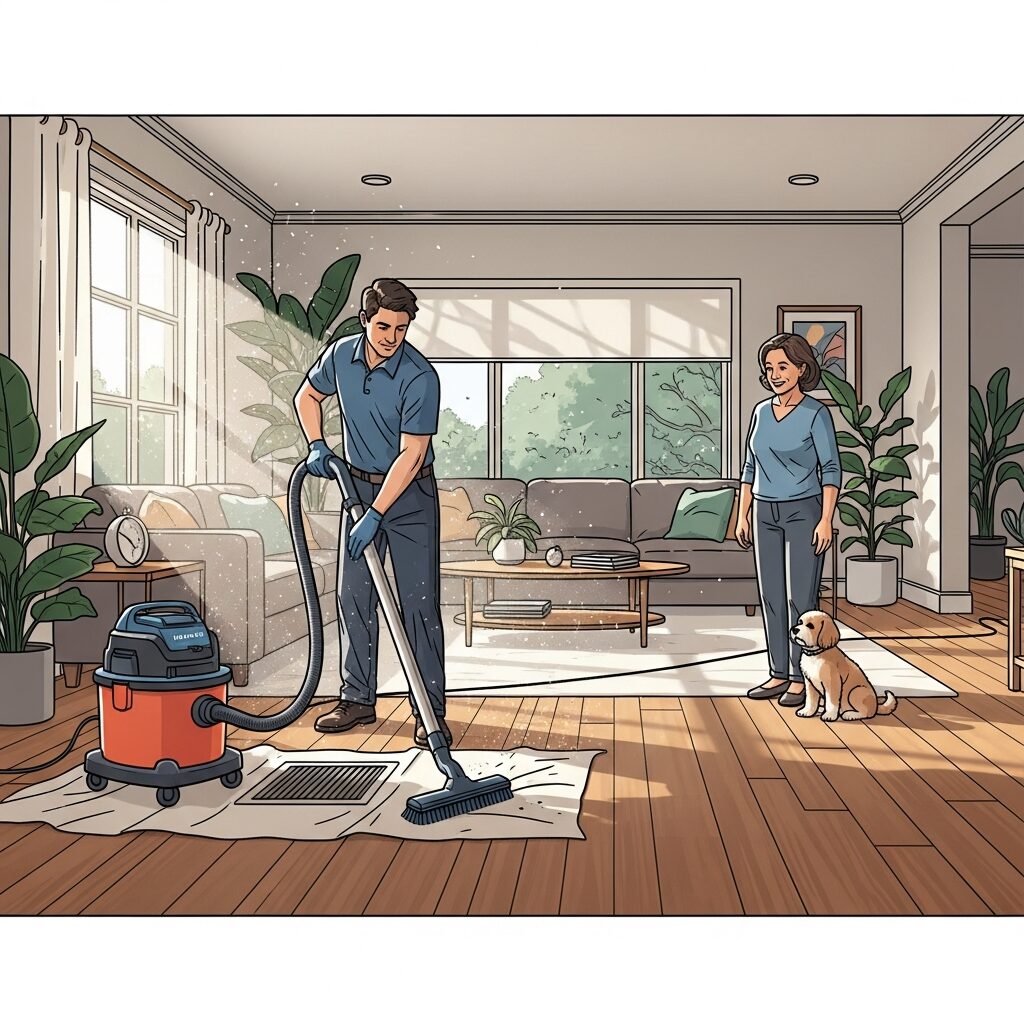
A proper residential duct cleaning is a process, not a quick wipe-down. A quality crew will usually begin by looking at the system layout: where the air handler sits, how many returns you have, where the supply runs branch off, and how accessible the ductwork is in the attic or crawl space. Protecting your home matters. Technicians should take care with flooring, corners, and furniture as they bring in hoses and equipment, because the goal is improved cleanliness, not a dusty footprint through the hallway.
Once the system is prepared, the ductwork is typically placed under controlled negative pressure so debris is pulled toward a collection point rather than pushed into rooms. Agitation tools are used to dislodge dust stuck to the duct interior. Returns often need special attention, since they act like wide inlets that pull in lint and hair. A thorough approach focuses on cleaning both supply and return pathways, not just the vents you see in each room.
Homeowners sometimes ask whether they should leave the house during service. In most cases, you can stay, especially if you work from home, but it’s helpful to plan for some noise and technicians moving between rooms. If you have a baby that naps lightly, a skittish pet, or a home office on a call schedule, it can be worth coordinating timing so the work is less disruptive.
When Home Air Duct Cleaning Makes the Most Sense
Not every home needs duct cleaning on a strict routine, but there are certain situations where it’s particularly worthwhile. If you’ve recently moved into a home and you don’t know the maintenance history, cleaning can be a reset that gives you a cleaner baseline. If you’ve completed renovations, even small ones, fine dust can travel and settle in the return side. If you notice dust puffing out when the HVAC starts, or if you see heavy buildup behind the return grille, that’s often a sign that debris has been accumulating for a while.
Another common trigger is odor. Sometimes, when the system kicks on after sitting, you get a stale smell that disappears after a few minutes. That can come from settled dust warming up, or from debris in the return path. Duct cleaning won’t solve every odor source, but it can reduce the “old dust” smell that lingers in systems that haven’t been addressed in years.
If anyone in your household is sensitive to dust—whether that’s allergies, asthma, or simply a preference for a fresher-feeling home—cleaning can be part of a broader indoor air plan. It’s not a replacement for good filtration and regular housekeeping, but it can remove a reservoir of debris that otherwise keeps recirculating.
What Happens in the Middle of the Job: The Part You Don’t See
The middle portion of a duct cleaning is where the work either becomes truly effective or becomes mostly cosmetic. Once the vacuum and negative-air setup is in place, the technician will work through the system methodically, addressing branches and trunks so debris is guided toward collection instead of scattered. This is also where careful technique matters, especially in homes with flexible ducting. Flex duct can be cleaned effectively, but it needs gentle handling to avoid tearing or compressing the inner liner.
It’s reasonable to ask how the company verifies progress. Some technicians use camera inspections or visual checks at access points to confirm debris removal. Others rely on their process and experience. What you want is a team that can explain what they’re doing in plain language and answer your questions without defensiveness. If you’d like to compare what you’re being told with a straightforward service description, reviewing air duct cleaning can help you understand the difference between a full-system approach and a “blow-and-go” visit that focuses only on the register covers.
During this phase, homeowners sometimes notice technicians spending extra time on returns. That’s normal. Returns are where a lot of household debris enters, and they can be a major contributor to visible dust patterns around grilles. Cleaning the returns thoroughly can make a noticeable difference in how quickly dust reappears on nearby walls and floors.
How to Maintain the Benefits After Cleaning
Once your ducts are cleaned, the best way to protect that investment is consistent filtration and a little attention to the system’s “edges.” Change filters on a schedule that matches your household’s needs, not just a generic calendar reminder. A home with pets, high occupancy, or frequent HVAC use often needs more frequent filter changes. Make sure the filter fits snugly, and consider having the filter slot inspected if you suspect bypass air.
Keep return grilles clean, since they’re the first line of contact for dust and lint. If you do home projects, consider turning off the HVAC when sanding or cutting, and clean thoroughly afterward before running the system again. If you notice rooms that are always dusty, the issue could be duct leaks in the attic pulling in insulation fibers or attic dust. In that case, sealing and repairing ductwork may be the better long-term fix, with cleaning as a helpful first step.
It also helps to pay attention to moisture. While Sherman Oaks is often dry, localized moisture can occur near cooling coils or in areas with poor drainage. If you ever see signs of condensation issues or persistent musty smells, it’s worth having the system evaluated. Duct cleaning is most effective when the system stays dry and properly filtered.
Choosing a Provider as a Homeowner: What to Ask
As a homeowner, you don’t need to become an HVAC specialist to hire well. You just need to ask a few common-sense questions. How will the home be protected during service? Will both supply and return ducts be cleaned? How will access points be handled and sealed? What is the plan for debris containment? Clear answers indicate a company that has a real process.
It’s also fair to ask what they expect to find based on your home’s history. If you’ve had recent construction, mention it. If you’ve had pets for years, say so. If your system is older or your home has been remodeled, that context helps. The best technicians treat this like an investigation: they gather clues, they inspect, and they tailor the approach to your specific system.
FAQ: Home Air Duct Cleaning in Sherman Oaks
Q: Will duct cleaning reduce the dust I see on furniture?
A: It can help by removing built-up debris from the system pathways, especially if returns are heavily loaded. You’ll still get everyday dust from normal living, but many homeowners notice less rapid buildup near vents and returns.
Q: Is duct cleaning safe for older homes?
A: Yes, when done by a trained crew using appropriate tools and careful technique. Older systems often have mixed materials, so gentle handling and proper access sealing are important.
Q: Do I need to leave the house while it’s being done?
A: Typically, no. You can usually stay home, but expect noise and foot traffic. If you have sensitive pets or a quiet-work schedule, coordinating the timing helps.
Q: How do I know if my ducts are actually dirty?
A: Visible buildup behind return grilles, dust puffs when the system starts, or heavy debris around registers can be clues. A visual inspection or camera check can provide confirmation.
Q: Does duct cleaning fix all indoor air quality issues?
A: It addresses one important source of circulating debris, but indoor air quality also depends on filtration, ventilation, humidity control, and whether ducts are sealed properly.
Bring Back That “Just Cleaned” Feeling to Your Home
Living comfortably in Sherman Oaks means managing the dust and airflow realities that come with the Valley lifestyle. If you’re ready to reset your HVAC system, reduce hidden buildup, and make your home feel fresher when the air turns on, take the next step with a service that explains the process and respects your space. Learn what a full-system approach includes by visiting air duct cleaning, then schedule a visit so your home’s ductwork can be cleaned thoughtfully, thoroughly, and with results you can actually feel over the weeks that follow.