
Sherman Oaks homeowners know how quickly a comfortable home can depend on the HVAC system. When the valley heat settles in, the AC becomes part of the daily rhythm, and the air you breathe indoors is often the same air being cycled through the system again and again. That’s why HVAC air duct cleaning isn’t just a “nice to have” for many families—it can be a practical way to support cleaner circulation, reduce that constant battle with dust, and make the home feel fresher. If you’re exploring air duct cleaning in Sherman Oaks, it helps to look at it through the HVAC lens: ducts are not isolated tubes, but part of a connected system that includes returns, filtration, and the mechanical equipment that moves air.
To understand how duct cleaning supports cleaner indoor air, start with the idea of airflow pathways. Your HVAC system pulls air from your living space through return vents, passes it through a filter, conditions it, and then sends it back out through supply vents. Along the way, any particles that bypass filtration—or that were introduced during a time when filtration wasn’t consistent—can settle inside the duct network. Over months and years, that buildup can become a stored source of debris that gets disturbed when the system cycles on, when airflow changes, or when the fan runs continuously for temperature balancing.
In Sherman Oaks, the “closed house” effect is real. Many homes stay sealed for comfort, noise control, and outdoor air concerns. That means the indoor environment relies heavily on mechanical circulation. If ducts and returns are holding dust, lint, or pet dander, it’s not just an out-of-sight issue. It can influence how quickly surfaces get dusty, how the air smells when the system starts, and how comfortable rooms feel over long days of AC use.
HVAC duct cleaning can also be especially helpful after specific life events. Remodeling is one of the biggest. Even careful contractors can’t always prevent fine dust from floating through the house and being drawn into returns. New flooring, drywall repairs, sanding, cabinet installation—these projects generate particles that can settle deep in the duct system. In a Sherman Oaks home where remodels and updates are common, cleaning the ducts after the dust has settled can feel like the final step that makes the home truly “finished” again.
Pets add another layer. Return vents are designed to pull air in, and they don’t discriminate between clean air and air filled with dander and fur. Over time, return ducts can collect a surprising amount of pet-related debris, especially in homes with multiple animals or with return grilles located near high-traffic areas. If you’ve ever noticed a faint pet odor when the HVAC starts up, it may be tied to what’s accumulated in the return pathways. Cleaning those areas can reduce that “startup smell” and help the whole home feel cleaner.
For cleaner air, the return side is often where the real story is. Homeowners sometimes focus on supply vents because that’s where air comes out, but returns are where air and particles enter. If return grilles are dusty or the return drop has heavy buildup, that debris can migrate, especially if the filter doesn’t fit tightly or isn’t changed consistently. A thorough HVAC-focused duct cleaning addresses returns and supplies as a connected loop, aiming to remove stored debris so filtration can do its job more effectively afterward.
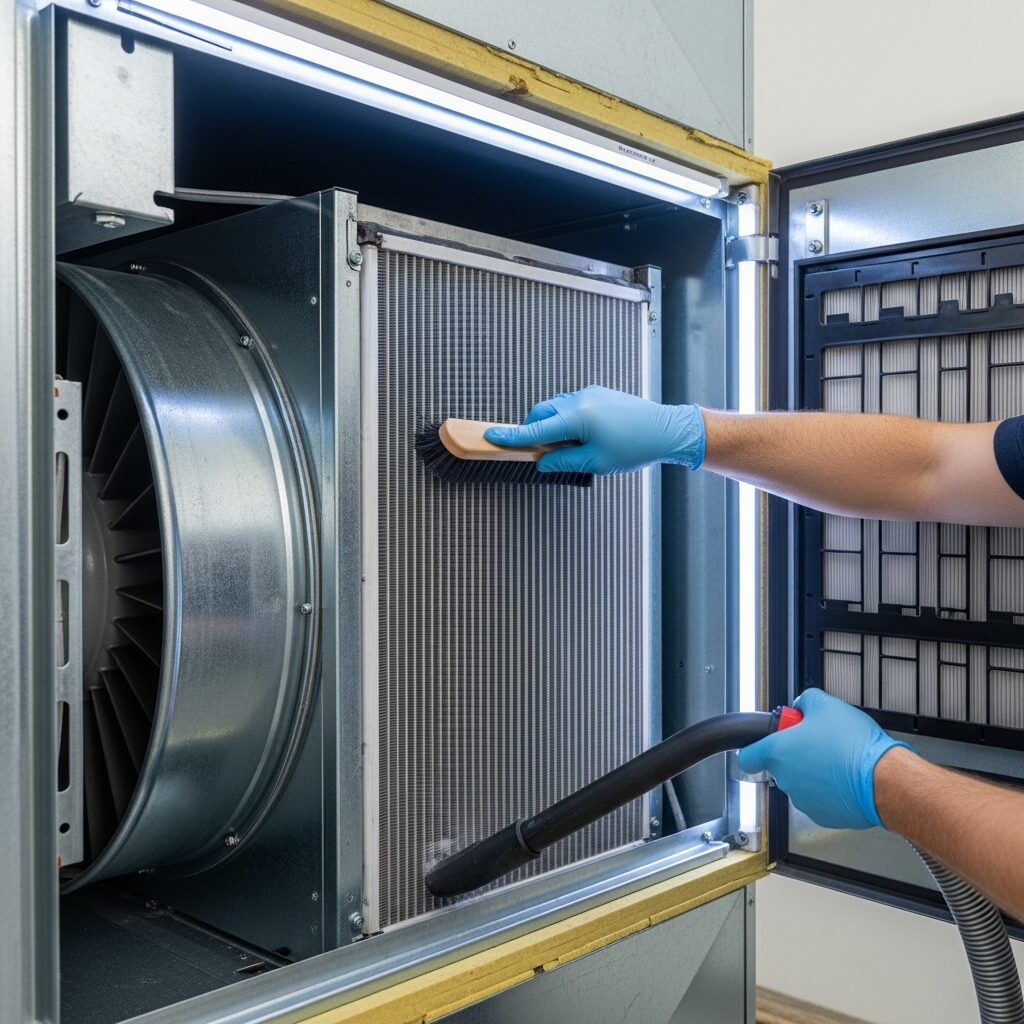
Another important aspect is the relationship between ducts and HVAC equipment. The blower compartment and surrounding areas can accumulate dust, especially if there has been filter bypass at any point. When that dust collects near moving parts, it doesn’t just sit there—it can be picked up by airflow and distributed again. A system-wide mindset recognizes that cleaner air is achieved not only by cleaning the ducts, but by ensuring the areas that move and condition air are not acting as a source of dust themselves. While duct cleaning is not the same as full mechanical servicing, a comprehensive approach pays attention to accessible internal HVAC surfaces that influence what gets circulated.
Midway through the discussion, I always encourage homeowners to think about how they’ll maintain the benefits. It’s easy to focus on the cleaning day and forget what comes after. The best results show up when duct cleaning is paired with consistent filter habits and a filter that fits properly. In many homes, the filter is technically present, but air can still slip around the edges if the rack is loose or the filter size isn’t quite right. That bypass can send dust into the system, where it settles and slowly builds again. If you’re scheduling air duct cleaning, it’s worth asking for guidance on the right filter fit and a maintenance rhythm that suits how often your system runs in Sherman Oaks.
Clean air also depends on controlling moisture. While Sherman Oaks isn’t humid in the way some climates are, HVAC systems can still develop condensation at the coil, and drainage problems can create damp conditions in parts of the system. Dust plus moisture can lead to stubborn buildup and odors that linger. If you notice musty smells, it’s wise to consider whether there’s a moisture or drainage issue that should be addressed alongside duct cleaning. Cleaning helps remove debris, but long-term freshness usually depends on keeping the system dry where it’s supposed to be dry.
There’s also the issue of duct leakage, which is more common than many homeowners realize, especially in older homes. Small gaps at joints or deteriorated seals in attic ductwork can allow dusty attic air to be pulled into the system. That can make ducts reaccumulate debris faster and can introduce insulation fibers into circulation. Duct cleaning can remove what’s already there, but if leakage is significant, the home may benefit from sealing improvements so the cleaned system stays cleaner longer.
From a comfort standpoint, cleaner ducts can contribute to a more consistent feel throughout the house. When returns and trunks are clear, the system can breathe more easily. Again, this doesn’t replace proper HVAC diagnosis if you have major airflow problems, but in cases where dust and debris have built up over years, removing that restriction can support smoother circulation. In practical terms, that can mean fewer rooms that feel stagnant and fewer moments where the system seems to struggle to push air where it needs to go.
Another benefit that’s often overlooked is how duct cleaning can help you better understand your home’s HVAC behavior. During a thorough service, technicians may notice crushed flex duct, disconnected runs, or poorly sealed connections. Those findings can explain why one room runs warmer than another or why dust seems to return quickly. This is valuable because it turns duct cleaning into a diagnostic opportunity, not just a cosmetic one. When homeowners have clearer information about their system, they can make targeted improvements that actually move the needle on comfort and cleanliness.
Cleaner air is also about what you don’t see. Fine particles can circulate without leaving obvious piles of dust, yet still contribute to that “dry” or “irritating” feeling some people notice after hours of AC. While duct cleaning won’t change outdoor conditions, it can reduce one internal source of particulate. Combined with good filtration and regular HVAC maintenance, it can be part of a practical plan for making indoor air feel more breathable, especially for families who are sensitive to dust.
The key is to choose a thorough approach and then support it with consistent habits. After cleaning, replace filters, vacuum return grilles periodically, and keep supply vents unobstructed by furniture or heavy drapes. If your home has a lot of attic dust or you suspect leakage, consider addressing sealing so you’re not pulling that debris into the system again. Over time, those choices do more than any single appointment to keep air feeling clean.
In Sherman Oaks, where HVAC comfort is part of everyday life for much of the year, HVAC air duct cleaning is best seen as a foundational maintenance step. It resets the circulation pathways, reduces stored debris, and helps the system deliver air that feels fresher. When you pair it with smart filtration and attention to moisture and leakage, you’re building a home environment that’s easier to maintain—and more pleasant to live in.
FAQ
Q: Is HVAC air duct cleaning different from just cleaning vent covers?
A: Yes. Vent covers are only the visible end points. HVAC air duct cleaning focuses on the interior duct runs, main trunks, and the return pathways that pull air back to the system, using equipment designed to remove debris rather than spread it.
Q: Why do returns matter so much for cleaner air?
A: Returns pull air in from the home along with dust, lint, and dander. If return ducts are dirty or the filter doesn’t fit well, that debris can enter the system and circulate, so cleaning returns can be a major part of improving overall cleanliness.
Q: Will duct cleaning help if my home has a musty smell when the AC runs?
A: It can help if the odor is tied to dust and debris. If the odor is moisture-related, you may also need to address condensate drainage, coil cleanliness, or other moisture sources to fully resolve it.
Q: How do I keep the ducts cleaner after they’ve been cleaned?
A: Use the correct filter size, change it consistently, keep return grilles clean and unobstructed, and address duct leakage if attic dust seems to be getting into the system.
Q: Does duct cleaning improve HVAC performance?
A: If debris was restricting airflow, cleaning can support smoother circulation. However, performance issues can also come from equipment or design factors, so duct cleaning is best viewed as one part of overall HVAC upkeep.
Make cleaner air the new normal in your Sherman Oaks home
If your home feels dusty, the air seems stale when the system starts, or you simply want a cleaner baseline for your HVAC to circulate, a system-wide cleaning can be a practical step. To schedule professional air duct cleaning in Sherman Oaks and get guidance on filters and follow-up maintenance, reach out and ask for a thorough plan that addresses both supply and return pathways for lasting, cleaner air.