
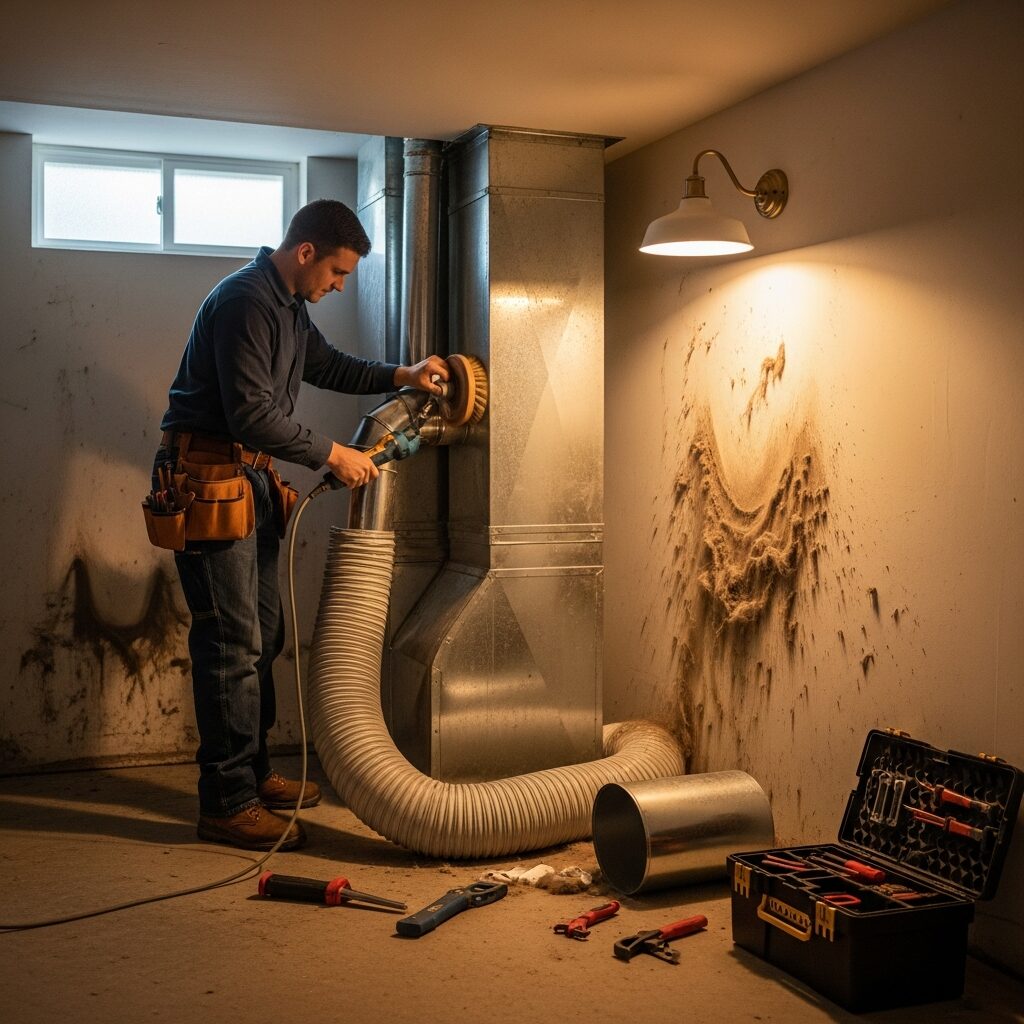
Ask anyone who has lived in Sherman Oaks through a summer heatwave and they’ll tell you: a dryer that drags through two or three cycles is more than an inconvenience—it turns the laundry area into a mini furnace and steals time you can’t spare. The good news is that most problems have straightforward solutions once you know where to look. As a local technician, I’ve worked in crawlspaces under mid-century ranch homes near Hazeltine, tight utility closets in newer condos off Ventura Boulevard, and hillside properties with vertical roof vents. Over and over, the same issues appear, and with the right approach, they’re fixable. If you’re wrestling with slow dry times, a persistent lint smell, or a vent flap that barely moves, here’s how to tackle the most common dryer vent issues and restore steady, reliable performance—starting with timely, professional dryer vent cleaning.
Problem One: Long Dry Times with a “Healthy” Dryer
It’s easy to assume the appliance is failing when a load takes ages. In reality, the dryer can be perfectly sound while the vent path is the real culprit. Airflow is everything. When lint narrows the duct, moisture can’t escape, and the machine heats the same air again and again. Sensors misread lingering humidity as fabric still being wet, and cycles stretch. In Sherman Oaks homes, I often find a combination of a crushed transition hose and a lint ring at the first elbow. Both conditions together choke the exit and double dry time. The solution is to reset the transition with a smooth, semi-rigid connector, brush the full run, and verify strong airflow at the exterior hood. Suddenly, the same dryer seems “new” again.
Problem Two: Lint Odor or “Hot” Laundry Room
A faint, dusty odor when the dryer runs is a sign lint is accumulating or scorching. The laundry room feeling overly warm is another clue. Heat that should leave the home gets trapped when backpressure rises. I’ve opened vents near Magnolia Woods that were nearly closed by a dense mat just past the lint trap housing. Once cleared, not only did dry times plummet, but the room temperature normalized, and the odor vanished. Remember, lint is cellulose; it doesn’t need a flame to smolder. A restricted vent tips the balance in the wrong direction, which is why thorough cleaning is both a performance and a safety fix.
Problem Three: Exterior Flap Barely Opening
Homeowners often check the exterior termination and see the damper barely twitch. That tiny movement is a diagnostic gift—it means the system is starved for flow or the cap is stuck. Sometimes louvers have fused with sun and age. Other times, the line is blocked upstream by a lint plug at an elbow. On roof terminations common to hillside streets, mesh screens inside caps fill with lint until they behave like fabric filters. Removing restrictions at the cap and brushing the line from the appliance side restores the full “puff” of exhaust you should feel outside. If a cap is damaged or poorly designed, swapping to a low-resistance damper can transform performance instantly.
Problem Four: Moisture or Staining Near the Vent Path
When vents are long and flat, especially under floors, moisture can condense in cool sections and form sticky lint paste that eventually hardens. That paste encourages more buildup and, in worst cases, leaks. I’ve seen ceiling stains below vent runs in multi-story buildings when joints separated under pressure. Fixing this demands a complete cleanout, resealing joints, and, when possible, improving pitch so condensation drains toward the exit. Even small improvements in slope pay off by keeping the airflow smooth and the interior of the duct dry.
Problem Five: Bird Nests and Pests
Roof caps near treetops can attract birds seeking a cozy niche. Unfortunately, a vent is not a safe place for any nest. Beyond the obvious blockage, nesting material is exceptionally flammable. During inspections around Kester and Weddington, I occasionally discover twigs and fiber jammed behind a screen. The immediate fix is removal and a careful cleaning to clear fines. The long-term fix is a code-compliant damper that deters entry without placing a screen in the air path, paired with periodic inspections to confirm it still swings freely.
How We Fix These Issues the Right Way
Every service starts with a simple principle: measure, then clean, then verify. We check baseline airflow, examine the lint screen for residue, and look at the transition hose geometry. With the dryer pulled forward, we disconnect the transition, set up controlled suction, and run a brush through the full duct length. Elbows get special attention because they act like lint harvesters. Where ducts sag under a house, we support them to remove bellies. If the run exits on a wall, we confirm the damper opens fully under load; for roof exits, we coordinate a top-down check to ensure the cap is clear and moving.
In many Sherman Oaks homes, the biggest win is the simplest: replacing an old, crushed foil connector with a smooth-walled, semi-rigid metal transition that holds its shape. That one change can add back a surprising amount of airflow, especially when paired with a full-line cleanout. We also reseat the dryer so it sits square and doesn’t shift into the wall during spin, preventing the fresh connector from being crushed again.
What You’ll Notice After a Proper Fix
The first thing most people remark on is time. Cycles complete faster. The second is comfort; the laundry room feels normal again. There’s often a change in the sound of the dryer—less strain, a steadier tone. Clothes emerge with fewer stubborn wrinkles because moist air leaves quickly, and towels feel lighter. Those are all practical signs that airflow is restored and the system is operating within its design range.
After that first week of smoother laundry, it’s smart to book recurring, preventative dryer vent cleaning. Waiting for symptoms means you’ve already spent extra time and energy fighting a blockage that was quietly building with every load.
Small Changes That Prevent Big Problems
Between professional visits, you can help the system help itself. Clean the lint screen before each load and rinse it occasionally if you use fabric softener sheets. Give the dryer a few inches of space from the wall so the transition hose doesn’t crush. Load similar fabrics together; mixed heavy and light items confuse moisture sensors and can prolong cycles. Finally, step outside once in a while during a cycle. The exterior damper should open decisively. If it flutters weakly, it’s a sign to call in a pro before efficiency slips away.
FAQs
My dryer is new. Could the vent still be the problem? Yes. New dryers are powerful, but they can’t overcome a clogged or poorly designed vent. I’ve seen brand-new units struggle behind crushed connectors or long, dirty ducts. Fix the airway and the new machine can finally perform.
Is it okay to install a screen at the termination to keep pests out? No. Screens inside the air path collect lint rapidly and create blockages. Use a proper damper that opens wide when the dryer runs and seals shut when it stops.
Do vertical roof vents clog faster than wall vents? Often, yes. Warm, moist air rises but slows at each elbow, where lint rings form. Roof caps also weather and may stick. Regular inspection and cleaning keep vertical runs honest.
Can I just vacuum the first few feet? That only removes what you can reach, leaving the densest accumulation at elbows and low spots untouched. A full-length brush under suction is the right method to restore uniform airflow.
Why does my lint screen look clean but the vent is clogged? Screens capture a lot, but not all. Fine fibers pass through and stick to the slightly rough inner wall of ducts, slowly layering into mats. Residue from dryer sheets can also reduce screen efficiency if it’s never rinsed.
How long will a proper fix last? With good habits and an annual or semi-annual service plan, most homes enjoy consistently strong airflow year-round. Heavier-use households or complex runs may benefit from more frequent checks.
Ready to Solve Your Dryer Vent Issues?
If you’re tired of babysitting laundry cycles or dealing with a warm, stuffy laundry room, a precise, professional approach can make all the difference. I tailor solutions to the realities of Sherman Oaks layouts—crawlspaces, vertical stacks, tight closets, and everything between—and I verify results before I leave. Reach out today to schedule comprehensive dryer vent cleaning and finally enjoy fast, reliable drying with a system that’s safe, efficient, and built to last.