
If you live in Sherman Oaks, you already know how our days seem to be planned around sunshine, school pickup windows, and just enough time to turn over a load of laundry before traffic builds on the 405. What many neighbors don’t realize is that the dryer humming in the background could be quietly wasting electricity and shortening the appliance’s life every single cycle. The most effective, least intrusive way to claw back wasted energy is simple: timely, professional dryer vent cleaning. As a local technician who has spent years working in post-war bungalows off Valleyheart, modern townhomes along Ventura Boulevard, and hillside properties edging the Santa Monica Mountains, I’ve seen first-hand how clean vents translate directly into lower energy use, faster dry times, and a safer home.
Think of your dryer as a lung. It draws air, heats it, tumbles it through fabric, and must exhale that warm, moisture-laden air with minimal resistance. Lint, pet hair, and fine dust accumulate in two places: the lint screen you see—and much more importantly—the vent line you don’t. When that hidden vent narrows, backpressure rises. Your dryer’s heat cycles extend, the motor works harder, and the machine re-circulates humid air that should have been expelled outside. The result is energy waste you can feel in both your schedule and your utility bill, plus extra wear on belts, rollers, and the heating element.
Why Sherman Oaks Homes Benefit So Much From Clean Vents
Sherman Oaks is a patchwork of building ages and styles. Older ranch homes near Riverside Drive often have longer vent runs that snake under the house before popping out at a side wall. Newer condominiums off Kester may route vents vertically through ceilings to a roof termination. Each extra elbow or foot of duct increases resistance, and resistance is the enemy of efficiency. Add in seasonal leaf debris, dryer sheets that shed fibers, and even an occasional bird nest tucked behind a roof cap, and you have a recipe for prolonged dry cycles that can quietly double the energy your dryer uses.
Humidity isn’t typically our biggest issue, but even our mild marine layer mornings can load fabric with moisture. If the vent is partially blocked, that moisture lingers in the drum and needs additional heating time to evaporate. Multiply a few extra minutes per cycle across the week, and you’ll notice your dryer becoming the most energy-hungry appliance in your home—second only to HVAC on peak summer days.
The Physics Behind Energy Savings
Clean vents reduce static pressure in the exhaust path. That simple change makes everything easier: the blower fan spins with less effort, the heating element cycles less frequently, and the thermostat reaches target temperatures more quickly. I’ve measured airflow before and after service in dozens of Sherman Oaks homes. Where we start with 50–70 CFM at the exterior hood, a proper cleaning and transition-hose reset frequently restores 100–140 CFM. That jump means damp air is whisked out on the first pass rather than lingering for round two and three in the drum. The practical outcome is shorter cycles, cooler laundry rooms, and far less energy consumed to reach the exact same dryness.
There is another piece homeowners rarely consider: when the vent is dirty, the dryer traps residual heat. That trapped heat radiates back into your laundry area, nudging your AC to work a little harder on hot afternoons. A clean vent streamlines the whole system, keeping the laundry room cooler and reducing the overall energy draw of your home.
Real Homes, Real Results
On a recent call near Hazeltine Park, a family with two athletic teenagers told me their dryer needed two full cycles for towels. The exterior hood barely fluttered while the dryer ran. Inside, the transition hose had been crushed during a renovation, and the main line had a heavy lint collar at each elbow. After cleaning the run, replacing the crushed hose with a rigid connection, and reseating the wall boot, dry time for a full towel load dropped from 92 minutes to 43. The difference was immediate, not just in time, but in how quietly and evenly the dryer ran. They also noticed their laundry room no longer felt like a sauna on summer afternoons.
Another visit, this one in a mid-rise off Ventura Canyon Avenue, involved a vertical vent that terminated through the roof. The cap’s screen had caught lint until it resembled felt. Once we brushed the vertical stack, vacuumed the transition, and cleared the cap, airflow surged. The resident thought her five-year-old dryer was failing; in reality, it never had a fair chance to breathe.
Common Energy-Wasting Culprits
In Sherman Oaks, the most common obstacles are familiar. Transition hoses crushed when the dryer is pushed too tightly against the wall. Long ducts that sag between joists, creating pockets where heavy lint settles. Roof caps with screens that clog rapidly. And the quiet culprit: flexible, foil-style ducting that traps lint in every ridge. The solution is not merely to vacuum the first few feet. It’s to brush and collect lint throughout the entire run, reseat or replace crushed connections, and verify exterior airflow under load.
It’s also smart to consider the makeup air in the laundry area. A tight closet door without a vent cutout can starve the dryer for intake air. When a dryer pulls against a closed, sealed door, it wastes energy trying to move air that isn’t available. A simple louvered door or undercut provides the intake the machine needs to operate efficiently.
How Professional Cleaning Saves Energy Step by Step
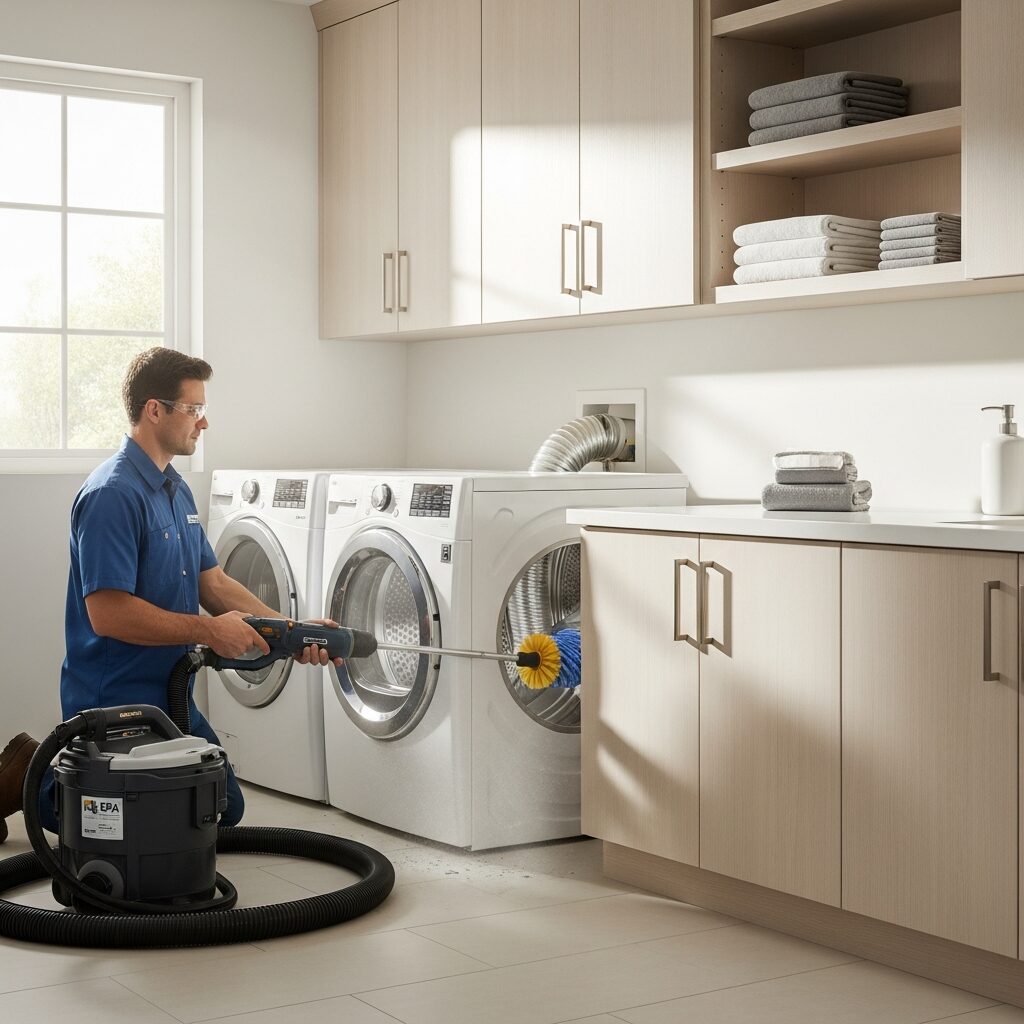
When we arrive at a home off Dickens Street or tucked above Beverly Glen, the process begins with a safety and performance check. We measure baseline airflow and temperature rise. Then we disconnect the transition hose, inspect for kinks or foil tears, and start a methodical brushing from the appliance side out. At each elbow, we agitate the brush to release lint rings that commonly act like baffles. A HEPA-filtered vacuum collects loosened debris so nothing disperses into the home. If the vent terminates on the roof, we coordinate from above as needed to ensure the cap and damper are free and moving smoothly. Only after the pathway is clear do we re-measure airflow, check for leaks, and confirm that the damper outside opens fully during operation.
Mid-service, many homeowners ask whether specialized machines make a difference. The truth is, equipment matters, but technique matters more. Gentle rotary brushing sized to the duct diameter, paired with constant negative pressure, prevents lint from migrating into wall cavities and keeps the job clean and thorough. The result is not just a cleaner line, but verifiable improvement you can see and feel as clothes dry evenly and quickly.
Some residents discover the energy benefit during that very first load post-service. Shirts come out less wrinkled, towels fluff more readily, and the dryer’s cycle indicator moves with a steady rhythm instead of stalling. That consistency is airflow, plain and simple. It’s the lungs doing their job again.
Somewhere in the middle of your laundry routine is the perfect time to consider scheduling proactive dryer vent cleaning. Waiting for visible lint at the exterior hood or a burning lint smell means energy has already been wasted—and your safety margin reduced. A periodic, preventative appointment locks in good airflow before bottlenecks form.
Upgrades That Complement a Clean Vent
While cleaning yields immediate gains, small upgrades can lock in those benefits. A smooth-walled, semi-rigid or rigid metal transition reduces turbulence right where it matters most. Properly supported runs—especially in crawlspaces—prevent sags where moisture and lint settle. A low-resistance exterior damper without a screen (as codes permit) improves exhaust flow and resists clogging. Each improvement compounds the others, preserving the energy savings you notice on day one.
Homeowners often ask whether switching detergents or softeners can help. The biggest factor is still airflow, but products that reduce residue leave less film on the lint screen, which helps maintain design airflow between professional cleanings. It’s also wise to wash similar fabrics together; mixed heavy and light items dry unevenly and can trick moisture sensors into running longer than necessary.
Seasonal Considerations in the Valley
Our warm season arrives early and stays late. Heat radiating from an overworked dryer adds to indoor load, which means your AC labors more. By restoring clean venting before the summer peak, you reduce the overlapping energy spike of two major appliances running at once. In the cooler months, we’re more likely to keep windows closed; that makes proper make-up air and venting even more important to keep humidity from lingering in the home and condensing along cooler walls or inside the vent.
Safety and Efficiency Go Hand in Hand
Energy savings is the benefit you can measure—but safety is the benefit you can feel. Lint is combustible, and a restricted vent raises internal temperatures at precisely the point where lint accumulates. Clean ducts keep temperatures in check, protect the heating element, and prevent glowing lint embers that can ignite downstream clumps. An efficient dryer is a safer dryer, and in close-set neighborhoods like ours, that matters to everyone on the block.
Simple Habits That Support Clean Vents
Between professional visits, a few habits make a real difference. Clean the lint screen before every cycle, not after. Shake out towels before loading so they don’t carry loose lint into the drum. Avoid overloading; when the drum is packed, air can’t move freely and energy consumption rises. Finally, give your dryer a few inches of breathing room behind the unit so the transition hose isn’t crushed when the appliance shifts during spin and stop.
FAQs
How often should I schedule vent cleaning in Sherman Oaks? For most households, once a year is ideal. Large families, pet owners, or homes with long, multi-elbow runs may benefit from a six- to nine-month interval. Vertical roof terminations tend to accumulate faster than short, straight wall runs.
What are the clearest signs my vent is costing me energy? Clothing that needs a second cycle, a laundry room that feels unusually warm, lint building up around the exterior hood, or a dryer that seems to run forever with light loads are all clues. You may also notice a musty smell from retained moisture.
Can I handle this as a DIY project? You can maintain the lint screen and keep the area behind the dryer tidy. But complete cleaning requires the right brushes, controlled suction, and sometimes roof access. Improper technique can compact lint deeper into the line or damage thin-wall ducting.
Does the type of vent cap matter? Yes. Caps with fine screens clog quickly. Low-resistance dampers that open wide with exhaust flow are best. Some screens are prohibited because they become lint traps; a proper damper keeps pests out without throttling airflow.
Will cleaning prolong my dryer’s life? Absolutely. Lower backpressure reduces heat stress on elements and strain on motors and belts. Many “old” dryers find a second wind after the vent is cleared, delivering years more of reliable service.
Is there a best season to schedule? Late spring is excellent because it removes the winter’s buildup before heat waves arrive. That said, any time you notice longer dry times is the right time to act.
Ready to Make Your Dryer Work Smarter?
If you’re ready to save time, trim energy use, and keep your home safer, let’s clear the path your dryer needs to breathe. Whether you’re in a hillside home above Valley Vista or a condo near Ventura Boulevard, expert service tailored to Sherman Oaks layouts will make a visible difference on the very next load. Reach out today to schedule professional dryer vent cleaning and give your dryer the easy, efficient airflow it was designed for. Your clothes, your schedule, and your home will thank you.