
Understanding What People Mean by “Cost” in Sherman Oaks
In Sherman Oaks, homeowners often ask about the “cost” of air duct cleaning, but what they really want is clarity. They want to know what they’re paying for, why one home feels simple while another feels complicated, and how to avoid surprises. The truth is that air duct cleaning isn’t a one-size-fits-all service, especially in a neighborhood where you can drive from a mid-century ranch near Ventura Boulevard to a newer build tucked into the hills and see completely different HVAC layouts in the span of minutes. When people ask about cost, they’re usually asking about scope, quality, and what a responsible company will actually do once they arrive.
As a local who’s seen how dust, wildfire season residue, and everyday city living can affect indoor air, I’ve found that the best way to “explain cost” is to explain the work itself. If you understand what a thorough job looks like, you can compare quotes and proposals more confidently, and you can spot the red flags that suggest a shortcut approach. If you’re just getting started, it helps to read a straightforward overview of air duct cleaning so you have a baseline for what the service includes and why it matters in the first place.
What a Legitimate Air Duct Cleaning Service Actually Involves
At its core, air duct cleaning is about removing accumulated particulate and debris from the pathways your conditioned air travels through. That includes the supply ducts that deliver cooled or heated air, and the return ducts that pull air back toward the equipment. In many Sherman Oaks homes, those runs can be located in attics, crawl spaces, interior chases, or a combination of all three. A high-quality cleaning addresses the duct interior surfaces and key system components that directly affect how air moves and how debris is reintroduced into the airstream.
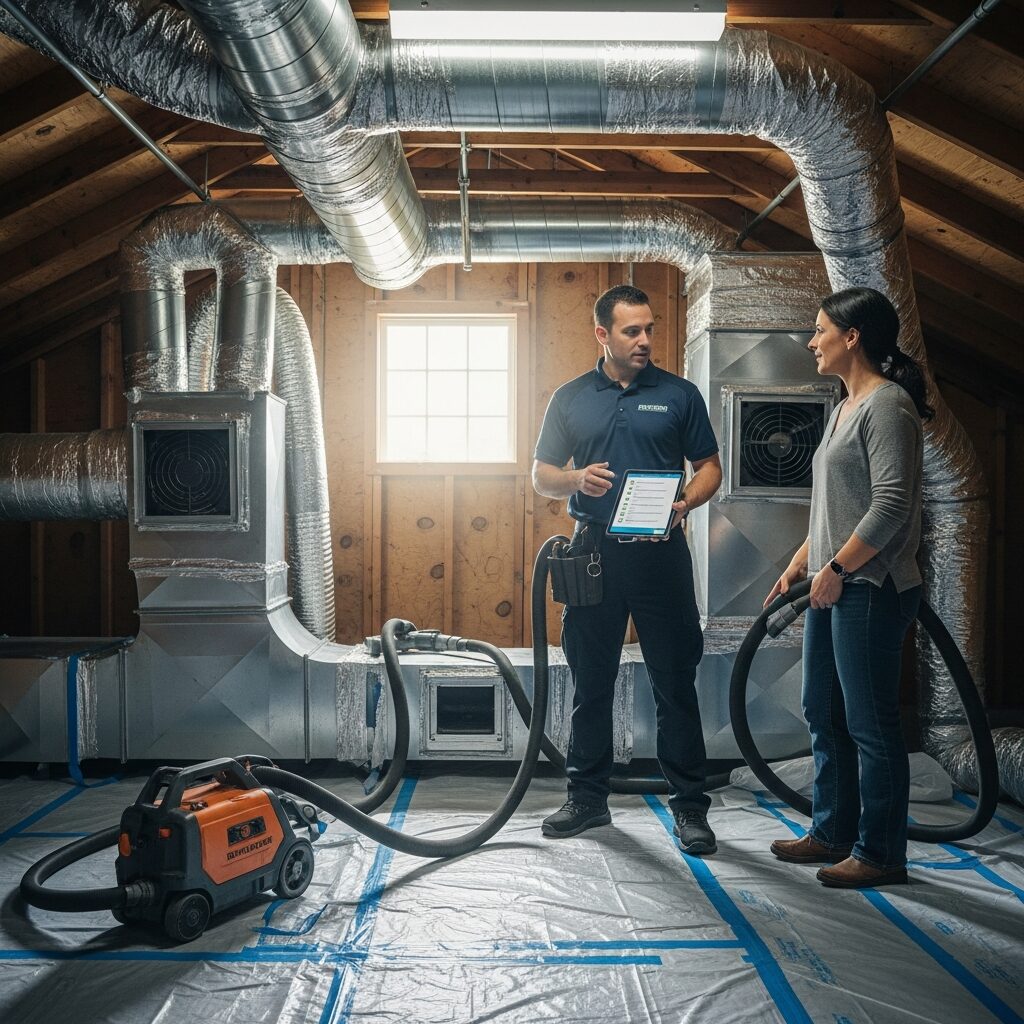
Homeowners are often surprised that a serious service isn’t simply “vacuum the vents.” A reputable crew typically uses a negative-air setup to place the duct system under controlled suction while agitating debris with appropriate tools so material is dislodged and captured rather than blown into the living space. Access points may be created and later sealed properly, and the contractor should protect floors and furnishings as they move hoses and equipment through your home. This is the difference between a surface-level job that looks tidy at the register and a whole-system approach that actually reduces the dust load circulating through the HVAC.
Because so many variables influence the time and equipment required, you’ll see why people talk about “cost.” They are sensing that the real question is: how involved is my system, and how much labor and setup does it take to do it right?
System Size, Layout, and the Sherman Oaks Housing Mix
Sherman Oaks has a wide range of home styles and renovations, and that diversity affects duct cleaning complexity. Some homes have a relatively compact single-story layout with a straightforward trunk-and-branch duct design. Others have additions that create longer runs, more turns, and multiple zones that require separate attention. A home with high ceilings, multiple returns, or a second story can mean more registers, more duct length, and more access challenges.
Attic-based ductwork is common in the Valley, and while it can be accessible, it can also be cramped, hot, and dusty. Working safely in an attic means moving carefully around insulation, framing, and electrical lines. In older properties, ducting may include older metal sections, flexible duct, or a patchwork from multiple remodels. Each material behaves differently during cleaning; flexible duct must be handled with care to avoid damage, while older metal can sometimes have seams that require a gentler approach and proper resealing.
When a company asks questions about your square footage, number of registers, and whether you have a crawl space or attic access, it’s not just small talk. Those details help determine the equipment configuration and the number of technicians needed to do a thorough job without cutting corners.
Condition of the Ductwork: Light Dust Versus Heavy Build-Up
Another major driver of how involved a job becomes is the current condition of the ducts. A home that has been well maintained, with consistent filter changes and no major indoor construction, often has a relatively manageable dust layer. In contrast, a property that recently underwent drywall work, flooring replacement, or a kitchen remodel can have fine particulate that migrates into the return side and settles throughout the system. Even if vents were covered during construction, projects tend to stir dust that finds its way into the HVAC.
In Sherman Oaks, there are also environmental realities. Windy days can push outdoor dust inside, and seasonal events like wildfire smoke can contribute to finer particles that cling to surfaces. If there have been years of reliance on low-grade filters or filters that didn’t fit properly, debris can bypass the filter track and collect downstream. The more embedded and compacted the debris, the more time it takes to agitate and remove without damaging the duct lining or dispersing particles back into the home.
A good contractor will set expectations based on what they can actually see, not simply on what they assume. That’s why an inspection component matters, whether visual at registers and returns or via camera for deeper runs. The condition of the ducts is one of the most meaningful reasons that “cost” varies, even between two homes with similar square footage.
What’s Included (and What Should Be) in the Scope
When you compare proposals, the most important thing is not the number on the page but the scope description. Some providers define duct cleaning narrowly, focusing only on the visible vent openings. Others include the supply and return trunk lines, branch lines, and key components near the air handler. The better scopes explain what will be cleaned and how, and they specify how access points will be handled and sealed afterward.
In many homes, attention to returns is particularly important. Returns often act like big vacuum inlets, pulling in hair, lint, and dust from the house. If the return path is dirty, it can reintroduce debris into the system even after supply ducts look clean. It’s also worth understanding whether the proposal addresses the blower compartment area near the equipment, where dust can accumulate and affect airflow. A thorough approach treats the system as a connected network rather than a series of disconnected grilles.
When homeowners say they want to understand “cost,” they are often trying to confirm that the company’s plan will actually improve their day-to-day indoor experience, not just check a box.
Middle-of-the-Project Reality: Why Setup and Containment Matter
Halfway through a proper duct cleaning, you can usually tell whether the crew is serious. You’ll see careful containment, with registers protected as needed and suction established before agitation starts. You’ll notice technicians paying attention to how dust moves and how to keep it from escaping into rooms. This is where professionalism shows, because it’s easy to make a home messier while trying to make ducts cleaner.
This middle phase is also where equipment standards and training make a difference. Negative-air machines, high-quality vacuums, and appropriate agitation tools allow technicians to dislodge debris effectively while keeping it captured. If you want a simple reference point for what to expect from a legitimate service in terms of approach and outcomes, reading about air duct cleaning can help you match the language in a proposal with the real-world process happening in your home.
In a place like Sherman Oaks, where many households include kids, pets, or family members sensitive to dust, containment is not an optional extra. It’s part of doing the work responsibly. The labor involved in protecting the home and managing airflow is a major reason the service can’t be reduced to a quick “in and out” visit without sacrificing results.
Common Red Flags When Comparing Providers
Because people are understandably trying to make good decisions, it helps to know the warning signs. One red flag is a quote that is offered without asking any questions about system size, number of vents, or access conditions. Another is vague scope language like “whole house duct cleaning” with no explanation of what “whole” means. A third is pressure tactics that push add-ons before any inspection, especially if the contractor hasn’t looked at the system or asked about recent renovations, filtration habits, or visible dust issues.
It’s also worth being cautious of any approach that suggests duct cleaning is always necessary on a strict schedule regardless of conditions. In reality, need varies. Some homes benefit more frequently because of pets, high occupancy, or ongoing construction. Others with excellent filtration and sealed ductwork may not need the same frequency. The best providers talk to you like a neighbor: they’ll explain what they see, what it means, and whether cleaning is likely to make a noticeable difference.
How Homeowners Can Prepare and Get More Accurate Proposals
If you want the clearest, most accurate proposal, a little preparation helps. Take note of how many supply vents and return grilles you have, and whether your system has one thermostat or multiple zones. If you’ve had recent construction, mention it. If you’ve noticed musty smells when the system turns on, uneven airflow, or excessive dust settling shortly after cleaning, share those observations. These details help a provider estimate the level of buildup and the complexity of access.
Also, check your filter size and how often you change it. Many Sherman Oaks homes have filter slots that are easy to overlook, and a filter that doesn’t fit snugly can allow bypass dust. If you have pets or use portable air purifiers, that can also influence dust patterns. A contractor who listens to these details is more likely to tailor the service rather than sell you a generic package.
What Results to Expect After a Well-Done Cleaning
After a thorough cleaning, many homeowners report that the home feels less dusty between cleanings, especially around registers and return areas. Some notice fewer odors when the HVAC starts up, particularly if the ducts previously held stale debris. You may also feel smoother airflow if returns were obstructed by lint and buildup. That said, duct cleaning is not magic: it won’t replace the need for regular filter changes, and it won’t solve problems caused by duct leaks, inadequate return capacity, or an oversized system cycling too quickly.
Think of duct cleaning as restoring the cleanliness of the air pathway and reducing the amount of material available to circulate. The best long-term outcomes come when it’s paired with good filtration, proper system maintenance, and attention to moisture control. If a home has persistent musty smells, visible mold-like growth, or recurring dust storms, the bigger question may be where moisture or infiltration is occurring. A trustworthy professional will point that out rather than simply repeating cleanings.
FAQ: Air Duct Cleaning “Cost” Questions in Sherman Oaks
Q: Why do quotes vary so much for the same neighborhood?
A: The biggest reasons are differences in scope, equipment, and time on site. Two homes can look similar from the street but have very different duct layouts, numbers of registers, and access challenges in attics or crawl spaces.
Q: Is it enough to clean only the vents I can see?
A: Cleaning just the visible registers may improve appearance, but it usually doesn’t address the dust load sitting deeper in the return and supply runs. A whole-system approach focuses on removing debris from the interior pathways, not just the openings.
Q: Does duct cleaning help with allergies?
A: It can reduce the amount of dust and debris available to circulate, which some households find helpful. Results vary, and good filtration and regular housekeeping still matter a lot for allergy management.
Q: How do I know if my ducts actually need cleaning?
A: Signs include visible dust blowing from vents, heavy buildup behind return grilles, lingering odors when the system runs, or recent construction. An inspection-based recommendation is more reliable than a blanket claim.
Q: Will duct cleaning fix weak airflow in one room?
A: Sometimes it helps if buildup is restricting a run or if returns are clogged with lint. But airflow issues can also come from duct design, closed dampers, leaks, or an unbalanced system. A good contractor will discuss these possibilities.
Ready for a Cleaner, More Comfortable HVAC System?
If you’re in Sherman Oaks and you want a straightforward, professional assessment rather than guesswork, focus on providers who explain their process clearly and treat your home with care. A thorough service is about containment, proper suction, careful agitation, and a scope that matches your system’s layout. When you’re ready to talk through your home’s setup and what a responsible cleaning would involve, start by learning more about air duct cleaning and then schedule a visit with a team that will answer questions, document what they see, and leave your system—and your living space—noticeably cleaner.