Why Equipment Standards Matter More Than Most Homeowners Realize
Air duct cleaning sounds like a simple idea: remove dust from the ducts and enjoy cleaner airflow. But in Sherman Oaks, where homes and small commercial buildings range from older constructions to high-end remodels, the quality of the result depends heavily on the equipment and methods used. Two crews can both say they “clean ducts,” yet one may leave you with genuinely cleaner pathways while the other stirs up debris and calls it done. The difference often comes down to standards: what machines are used, how suction is created and controlled, and whether the tools match the duct materials in your home.
When people ask me what to look for, I usually start by encouraging them to understand the basics of air duct cleaning itself. Once you know the goal—capturing debris rather than redistributing it—you can appreciate why equipment choices are not just technical details. They affect containment, effectiveness, and how clean your living space stays during and after the service.
The Core Principle: Source Removal With Controlled Airflow
The most reliable standard in duct cleaning is source removal. That means dislodging debris from duct interior surfaces and physically removing it from the system, not just pushing it around. To do that well, technicians need controlled airflow, typically achieved through negative pressure. In plain terms, the system is put under suction so loosened dust is pulled toward a collection unit rather than blown into rooms.
In Sherman Oaks homes, you often have a mix of duct types, including sheet metal and flexible ducts. Each type requires a different touch. Good equipment supports that flexibility: strong enough suction to capture debris, but paired with agitation tools that won’t tear a flex liner or damage fragile internal insulation. This is why “standards” matter. Without them, a contractor may use an aggressive tool that causes harm or a weak vacuum that leaves most debris behind.
Negative Air Machines and Collection: What “Good” Looks Like
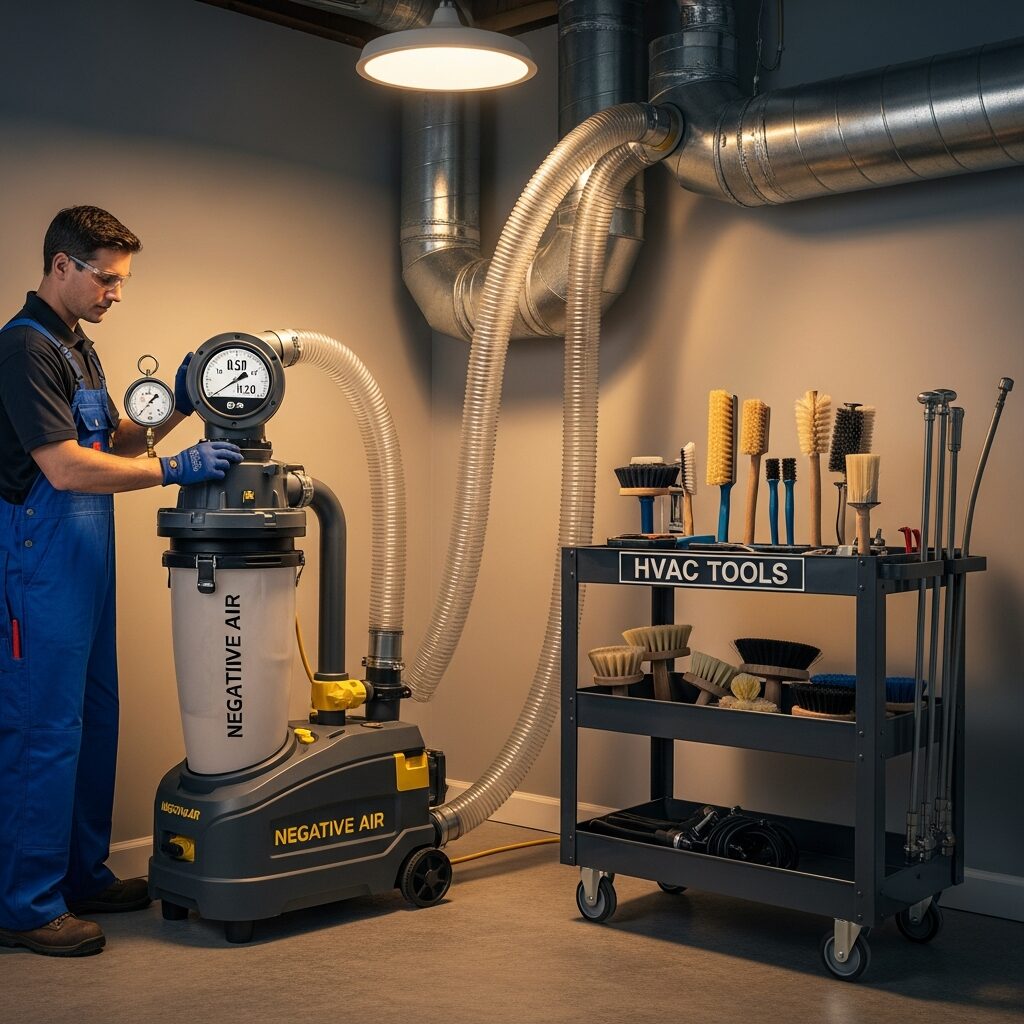
A common marker of professional-grade work is the use of a dedicated negative-air machine or equivalent high-capacity vacuum system designed for duct cleaning. This equipment is built to move substantial air volume and trap fine particles effectively. The goal is to create consistent suction throughout the duct network so agitation can be productive. If suction is too weak, dislodged debris can drift and resettle. If suction is poorly controlled, dust can escape into the home at registers or access points.
Filtration in the collection system also matters. Fine particulate is part of what people hope to reduce, so the collection unit should be designed to retain small particles rather than exhausting them back into the environment. A well-equipped crew will also seal or cover registers as needed and manage pressure zones so rooms don’t become dusty during the process. These aren’t “extras”; they’re part of a standard of care that respects indoor environments.
In a neighborhood where many families include children and pets, this kind of containment isn’t just a technical feature—it’s a practical necessity.
Agitation Tools: Brushes, Air Whips, and When Each Makes Sense
Agitation is what turns suction into actual cleaning. Dust sticks to duct walls; it doesn’t always slide out on its own. Professional crews use tools like rotary brushes, air whips, and compressed-air devices designed to loosen debris. The right tool depends on the duct construction and what the technician finds.
For metal ducts, carefully selected brush systems can be effective. For flexible ducts, aggressive brushing can be risky, so gentler air-based agitation is often preferred. In internally lined ducts, technicians must be cautious to avoid shredding the liner or dislodging material. Standards here are about matching tool to material. If a company can’t explain how they adapt their tools to different ducts, that’s a sign they may use a one-tool approach everywhere, which can lead to poor results or damage.
Equipment standards also include maintenance of the tools themselves. Worn brushes, dirty hoses, and poorly maintained vacuums can reduce effectiveness and introduce contamination. A professional operation treats equipment like a trade tool that must be kept clean and functional, not like an afterthought.
Access Tools and Sealing: The Details That Protect Your System
One aspect of duct cleaning that homeowners don’t often consider is access. To reach deeper sections of ductwork, technicians may use existing openings or create access points that are later sealed. The tools and materials used for this matter because any poorly sealed opening can become a new leak path, drawing in attic dust or reducing airflow to certain rooms.
In Sherman Oaks, attic dust and insulation particles can be a real issue when ducts are leaky. If a cleaning creates or worsens leaks, the home may feel dustier afterward, which is the opposite of what you want. Equipment standards therefore include not just vacuums and brushes, but also the ability to open and close the system correctly, restoring it to a sealed, functional state. A careful sealing step supports both cleanliness and comfort.
Mid-Job Verification: Cameras, Visual Checks, and Professional Transparency
During the middle of a job, the best crews don’t work in a black box. They can show you what they’re seeing and explain what they’re doing. Some use inspection cameras to confirm conditions in trunk lines or hard-to-reach areas. Others rely on visual checks at access points and the evidence collected in the vacuum system. Either way, the standard is transparency: the contractor should be able to demonstrate that debris is being removed and that the system is being treated comprehensively.
This is also where homeowners can benefit from understanding the expected process of air duct cleaning. If you know that negative pressure and source removal are central, you can ask: Where is the suction unit connected? How are you preventing dust from escaping into rooms? How will you confirm the returns are cleaned, not just the supplies? These questions aren’t confrontational; they’re a way to make sure the contractor is following a recognized standard rather than improvising.
In commercial settings—small offices, studios, or retail spaces—verification can also mean providing basic documentation. For property managers and tenants, that documentation helps with maintenance records and supports accountability across building transitions.
What “Low-Standard” Equipment Often Looks Like in the Real World
When equipment standards are low, you can often tell from the approach. Some crews rely on small shop vacuums or lightweight equipment that isn’t designed to move enough air volume through an entire duct system. They may focus heavily on cleaning vent covers, because that’s visible and quick, while deeper ductwork gets minimal attention. You might also see a lack of containment: no protection at registers, no careful sealing, and no clear plan for preventing dust from drifting into rooms.
Another common issue is overreliance on fragrance or “fresh smell” tactics. A clean system should feel cleaner because debris has been removed, not because something has been sprayed to mask odors. Equipment standards are about physical removal and capture, not about superficial cues.
In Sherman Oaks, where many homes are renovated and duct systems may be patched together over time, low-standard equipment can also increase the risk of damaging older components. A careful, well-equipped team recognizes these vulnerabilities and adjusts accordingly.
How Homeowners Can Use Standards to Choose the Right Company
You don’t need to know model numbers to hire well. Instead, listen for how a company talks about its process. Do they mention negative pressure or a dedicated vacuum setup? Do they explain how they’ll dislodge debris while capturing it? Do they ask about your duct type, attic access, and system layout? A company that asks thoughtful questions is more likely to bring the right equipment and staff.
It’s also reasonable to ask how they protect your home during service and how they handle access points. A clear explanation is a sign of experience. If a provider can’t describe their containment steps, or if they seem to treat the job like a quick vent wipe, that’s a clue that their equipment standards may not align with a true source-removal cleaning.
FAQ: Air Duct Cleaning Equipment Standards in Sherman Oaks
Q: What’s the most important piece of equipment in duct cleaning?
A: A high-capacity vacuum or negative-air machine is central because it creates controlled suction to capture debris. Without strong, well-managed suction, loosened dust can drift and resettle.
Q: Are rotary brushes always the best tool?
A: Not always. Brushes can be effective in metal ducts, but flexible ducts and lined ducts may require gentler agitation to avoid damage. The best standard is using the right tool for the duct material.
Q: How do technicians reach ducts deep in the system?
A: They may use existing access points or create temporary ones that must be sealed properly afterward. Proper sealing is part of protecting system performance and cleanliness.
Q: Can duct cleaning make the house dusty during service?
A: If equipment and containment are poor, yes. With proper negative pressure and register protection, a professional job should keep dust contained and captured.
Q: How can I tell if a company is following good standards?
A: Look for clear explanations of negative pressure, source removal, containment, and how they adapt tools to your duct type. Transparency and a methodical approach are strong indicators.
Choose a Standard You Can Feel in the Air
Sherman Oaks homeowners are busy, and nobody wants a service that creates a mess or delivers only cosmetic results. Equipment standards are the quiet difference between a job that truly reduces circulating debris and a job that just looks good at the vent. If you’re ready to work with a team that treats duct cleaning as a whole-system process—built around suction, containment, and careful tool selection—start by reviewing air duct cleaning and then book an appointment with professionals who can explain their equipment, their method, and how they’ll protect your home from start to finish.