
Why Office Air Quality in Sherman Oaks Is a Day-to-Day Business Concern
In Sherman Oaks, offices don’t just compete on location and amenities; they compete on how people feel inside the space. When employees mention headaches in the afternoon, when clients comment on a stuffy conference room, or when dust seems to collect around vents no matter how often the janitorial team wipes surfaces, it’s natural to look beyond the obvious. Commercial HVAC systems run long hours, handle higher occupancy, and move huge volumes of air compared to most homes. That workload can turn small maintenance gaps into noticeable comfort issues.
Commercial air duct cleaning is one of those services that sounds simple until you realize how many moving pieces an office HVAC system contains. In practice, it’s about improving the cleanliness of the air pathway, supporting consistent airflow, and helping your building operate in a way that feels professional to everyone who walks in. If you want a clear starting point for what the service entails, it’s helpful to review a plain-language explanation of air duct cleaning before you begin evaluating vendors and planning logistics.
How Office Duct Systems Get Dirty Differently Than Homes
Commercial spaces in Sherman Oaks often have open-plan areas, private offices, break rooms, copy stations, and reception zones, all with different airflow demands. Even when a building looks clean, its HVAC system can accumulate debris steadily over time. Offices generate a lot of fine particulate: paper dust, textile lint from carpet tiles, skin cells from constant occupancy, and outdoor dust tracked in from parking areas and sidewalks. Add in kitchen odors, printer heat, and frequent door openings, and the return side of the HVAC system can become a steady collector of airborne material.
Unlike many homes that run the system mostly morning and evening, offices may run HVAC all day, sometimes with extended hours. That means more cycles of air moving through returns and ducts. If filters aren’t changed consistently, or if the filter racks allow bypass air, particles can move downstream and settle within the ductwork. Over time, that buildup can affect how clean the air feels, especially in smaller rooms that rely on balanced airflow to stay comfortable.
There’s also the reality of tenant improvements. Sherman Oaks offices frequently change hands, and each turnover can involve painting, drywall work, and flooring changes. Even with careful containment, renovation dust has a way of migrating. If a space has been remodeled multiple times, the ducts may have collected layers of fine debris that normal cleaning of vents can’t address.
What a Professional Commercial Duct Cleaning Looks Like
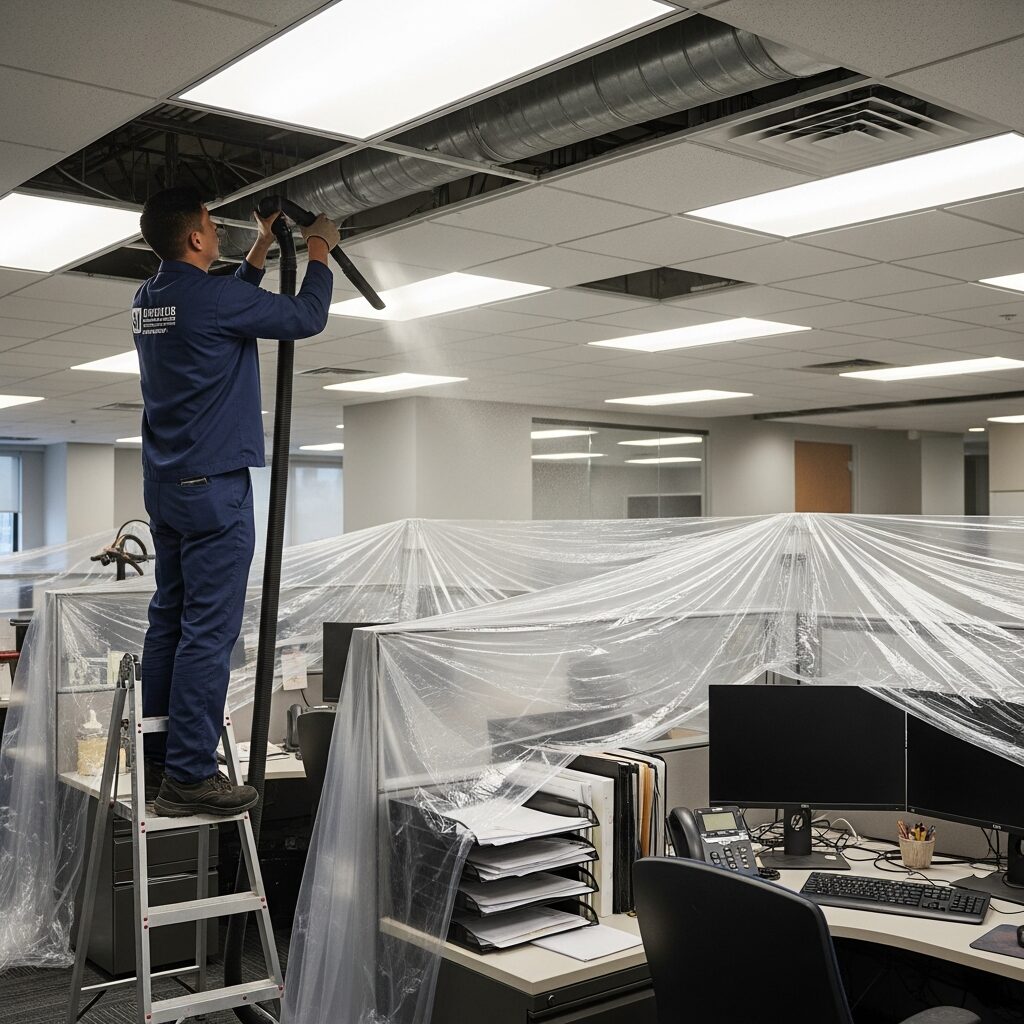
A professional commercial duct cleaning begins with planning. A vendor should ask about building layout, operating hours, ceiling type, and HVAC configuration, including rooftop units, split systems, or packaged units. In many office buildings, ductwork runs above drop ceilings, which can be convenient for access but requires care to avoid disrupting ceiling tiles, sprinklers, and lighting. A good crew moves methodically, keeping the worksite tidy so employees can continue working with minimal interruption.
Once onsite, technicians typically set up negative air containment and use agitation tools to dislodge debris so it’s captured rather than released into occupied areas. They should protect workstations and walkways, especially in client-facing businesses where appearance matters. In a well-run project, you’ll see attention to sealing access points properly afterward, because leaving gaps can invite dust infiltration and reduce system efficiency.
Commercial projects often benefit from documentation. Depending on your industry and internal policies, you may want before-and-after photos at key points, a written scope, and a completion summary that facilities staff can file for reference. This kind of professionalism matters in offices where property managers, tenants, and maintenance teams all share responsibility for the environment.
Mid-Project Logistics: Minimizing Disruption While Maximizing Results
The middle of a commercial duct cleaning project is where coordination makes or breaks the experience. In an occupied Sherman Oaks office, you may need to schedule work in phases: after-hours for reception and conference rooms, early mornings for open-plan areas, or weekends for spaces where noise would disrupt calls. Good vendors anticipate this and discuss scheduling before arriving with equipment.
This is also the phase where you’ll want to confirm the vendor is addressing both supply and return ductwork, not just the visible diffusers. Returns in offices can collect substantial debris because they pull air continuously from high-traffic zones. A cleaning that ignores return pathways may leave behind the very material that keeps reentering circulation. If you’re cross-checking what you’re hearing with an independent description of what’s typically included, reviewing air duct cleaning can help you ask better questions and align expectations across your team.
In multi-tenant buildings, coordination may extend to building management, especially if rooftop access or shared mechanical rooms are involved. Confirming access protocols, elevator usage for equipment, and waste handling keeps the project smooth and reduces the risk of surprises on the day of service.
Signs Your Office May Benefit From Duct Cleaning
Some signs are obvious, like visible dust streaking around diffusers or debris collecting on ceiling tiles near vents. Other signs are more subtle: a persistent “stale” smell when the system starts, conference rooms that feel stuffy even when the thermostat reads correctly, or occupants reporting that the air feels heavy in the afternoons. These issues can have multiple causes, including ventilation rates, thermostat zoning, and equipment performance, but dirty ductwork can contribute by reintroducing particulate into the airstream and affecting airflow consistency.
Another clue is how quickly surfaces get dusty after cleaning. If the janitorial team notices that certain zones always look dusty near vents, it may indicate that returns are pulling in high particulate loads and redistributing them. Duct cleaning can be part of an overall strategy that includes filter upgrades, better maintenance schedules, and addressing any leaks that pull dust from ceiling cavities or wall chases.
What Duct Cleaning Can and Can’t Do for a Business
Commercial duct cleaning can support a cleaner-feeling environment, reduce the amount of debris available to circulate, and help facilities teams maintain a more consistent standard across the space. It can also support HVAC performance by reducing obstructions at key points in the duct network. However, it’s not a cure-all. If a building has inadequate ventilation, unbalanced airflow, persistent humidity issues, or poorly sealed ducts that draw in dust from unconditioned spaces, cleaning alone won’t solve the underlying problem.
The best results come when duct cleaning is treated as a reset, followed by strong maintenance. That includes routine filter changes, ensuring filters fit properly, keeping returns clear of clutter, and addressing construction dust promptly after any tenant improvement work. For property managers, it can also be helpful to set standards for how contractors protect returns during renovations, since that’s often where fine particulate enters in the first place.
How to Evaluate a Vendor for an Office Project
For Sherman Oaks businesses, vendor selection should focus on process and professionalism. You want clear communication, a defined scope, and a plan for working around staff. Ask how they will protect occupied areas, what containment methods they use, and how they handle access points. A reputable provider should be comfortable discussing how they avoid spreading dust during the job and how they ensure debris is captured effectively.
It’s also wise to ask how they coordinate with building management in multi-tenant settings. If rooftop access or shared mechanical rooms are involved, you’ll want a vendor who can follow site rules, communicate with security, and keep the project moving without confusion. The overall experience should feel like a facilities project, not like a mystery service where you’re guessing what happens behind the ceiling tiles.
FAQ: Commercial Air Duct Cleaning for Sherman Oaks Offices
Q: Can duct cleaning be done while employees are working?
A: Often yes, but it depends on the layout and noise tolerance. Many offices choose phased scheduling or after-hours work for sensitive areas like conference rooms and call-heavy departments.
Q: Will duct cleaning fix temperature complaints in certain rooms?
A: It may help if airflow is restricted by debris, but temperature issues can also come from zoning, thermostat placement, duct leaks, or equipment capacity. A good vendor will discuss these factors.
Q: Is duct cleaning only for older buildings?
A: Not necessarily. Newer spaces can accumulate construction dust after tenant improvements, and high-occupancy offices can load filters and returns quickly even in modern buildings.
Q: What areas of the system should be addressed in a commercial cleaning?
A: A meaningful scope typically includes supply and return ductwork, key trunk lines, and attention to debris-prone areas near diffusers and returns. The vendor should explain what is and isn’t included.
Q: How can we keep ducts cleaner after service?
A: Consistent filter maintenance, ensuring filters fit properly, protecting returns during renovations, and addressing duct leaks or ceiling cavity infiltration can all help extend results.
Make Your Office Feel Cleaner, Fresher, and More Professional
Your Sherman Oaks office is part of your brand. When the air feels clean and rooms stay comfortable, people focus better, meetings run smoother, and clients feel welcome. If you’re ready to plan a project with clear communication and minimal disruption, start by learning more about air duct cleaning and then schedule a walkthrough with a team that can map the scope to your space, coordinate around your hours, and deliver a result that supports a healthier, more polished workplace.